
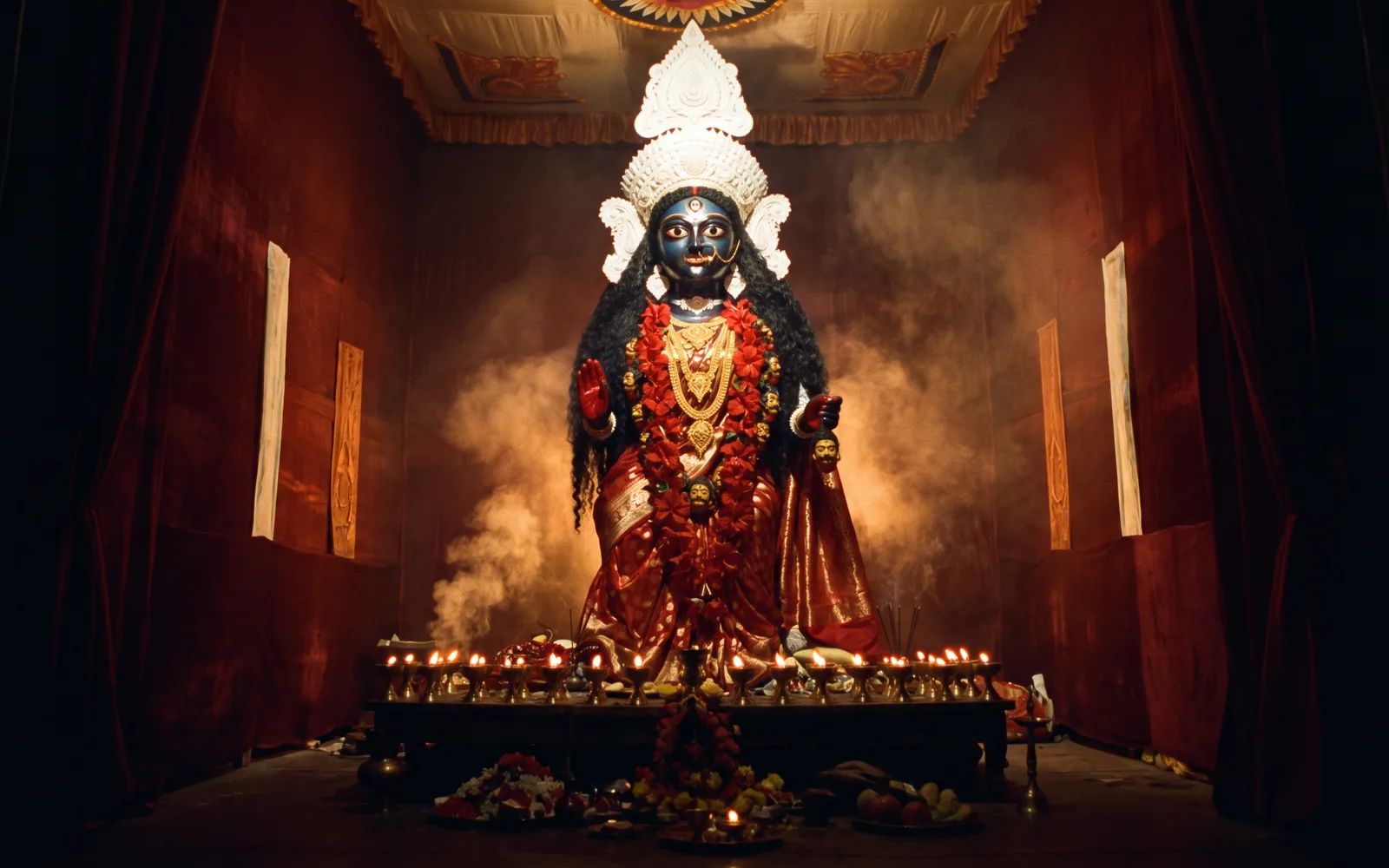
Kali Puja 2026 (Kali Puja Kab Hai): Date, Puja Vidhi and Why It Falls on Diwali Night
Kali Puja 2026 is on Sunday, 8 November, the night of Diwali. Kolkata's Nishita puja runs 10:55 to 11:46 PM. Puja vidhi, Kali yantra and temples.
On Sunday, 8 November 2026, most of India lights lamps for Lakshmi. In Bengal, Assam and Odisha, the same new moon belongs to Kali. The two pujas share a date but not an hour: Lakshmi is welcomed at dusk, while Kali is worshipped near midnight, in the darkest hour of a new-moon night.
| Kali Puja 2026 | Date and time |
|---|---|
| Date | Sunday, 8 November 2026 |
| Amavasya tithi | 11:27 AM, 8 Nov to 12:31 PM, 9 Nov |
| Nishita Kaal puja (Kolkata) | 10:55 PM to 11:46 PM, 8 Nov |
| Bhoot Chaturdashi (the night before) | Saturday, 7 November 2026 |
Kali Puja Kab Hai 2026: Date and Nishita Kaal Timing
Kali Puja falls on the Kartik Amavasya, the same new moon as Diwali, so in 2026 it is on Sunday, 8 November. Its main worship belongs to Nishita Kaal, the midnight window, which is worked out from each city's sunset and sunrise. That is why Kolkata's puja begins more than 40 minutes before Delhi's.
| City | Nishita Kaal, night of 8 November 2026 |
|---|---|
| Guwahati | 10:41 PM to 11:33 PM |
| Kolkata | 10:55 PM to 11:46 PM |
| Patna | 11:07 PM to 11:59 PM |
| New Delhi | 11:38 PM to 12:31 AM |
Amavasya runs until 12:31 PM on 9 November, so the whole night is covered. Pandals and temples often continue their rites well past the Nishita window into the early hours of 9 November.
Learn more: Kali Puja, Kali Chaudas or Bhoot Chaturdashi?
They are three observances on two nights. Bhoot Chaturdashi and Kali Chaudas fall on the night before, Saturday, 7 November, when Chaturdashi is at midnight. Kali Puja is Amavasya night, 8 November. Gujarat's Kali Chaudas worship of Mahakali is a separate observance from Bengal's Kali Puja, even though both honour Kali.
Why Kali Puja Is Celebrated on Diwali Night
In Bengal, Lakshmi has already been worshipped by the time Diwali arrives. Families welcome her at Kojagari Lakshmi Puja, on the full moon after Durga Puja. When the Kartik new moon comes two weeks later, Bengal gives the night to Kali instead, as Dipanwita Kali Puja, Kali Puja of the lamps.
In the Devi Mahatmya, Kali springs from the Devi's brow in battle, and later drinks the blood of the demon Raktabija, every drop of which raised another of him, before it can touch the ground. A later tradition carries the story further. Her fury kept rising until Shiva lay down in her path, and when her foot touched his chest she stopped, her tongue out. Some read that moment as shame, others as recognition, and the image in most Kali Puja pandals holds both readings at once.
The festival in its present public form is often credited to Raja Krishnachandra of Nadia in the 18th century, who encouraged its celebration across his kingdom. Before that, Kali worship on Amavasya was largely a matter for tantric practitioners and household shrines.
Kali Puja Vidhi at Home
The elaborate tantric rites of Kali Puja are performed by priests in temples and pandals. At home, families keep a simpler, sattvik puja. Begin it inside your city's Nishita window, or earlier in the night if that is late for the household.
- Set up the altar. Place a picture or small idol of Kali on a red or black cloth, with a ghee or mustard-oil lamp before her.
- Ganesh and sankalp. Offer a flower to Ganesh with Om Gan Ganapataye Namah, then take the sankalp with water, akshat and a flower, naming the date, Kartik Amavasya, 8 November 2026.
- Invite Kali. Chant her mantra, ॐ क्रीं कालिकायै नमः (Om Kreem Kalikayai Namah), 11 times while holding a red flower, then place it at her feet.
- Offer red hibiscus. Jaba, the red hibiscus, is Kali's flower. Many households offer a garland of 108.
- Sindoor, kumkum and shringar. Apply sindoor to the image and offer red cloth or bangles.
- Dhoop and deep. Light the dhoop and wave it, then the lamp, three times each. A deep, warm fragrance suits a night puja; Mrigmaya dhoop cones work for the offering itself, and dhoop sticks or incense sticks from the same range can burn through the rest of the night.
- Bhog. Khichuri, fried vegetables, payesh (rice kheer) and sweets are common household offerings.
- Jaap. One mala of Om Kreem Kalikayai Namah.
- Aarti and pushpanjali. Close with the aarti and a handful of flowers from everyone.
Mrigmaya dhoop and incense for Kali Puja night
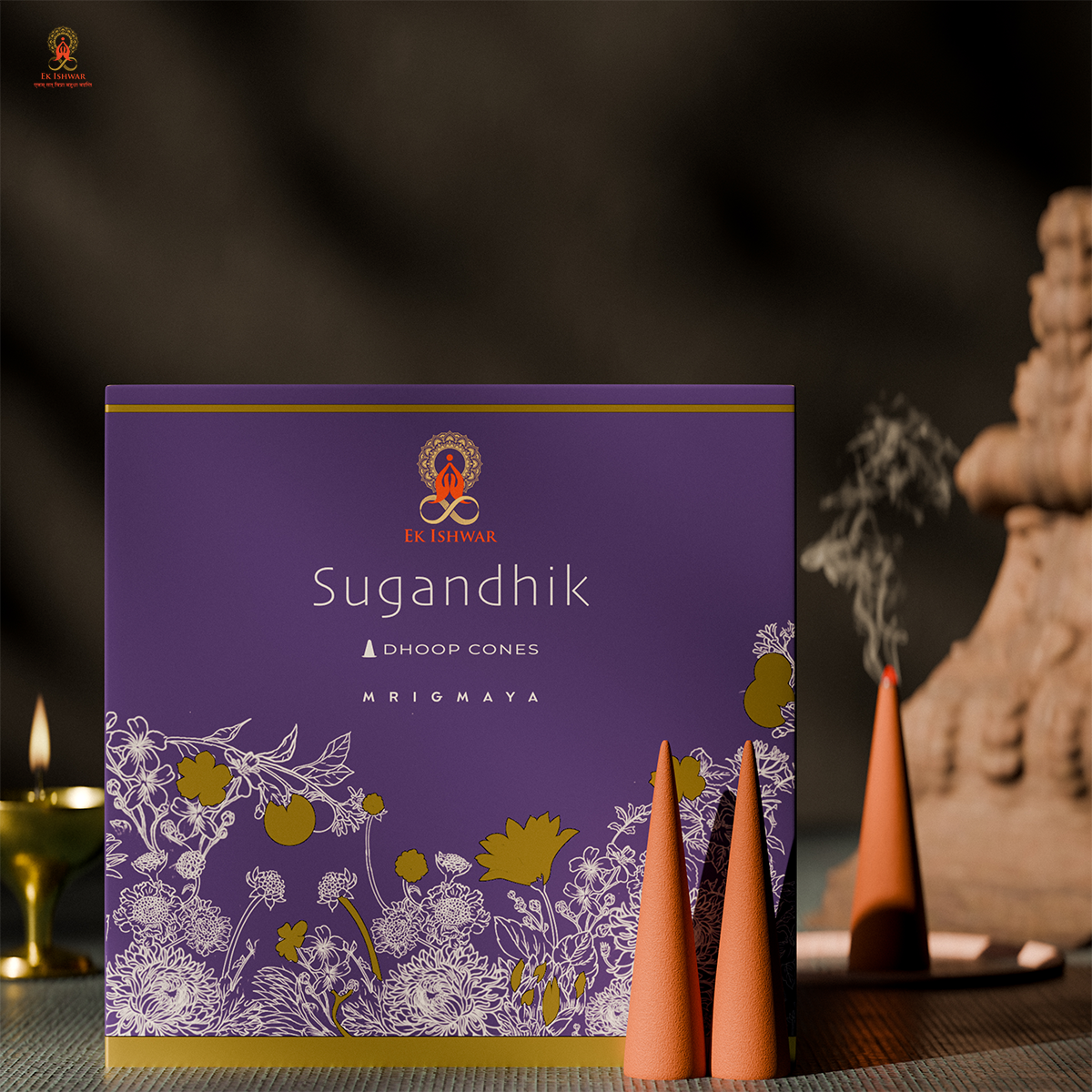 Dhoop Cones – MrigmayaThere’s something primal about musk.View product
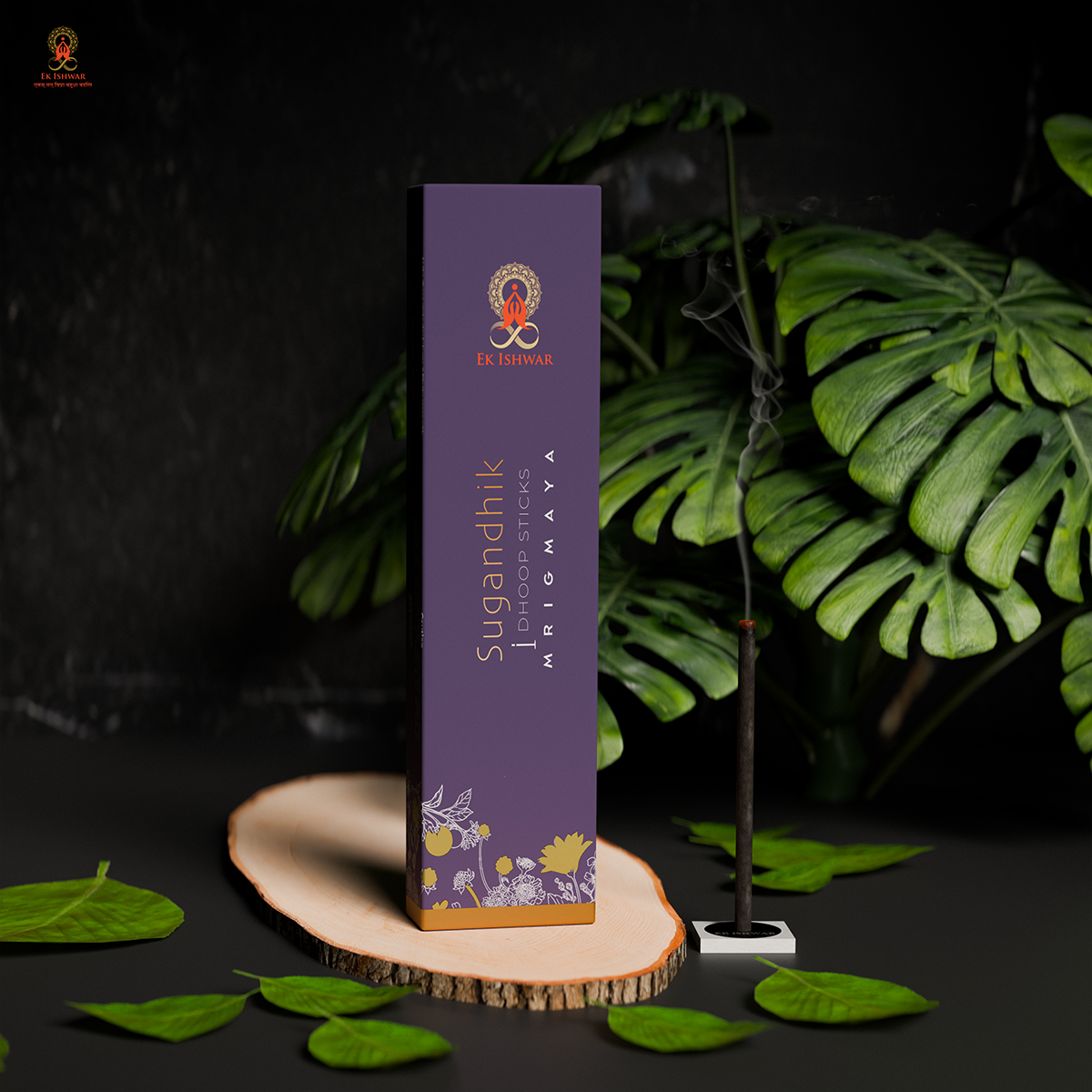 Dhoop Sticks – MrigmayaThe Mrigmaya Dhoop Sticks from Ek Ishwar’s Sugandhik range are crafted to bring quiet strength and deep stillness into your sacred space.View product
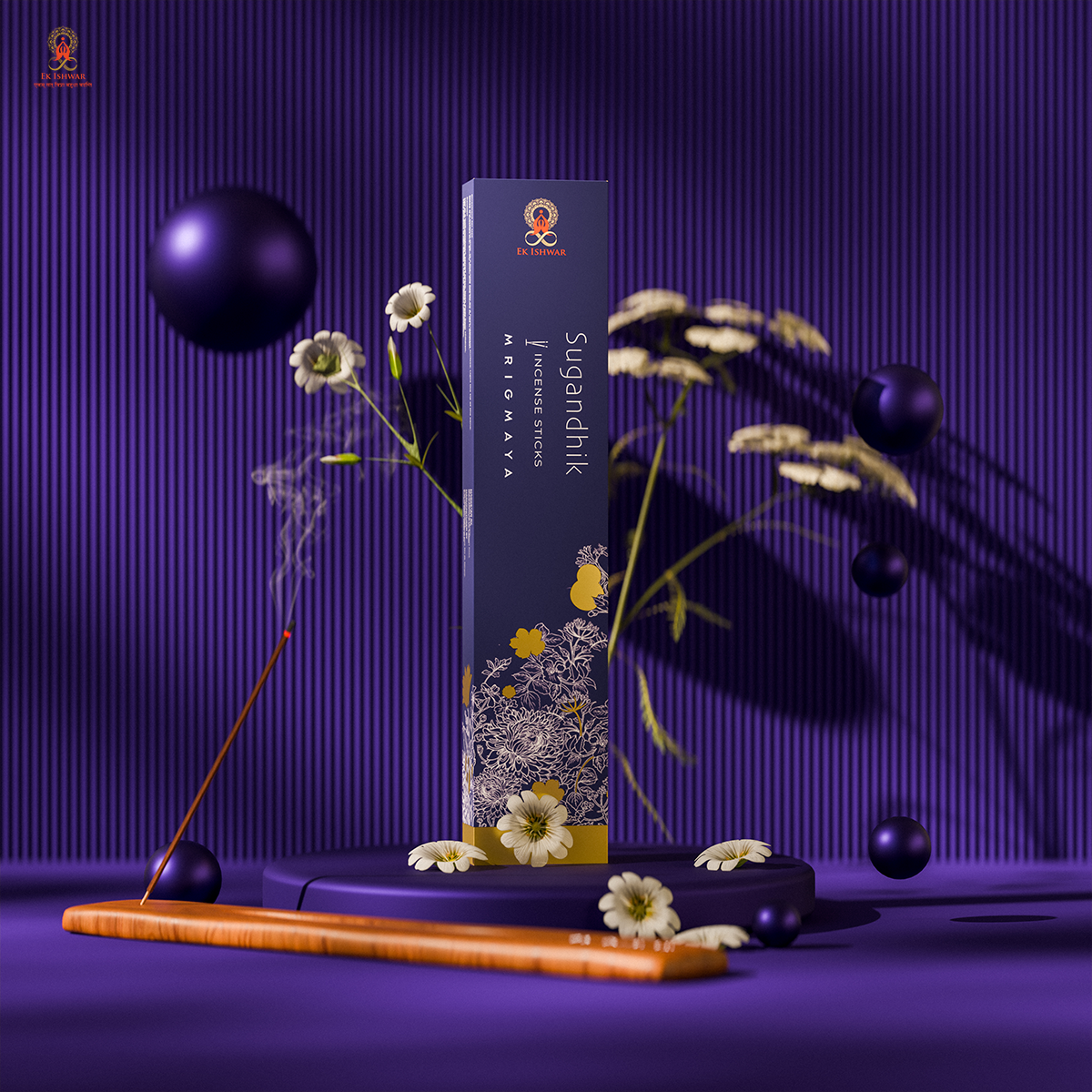 Incense Stick – MrigmayaMrigmaya Incense Stick is a deeply grounding and contemplative fragrance inspired by the timeless scent of musk.View product
Kali Yantra: Meaning, Types and How It Is Used
A yantra is a geometric form of a deity, worshipped in place of, or alongside, an image. The Kali yantra is drawn as a set of nested shapes, read from the outside in:
- A square outer boundary (bhupura) with four gates, marking the sacred space.
- A ring of eight lotus petals.
- Five downward-pointing triangles, one inside the next, the downward point being the sign of the Devi.
- A central dot (bindu), where Kali herself is meditated upon.
| Type | Associated form | Common use |
|---|---|---|
| Dakshina Kali yantra | Dakshina Kali, the most widely worshipped form, especially in Bengal | Household worship and Kali Puja night |
| Mahakali yantra | Mahakali, the fierce form who destroys negativity | Protection, often kept near the entrance or puja space |
| Bhadrakali yantra | Bhadrakali, the auspicious and protective form | Worshipped in South India and among Shakta families |
A Kali yantra is installed in the puja space and worshipped with kumkum, red flowers and her mantra, Om Kreem Kalikayai Namah. Many families choose Kali Puja night to install one and then keep up a short daily worship. The benefits families describe, courage, protection and clarity, come from that practice over time rather than from owning the yantra.
Learn more: copper, silver or paper?
Copper is the traditional material and the most common. The yantra's lines and proportions matter more than the metal; a correctly drawn yantra on paper, worshipped regularly, is treated with the same respect.
Kali Puja in West Bengal: Kalighat and Dakshineshwar
In West Bengal, Kali Puja is as public as it is private. Pandals go up across Kolkata and its suburbs, Barasat and Naihati draw crowds from across the state, and the two great Kali temples of the city stay open through the night.
Kalighat is one of the 51 Shaktipeeths, where the toe of Sati's right foot is believed to have fallen. The Devi here is Kalika, with her long golden tongue and three wide eyes, and on Kali Puja night the temple holds its rites through the Nishita hours. For families who can't be in Kolkata, Ekishwar arranges the Kalighat Raksha Kavach Paath at the Shaktipeeth, with a havan of 1,008 ahutis for protection. A simpler offering is the Nazar Mukti Nariyal chadhawa, a coconut offered to Maa Kali on your behalf to remove the evil eye.
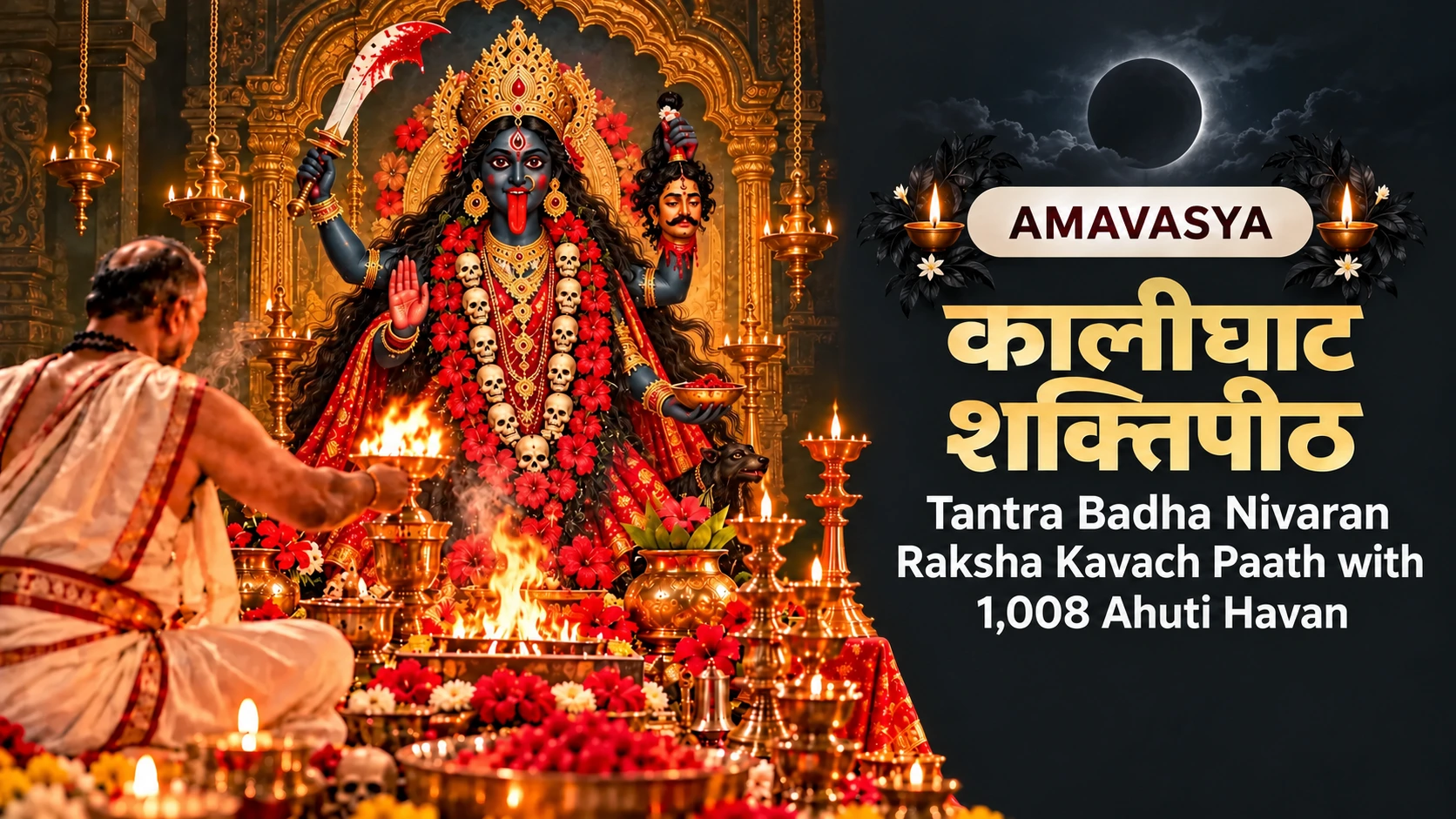 At the Kalighat ShaktipeethKalighat Shaktipeeth Tantra Badha Nivaran Raksha Kavach Paath with 1,008 Ahuti HavanRaksha Kavach Paath with a havan of 1,008 ahutis for protectionShakiteepth Kalighat, KolkataBook this puja
Dakshineshwar, on the east bank of the Hooghly, was built by Rani Rashmoni in the 19th century. Its Devi, Bhavatarini, is the Kali whom Sri Ramakrishna served as priest, and the temple is one of the most visited in Bengal on Kali Puja night.
Lamps at Dusk, Kali at Midnight: Keeping Both on 8 November
Kali Puja and Diwali are not competing festivals but two halves of the same Amavasya. In 2026, the night of Sunday, 8 November holds both: Lakshmi at dusk, Kali in the Nishita window, 10:55 PM to 11:46 PM in Kolkata and later further west. At home, a short sattvik puja with red hibiscus, a lamp, bhog and one mala of her mantra is complete in itself; the tantric rites are for temples and pandals. Bhoot Chaturdashi, the night before, prepares the house; Kali Puja is the night itself.
For dhoop and incense for Kali Puja and Diwali night, visit Ekishwar.
Pujas for you
Swipe · 2 pujas
FAQs on Kali Puja
- Are Kali Puja and Diwali on the same day in 2026?
- Yes. Both fall on the Kartik Amavasya, Sunday, 8 November 2026. Lakshmi Puja is done at dusk and Kali Puja near midnight.
- Why is Kali Puja celebrated in Diwali?
- In Bengal, Lakshmi is worshipped earlier, at Kojagari Purnima, so the Diwali new moon is given to Kali. She is worshipped on the darkest night as the Devi who cuts through fear and ignorance.
- What time is the Maa Kali puja in Kolkata in 2026?
- The Nishita Kaal puja runs from 10:55 PM to 11:46 PM on 8 November 2026.
- How is West Bengal Kali Puja different from Kali Chaudas?
- West Bengal's Kali Puja is on Amavasya night, 8 November. Kali Chaudas, kept mainly in Gujarat and Rajasthan, is on Chaturdashi night, 7 November.
- What are Kali yantra benefits?
- Families keep a Kali yantra for protection, courage and steadiness of mind. Those effects are tied to regular worship of the yantra, not simply to keeping one.
- Which mantra is chanted in Diwali Kali Puja?
- Om Kreem Kalikayai Namah (ॐ क्रीं कालिकायै नमः), with Kreem as Kali's bija.
- Kali Puja 2026
- Kali Puja kab hai
- Kali Puja vidhi
- Kali yantra
- Nishita Kaal
- Kalighat
- Dakshineshwar
- Diwali 2026
Read next
All guides →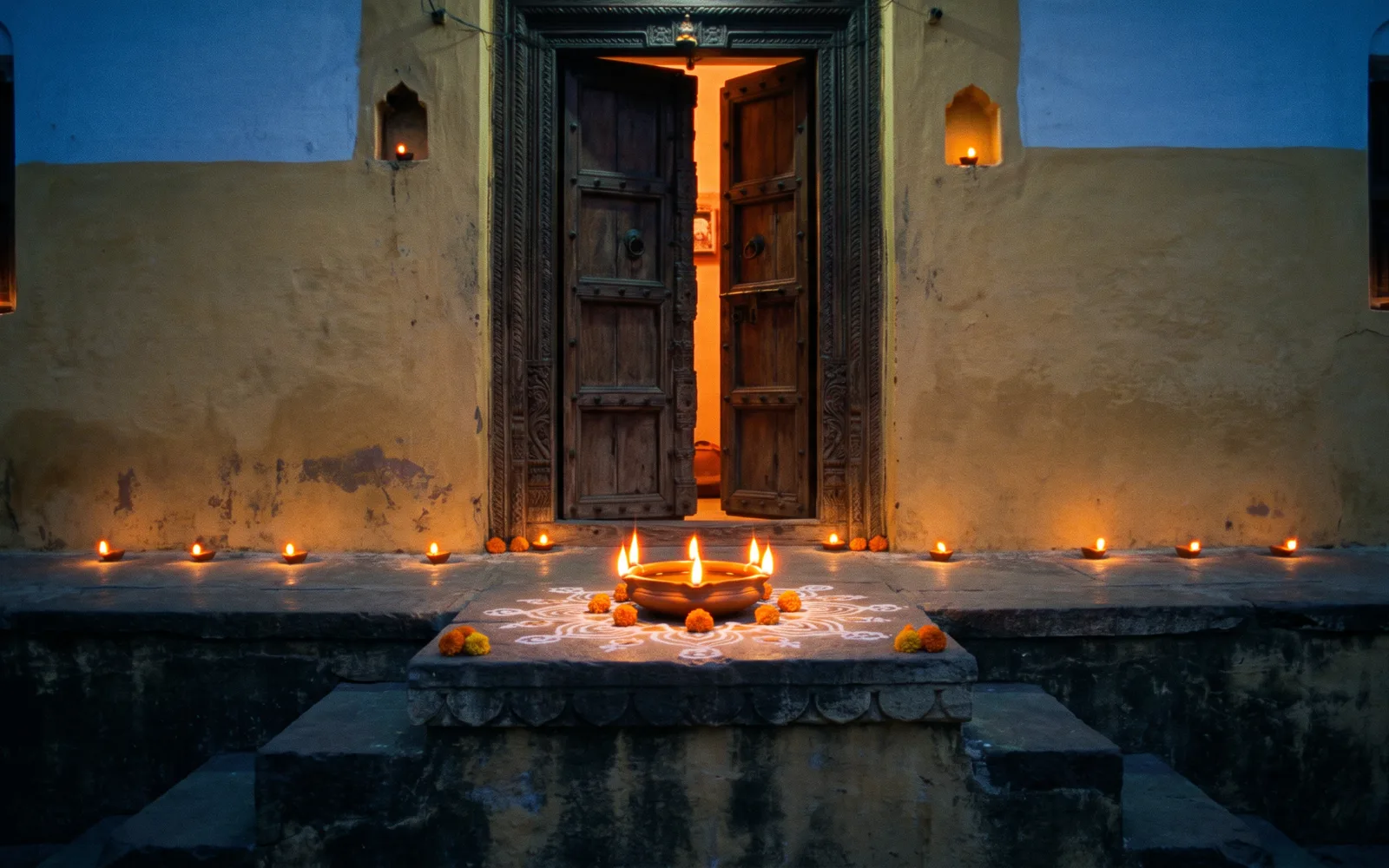 DiwaliChhoti Diwali 2026 Date (Chhoti Diwali Kab Hai): Narak Chaturdashi Puja and How Many Diyas to LightChhoti Diwali 2026 is on Saturday, 7 November, with the oil bath at dawn on the 8th. Puja vidhi, Kali Chaudas timing, and how many diyas to light.5 Nov 2026 · 7 min read
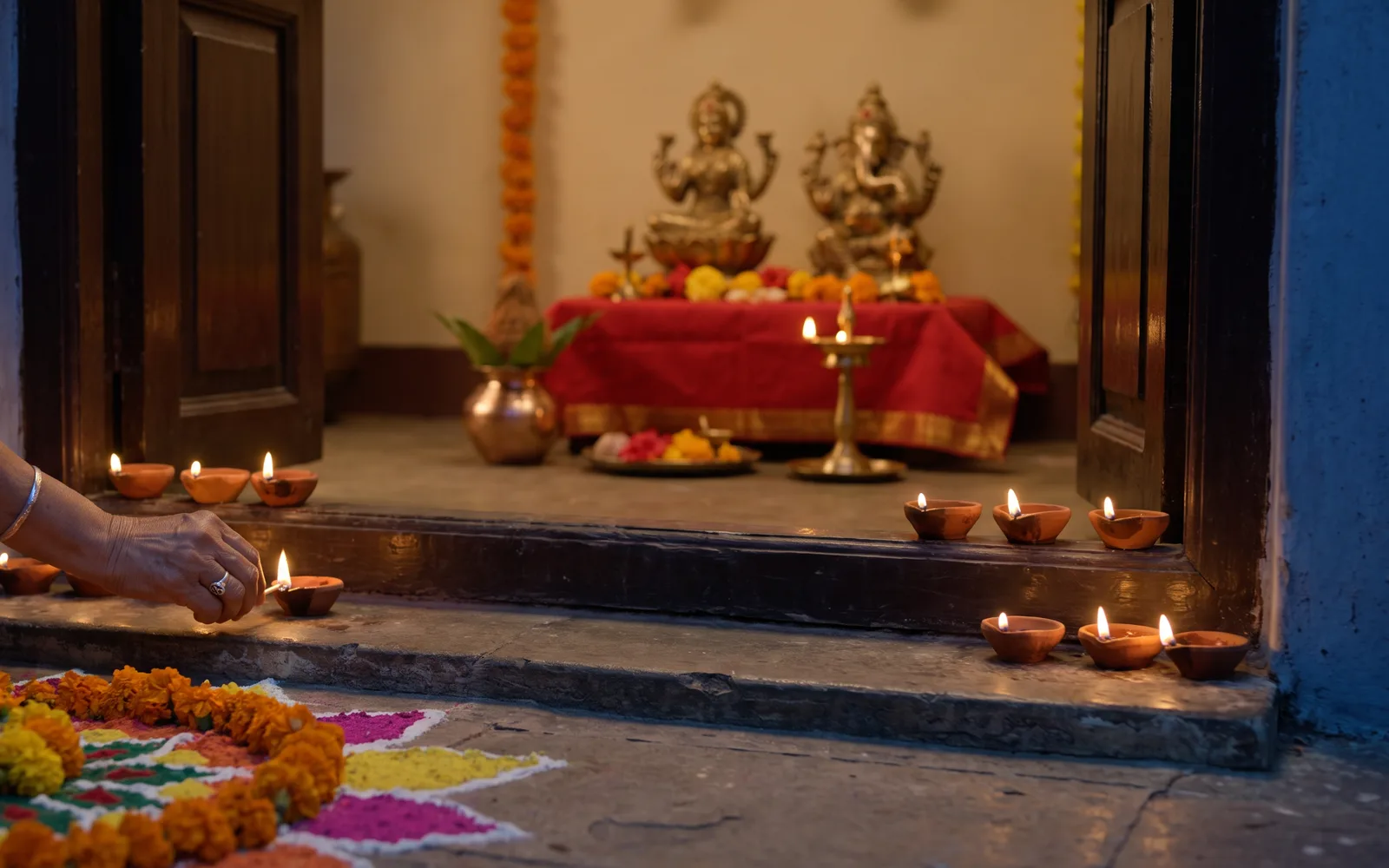 DiwaliDiwali Puja Time 2026: Lakshmi Puja Shubh Muhurat on 8 November, City by CityLakshmi Puja muhurat for 12 cities on Sunday, 8 November 2026, from Kolkata at 5:20 PM to Mumbai at 6:27 PM, with Pradosh Kaal, choghadiya and fallbacks.2 Nov 2026 · 8 min read
 DiwaliDiwali Date 2026 (Diwali Kab Hai): Full 5-Day Calendar from Dhanteras to Bhai DoojDiwali falls on Sunday, 8 November 2026. All five days from Dhanteras to Bhai Dooj, the tithi behind each date, and the Monday with no festival this year.27 Oct 2026 · 7 min read