
What Is Rudrabhishek? Meaning, Benefits and Why It Is Performed
Rudrabhishek kya hota hai? The meaning of Rudra and abhishek, what the Rudri recites, the offerings used, traditional benefits and when and where to perform it.
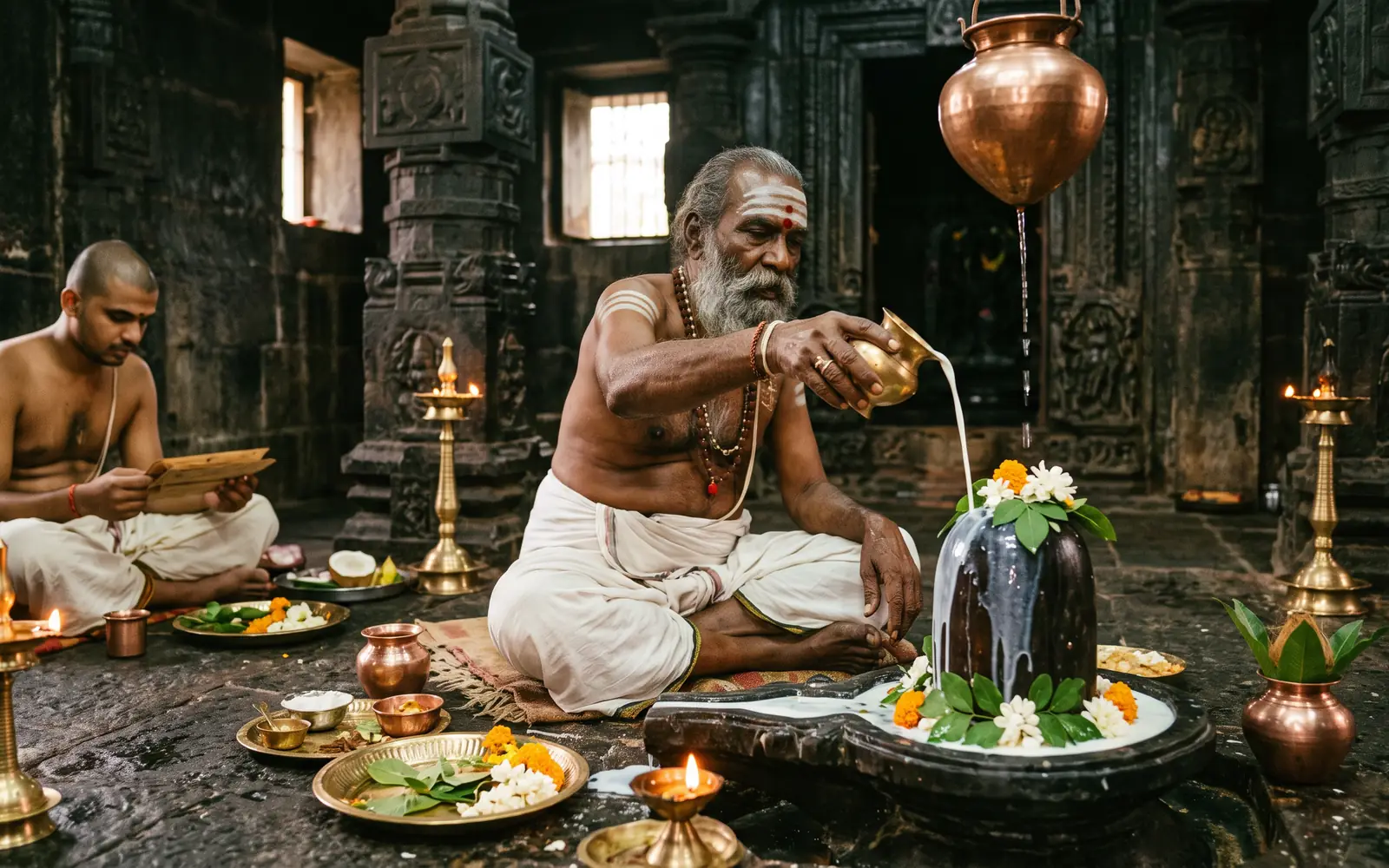
The Rudra hymn at the heart of this puja is among the oldest prayers still recited every day in India. Its verses sit in the Yajurveda, and priests at Somnath, Omkareshwar and Kashi recite them over the Shivling in much the same metre their predecessors used. What makes rudrabhishek distinctive is not the offering alone. It is the pairing of a continuous stream of liquid with a continuous stream of mantra, so that the Shivling is never dry and the chant never stops until the rite is complete.
What Is Rudrabhishek? (Rudrabhishek Kya Hota Hai)
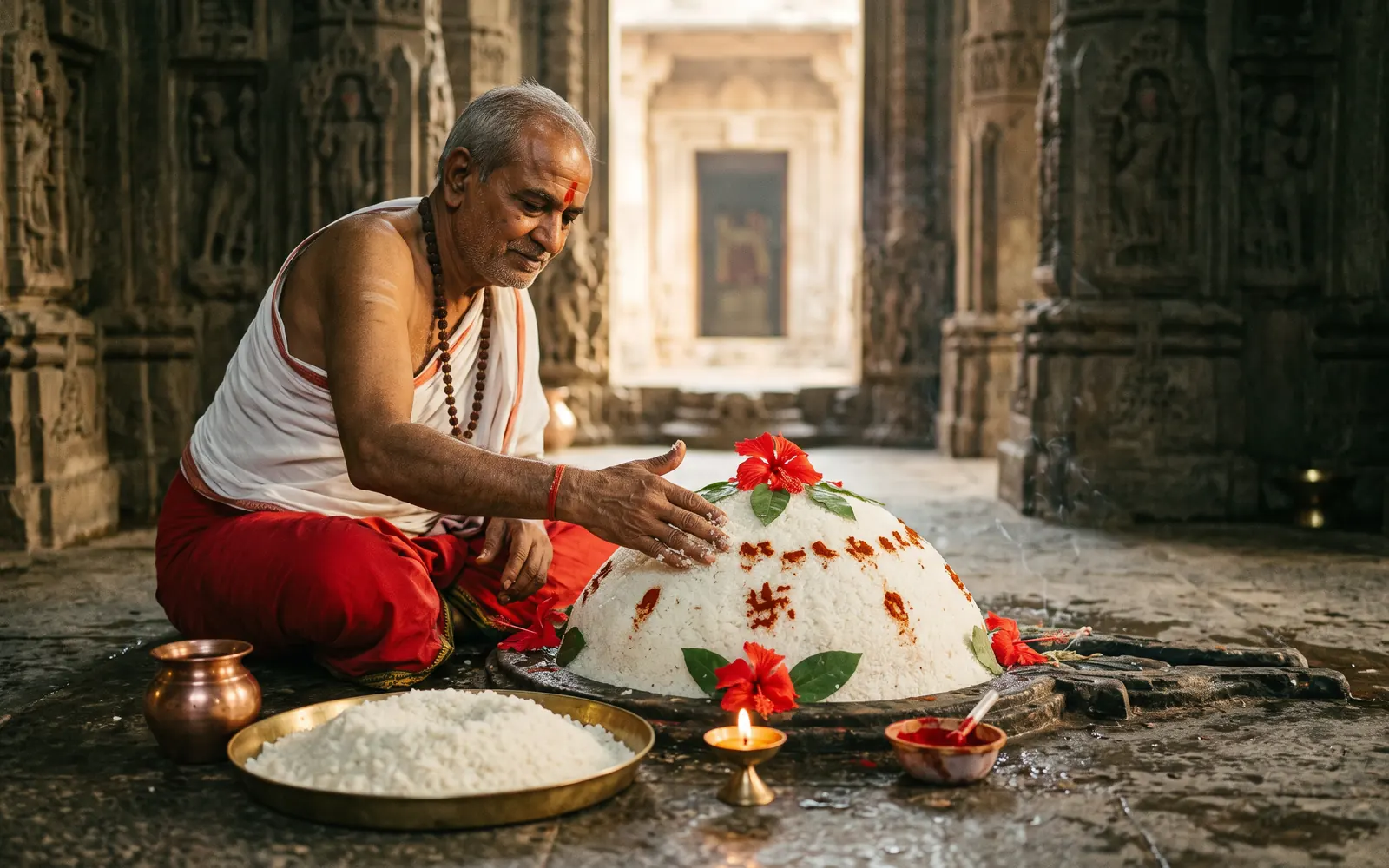
Rudrabhishek is a form of Shiva worship in which the Shivling receives abhishek while Shri Rudram or the Rudrashtadhyayi is recited. The word joins two parts: Rudra, the Vedic name for Shiva in his fierce, storm-like form, and abhishek, a ceremonial bath poured over a deity.
So if someone asks rudrabhishek kya hai, the short answer is: bathing the Shivling while praising Shiva as Rudra. A simple jal abhishek with "Om Namah Shivaya" is lovely devotion, but it is not rudrabhishek. The Rudra path is what turns an abhishek into a rudrabhishek.
Rudrabhishek Meaning in Hindi
Rudrabhishek in Hindi is written रुद्राभिषेक, from रुद्र (Rudra) and अभिषेक (abhishek). The rudrabhishek meaning in Hindi sources is usually given as "रुद्र रूप में शिव का अभिषेक", the abhishek of Shiva in his Rudra form. In everyday speech, families simply say "shiv ji ka rudrabhishek".
The name Rudra itself is often traced to the root "rud", to weep or to roar. One traditional reading says Rudra is the one who removes the causes of weeping (dukh). Another links the name to the roar of the storm. Both readings point to the same idea: the fierce form of Shiva that destroys suffering, approached with enough reverence that the fierceness turns protective.
Why Rudrabhishek Is Done
Why is rudrabhishek done when a simpler Shiva puja exists? Tradition gives three reasons.
The first is shanti. The Rudra hymn asks the fierce form of Shiva to turn his weapons away and bless instead. Devotees perform rudrabhishek when life feels turbulent, much as a household would make peace with a storm rather than fight it.
The second is graha dosh. Shiva is worshipped as the lord of all the grahas, so astrologers commonly suggest rudrabhishek for afflictions involving the Moon, Mars, Rahu, Ketu and Saturn. A kaal sarp dosh puja, for example, often builds on a rudrabhishek and adds a silver naag-naagin pair for Rahu and Ketu. For manglik dosh, the Mangal Bhaat rite at Mangalnath in Ujjain is itself offered over a Shivling.
The third is gratitude and sankalp. Families perform it on birthdays, griha pravesh, after a recovery, or in memory of ancestors. Households working through the signs of pitru dosha often pair a jal abhishek with pitru puja, as many do with the jal abhishek and pitru puja at Somnath.
Rudrabhishek ke Fayde and Benefits
Rudrabhishek ke fayde are described in tradition rather than promised. The rudrabhishek puja benefits that devotees and purohits speak of most often:
- A calmer mind. The Moon sits on Shiva's head, and Shiva worship is traditionally linked with mental steadiness.
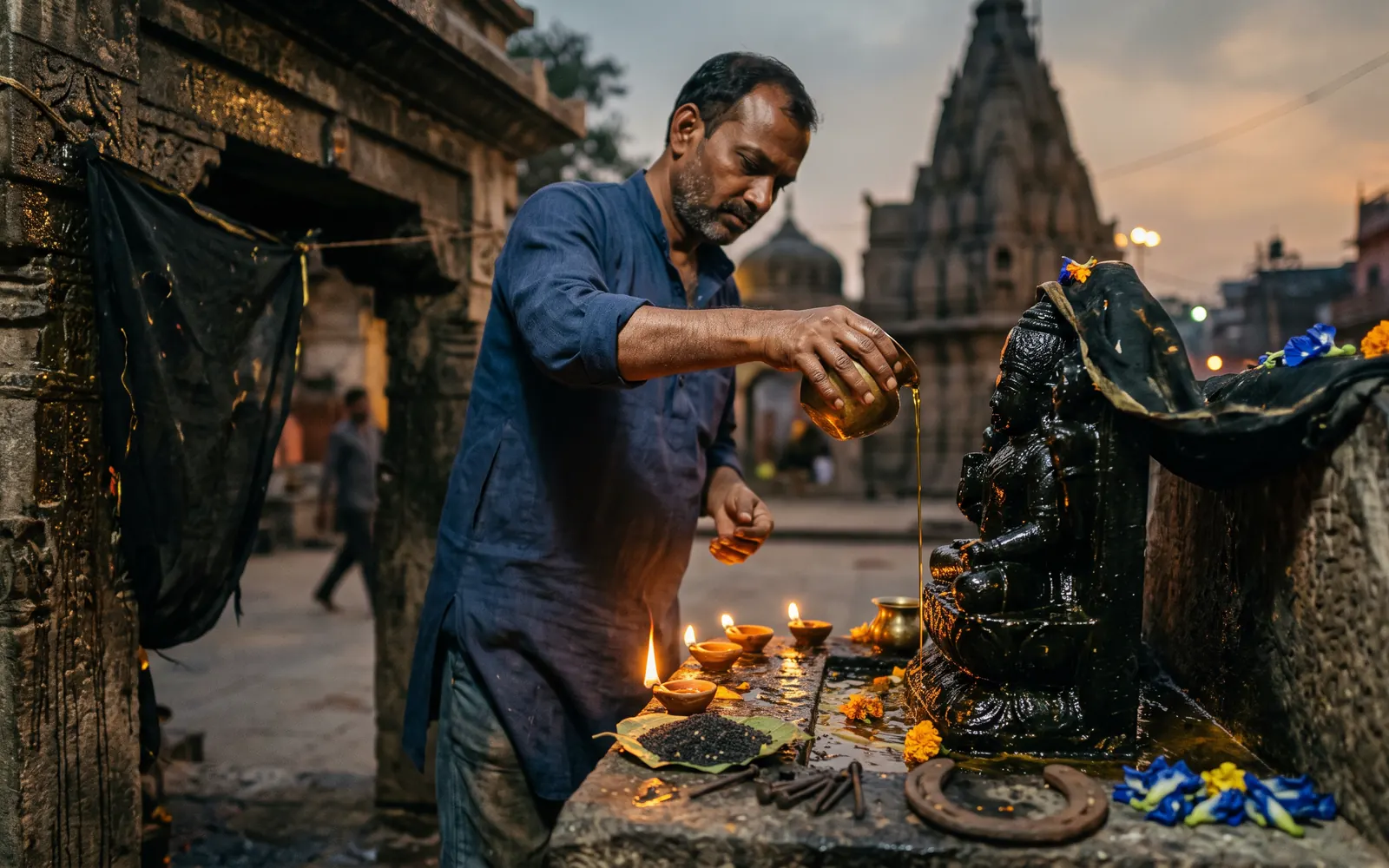
- Easing of graha pressure. Especially during shani sade sati, Rahu-Ketu periods or a weak Moon.
- Health and long life. Milk and ghee abhishek are traditionally associated with health and longevity.
- Family harmony. Shiva and Parvati are worshipped together as the ideal household, so couples often perform it jointly.
- Fulfilment of a sankalp. A rudrabhishek done with a stated wish is called sakam; one done purely as devotion is called nishkam.
Rudrabhishek karne se kya hota hai, in plain terms? It gives a person a long, structured stretch of prayer, focused on one intention, carried by mantra that has been chanted the same way for thousands of years. That focus is part of why devotees describe rudrabhishek benefits as felt, not just believed.
What Each Offering Is Traditionally Associated With
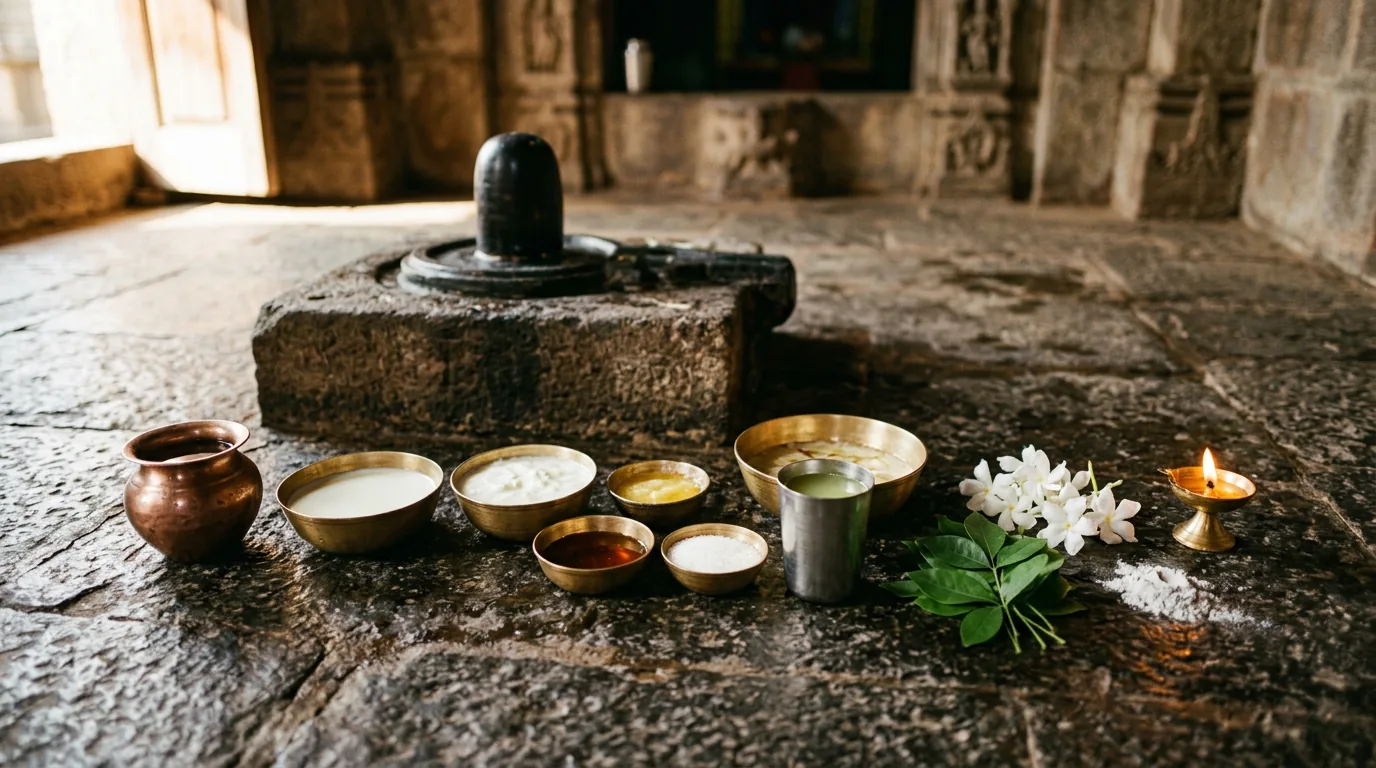
| Dravya (offering) | Traditional association |
|---|---|
| Jal or Gangajal | Purification, peace, general wellbeing |
| Cow's milk | Health, long life, a calm mind |
| Curd | Steadiness, family stability |
| Ghee | Strength, recovery, vitality |
| Honey | Sweetness in speech and relationships |
| Sugarcane juice | Prosperity and abundance |
| Panchamrit (milk, curd, ghee, honey, sugar) | All of the above together |
Shiv Rudrabhishek: The Rudri and the Offering
The recitation is the heart of shiv rudrabhishek, and two textual traditions are used.
Shri Rudram (Namakam and Chamakam). This hymn comes from the Krishna Yajurveda. The Namakam bows to Rudra again and again; its refrain is "namo" (salutation). The Chamakam asks for the good things of life, each line ending in "cha me" (and to me). South Indian and Maharashtrian temples commonly use this form, which is why it is often called Namak-Chamak rudrabhishek. At the Mamleshwar Jyotirlinga in Omkareshwar, the Namak Chamak rudrabhishek follows exactly this pattern.
Rudrashtadhyayi (the Rudri). This compilation from the Shukla Yajurveda has eight chapters (ashtadhyayi), with the Rudra chapter at its centre. North Indian and Kashi tradition generally uses the Rudri, and "rudri path" is the everyday name for it.
The sequence is the same in both. The purohit takes sankalp with your name and gotra, worships Ganesh and the navagraha, then begins the abhishek. Each liquid is offered while the chant continues, and the rite ends with shringar of the Shivling, bilva leaves, aarti and prasad.
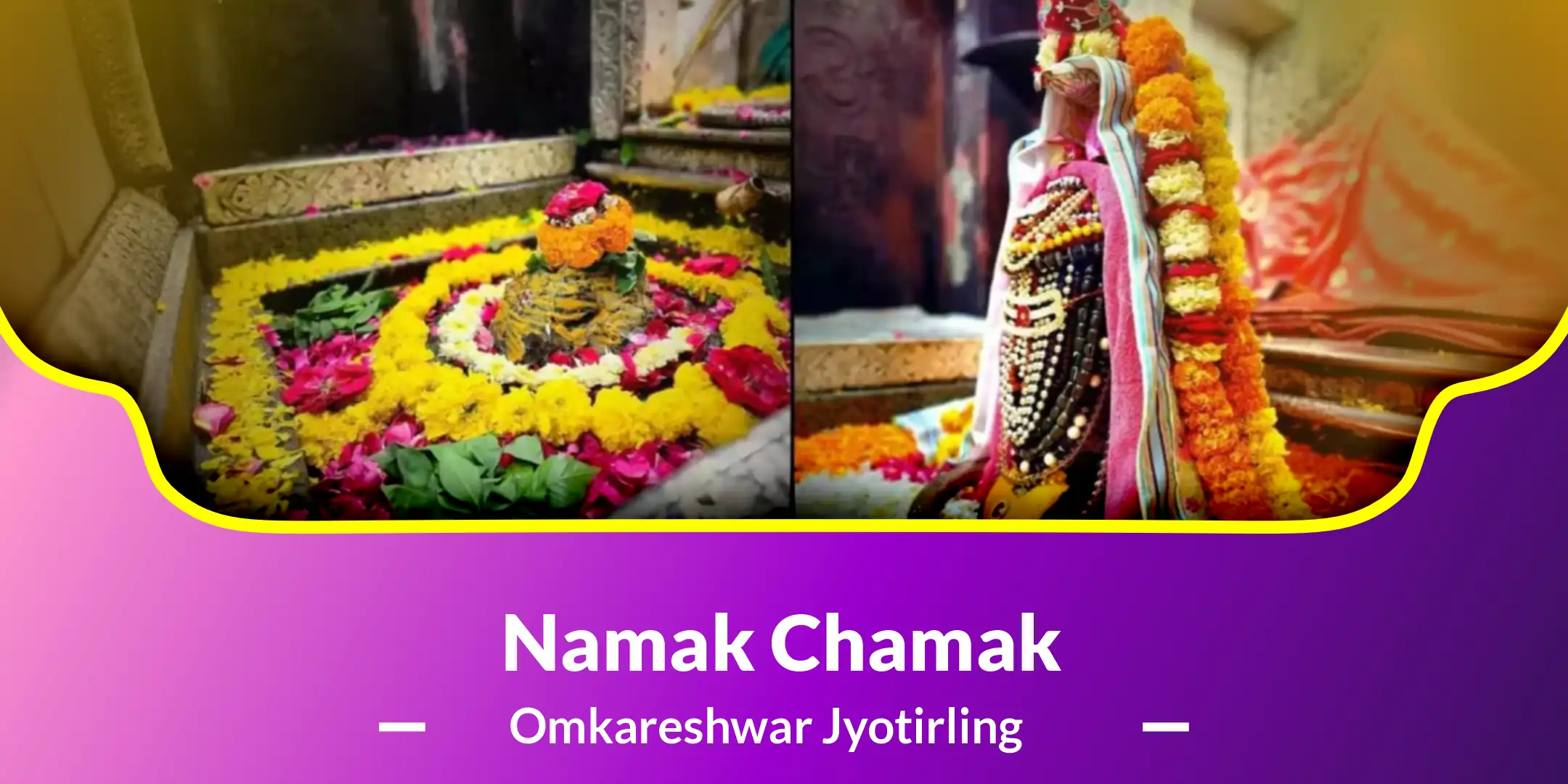 Shri Rudram, Namakam and ChamakamNamak Chamak RudrabhishekNamak Chamak rudrabhishek at Mamleshwar Jyotirlinga, Omkareshwar, with your name and gotra in the sankalp.Shri Mamleshwar Jyotirlinga, Omkareshwar Book this puja
Learn more: why is the Shivling never left dry during rudrabhishek?
A tradition linked to the churning of the ocean says Shiva held the halahal poison in his throat, and cooling liquids poured over him soothe its heat.
Many Shiva temples hang a jaladhari, a pot that drips water onto the linga day and night, for the same reason.
Rudrabhishek Puja: Where and When to Do It
When. Monday (Somvar) is Shiva's day. Pradosh, Masik Shivratri and Mahashivratri are the most sought-after dates, and the whole month of Shravan is traditionally considered ideal. The rudrabhishek puja time is usually the morning, though Pradosh rudrabhishek is done in the evening twilight.
Where. Rudrabhishek kaha karna chahiye? Tradition holds that the same rite carries more weight at a jyotirlinga or an ancient Shiva temple. These are among the temples where a rudrabhishek can be performed in your name:
| Temple | Location | Rudrabhishek offered |
|---|---|---|
| Somnath Jyotirlinga | Prabhas Patan, Gujarat | Somnath rudrabhishek |
| Ghrishneshwar Jyotirlinga | Ellora, Maharashtra | Ghrishneshwar rudrabhishek |
| Mamleshwar Jyotirlinga | Omkareshwar, Madhya Pradesh | Mamleshwar rudrabhishek |
| Bhimashankar Jyotirlinga | Pune district, Maharashtra | Bhimashankar rudrabhishek |
| Aundha Nagnath Jyotirlinga | Hingoli, Maharashtra | Aundha Nagnath rudrabhishek |
| Gauri Kedareshwar Mandir | Bengali Tola, Varanasi | Kedareshwar rudrabhishek |
| Mangla Gauri Mandir | Ram Ghat, Varanasi | Mangla Gauri rudrabhishek |
If you cannot travel, the purohits at these temples perform the abhishek and recitation with your name and gotra in the sankalp, and share a video of the rite.
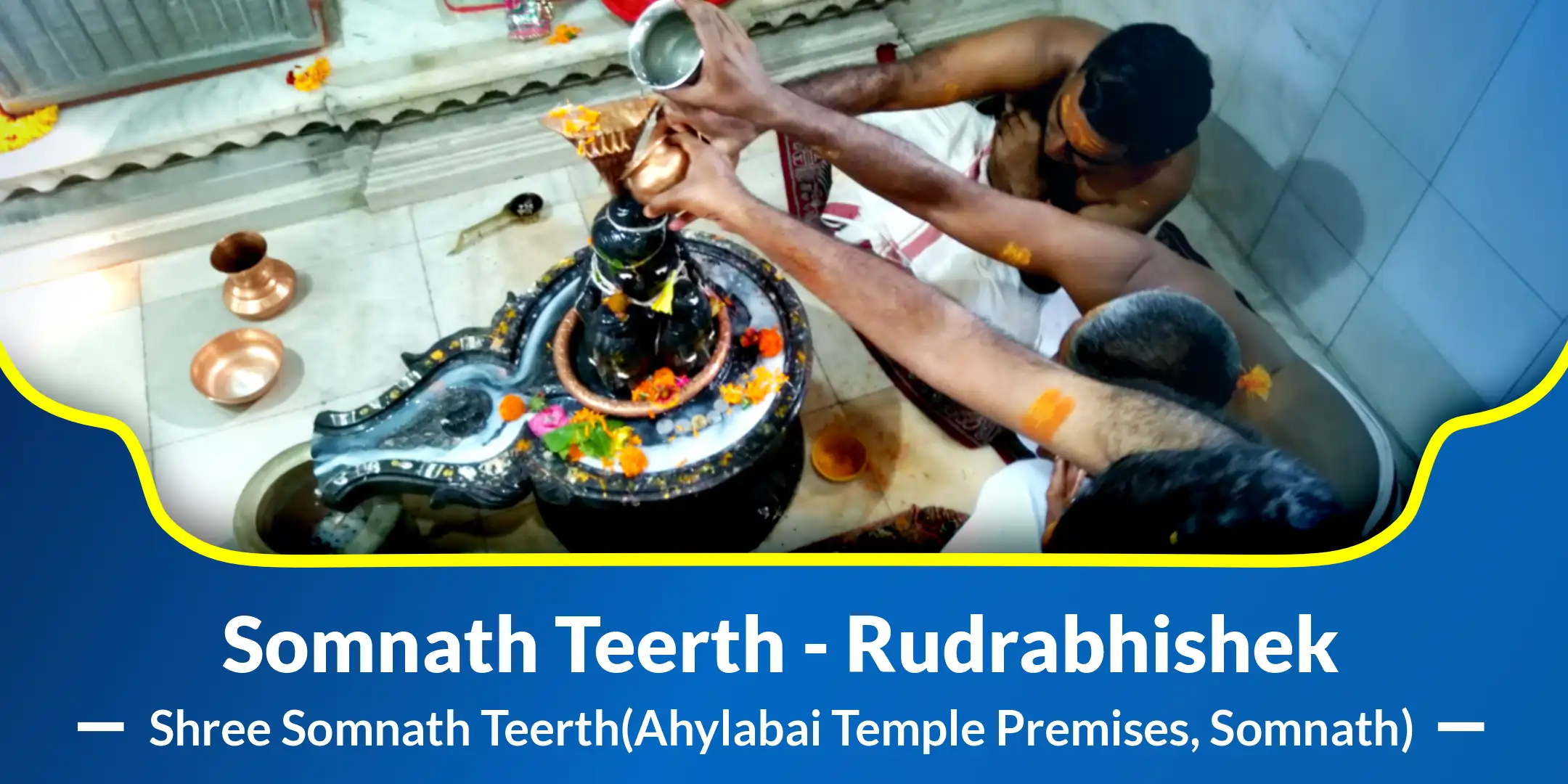 At the first jyotirlingaSomnath Teerth - RudrabhishekSomnath Teerth rudrabhishek at Prabhas Patan, Gujarat, performed in your name.Shri Somnath Jyotirlinga Teerth, Prabhas PatanBook this puja
Types of Rudrabhishek at a Glance
Rudrabhishek scales by how many times the Rudra hymn is recited. The names follow a simple multiplication by eleven, the number of the Rudras:
| Type | Recitations of Rudram | Usually performed by |
|---|---|---|
| Rudrabhishek (Ekadashini) | 11 | One or a few purohits |
| Laghu Rudra | 121 (11 × 11) | 11 purohits |
| Maha Rudra | 1,331 (11 × 121) | 11 purohits over several days, or more purohits |
| Ati Rudra | 14,641 (11 × 1,331) | A large group over many days |
Offerings vary too, from a simple jal abhishek to panchamrit, sugarcane juice or 108 dravyas. A laghu rudrabhishek with 11 pujaris at Ghrishneshwar is a common choice when a family wants the fuller rite without the days a Maha Rudra needs.
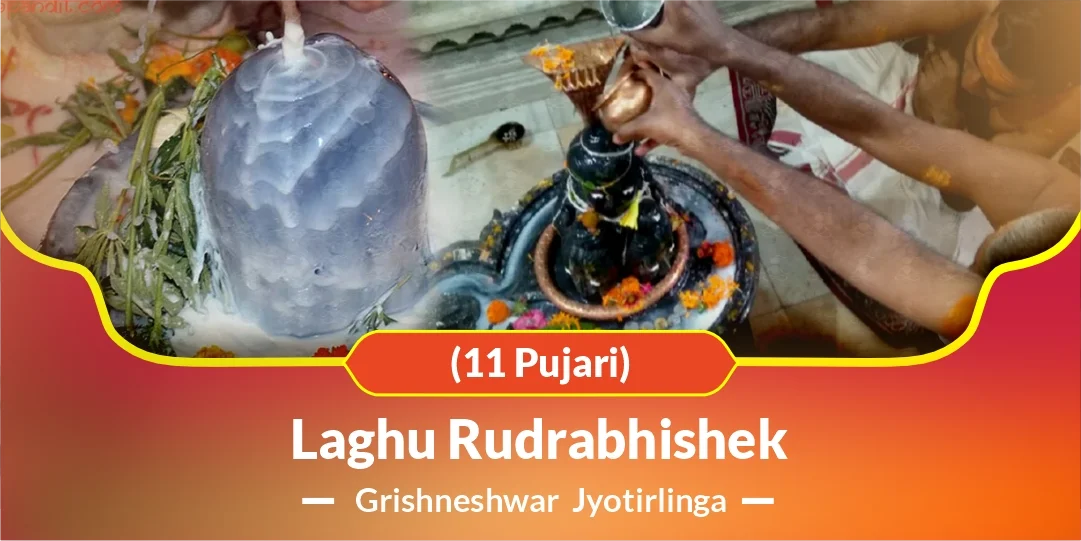 The fuller rite, in a single dayLaghu Rudrabhishek (11 Pujari)Laghu rudrabhishek with 11 pujaris at Ghrishneshwar Jyotirlinga, Ellora.Shri Ghrishneshwar Jyotirlinga, Ellora, MaharashtraBook this puja
For a Monday abhishek at home, the Shiv Kripa Puja Kosh holds the essentials for Shiva puja, so a simple jal or milk abhishek with "Om Namah Shivaya" can become a weekly habit between temple rites.
The Shiv Kripa Puja Kosh, a rudraksha mala and dhoop
 Shiv Kripa Puja KoshThe Shiv Kripa Puja Kosh from Ek Ishwar is a thoughtfully curated collection of 21 essential puja items designed to support traditional worship of Lord Shiva with devotion, simplicity, and authenticity.View product
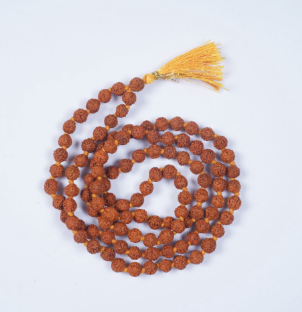 5 Mukhi Rudraksha Mala 108+1This 5 Mukhi Rudraksha Mala (108+1) is made with 4–5 mm finely selected beads, ideal for wearing or chanting (japa).View product
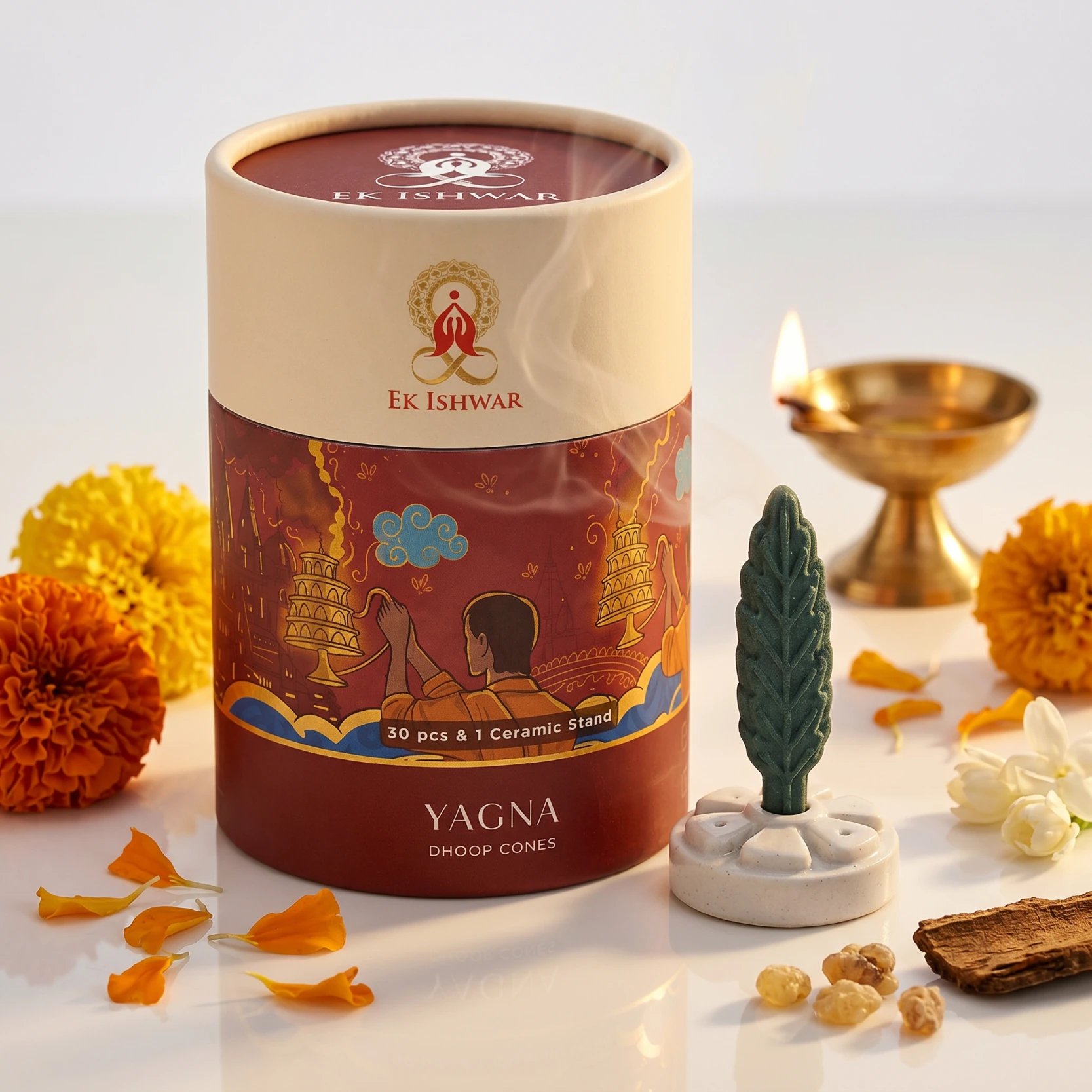 Yagna - Dhoop ConeThe Yagna Dhoop Cones from Ek Ishwar’s Sugandhik range are inspired by the sacred atmosphere of ancient yajnas, temple rituals, and the transformative energy of devotional fire offerings.View product
Pouring Water, Steadying the Mind
Strip rudrabhishek to its bones and it asks two things of a person: patience and attention. The liquid has to fall in an unbroken stream. The chant has to continue without hurry. Anyone who has sat through a full Rudri knows the rite slowly quietens the people around it, not just the purohit.
That is the habit it leaves behind. Shiva in his Rudra form is the force that breaks things down, and the Rudra hymn spends most of its length asking that force to be gentle. Devotees who carry that request into their own temper, toward family, colleagues and animals, take the abhishek home with them.
Families who want a rudrabhishek performed at Somnath, Omkareshwar or Kashi in their name, without the journey, can arrange it through Ekishwar.
Book a rudrabhishek
Somnath Teerth - RudrabhishekPrabhas Patan · Somnath JyotirlingaNamak Chamak RudrabhishekOmkareshwar · Namak ChamakLaghu Rudrabhishek (11 Pujari)Ellora · Laghu Rudra, 11 pujaris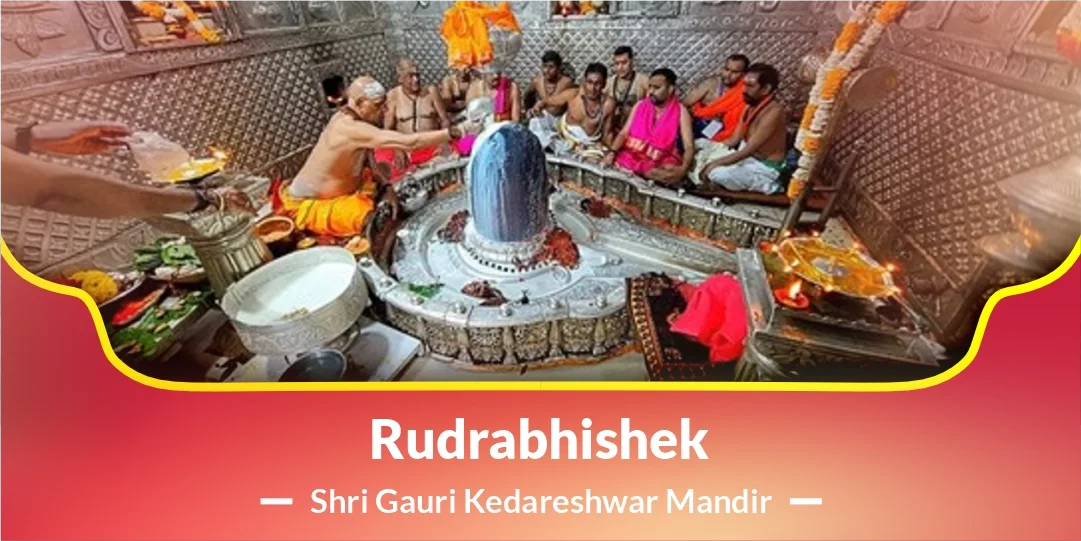 RudrabhishekKashi · Gauri Kedareshwar
Pujas for you
Swipe · 4 pujas- Somnath Teerth - RudrabhishekShri Somnath Jyotirlinga Teerth, Prabhas PatanBook now
- Namak Chamak RudrabhishekShri Mamleshwar Jyotirlinga, Omkareshwar Book now
- Laghu Rudrabhishek (11 Pujari)Shri Ghrishneshwar Jyotirlinga, Ellora, MaharashtraBook now
- RudrabhishekShri Gauri Kedareshwar Mandir, Bengali Tola, VaranasiBook now
FAQs on Rudrabhishek
- What is rudrabhishek puja in simple words?
- It is the ritual bathing of the Shivling with water, milk and other offerings while purohits chant the Rudra hymn from the Yajurveda. It is performed for peace, health and the easing of graha dosh.
- What is the difference between rudrabhishek and jal abhishek?
- A jal abhishek pours water on the Shivling with any Shiva mantra. A rudrabhishek requires the Rudra path, either Shri Rudram or the Rudrashtadhyayi, recited throughout the abhishek.
- What is the best time for rudrabhishek?
- Monday mornings, Pradosh evenings, Masik Shivratri, Mahashivratri and any day in Shravan are considered the best time for rudrabhishek. For a wish-based rudrabhishek on other days, purohits check Shiv vas first.
- Can women perform rudrabhishek?
- Yes. Women commonly perform or sponsor rudrabhishek, and couples often sit for it together. The Vedic recitation is usually led by trained purohits.
- How long does a rudrabhishek take?
- A standard rudrabhishek with 11 recitations takes about one and a half to two hours. A laghu rudra with 11 purohits takes most of a day.
- Can rudrabhishek be done at home?
- Yes. A simple abhishek with "Om Namah Shivaya" can be done at home on any Monday. A full rudrabhishek at home needs a purohit who can recite the Rudri, or devotees can have it performed at a temple in their name.
- Rudrabhishek
- Rudrabhishek kya hota hai
- Rudrabhishek meaning in Hindi
- Rudrabhishek ke fayde
- Shiv rudrabhishek
- Laghu rudrabhishek
- Namak Chamak rudrabhishek
- Best time for rudrabhishek
Read next
All guides →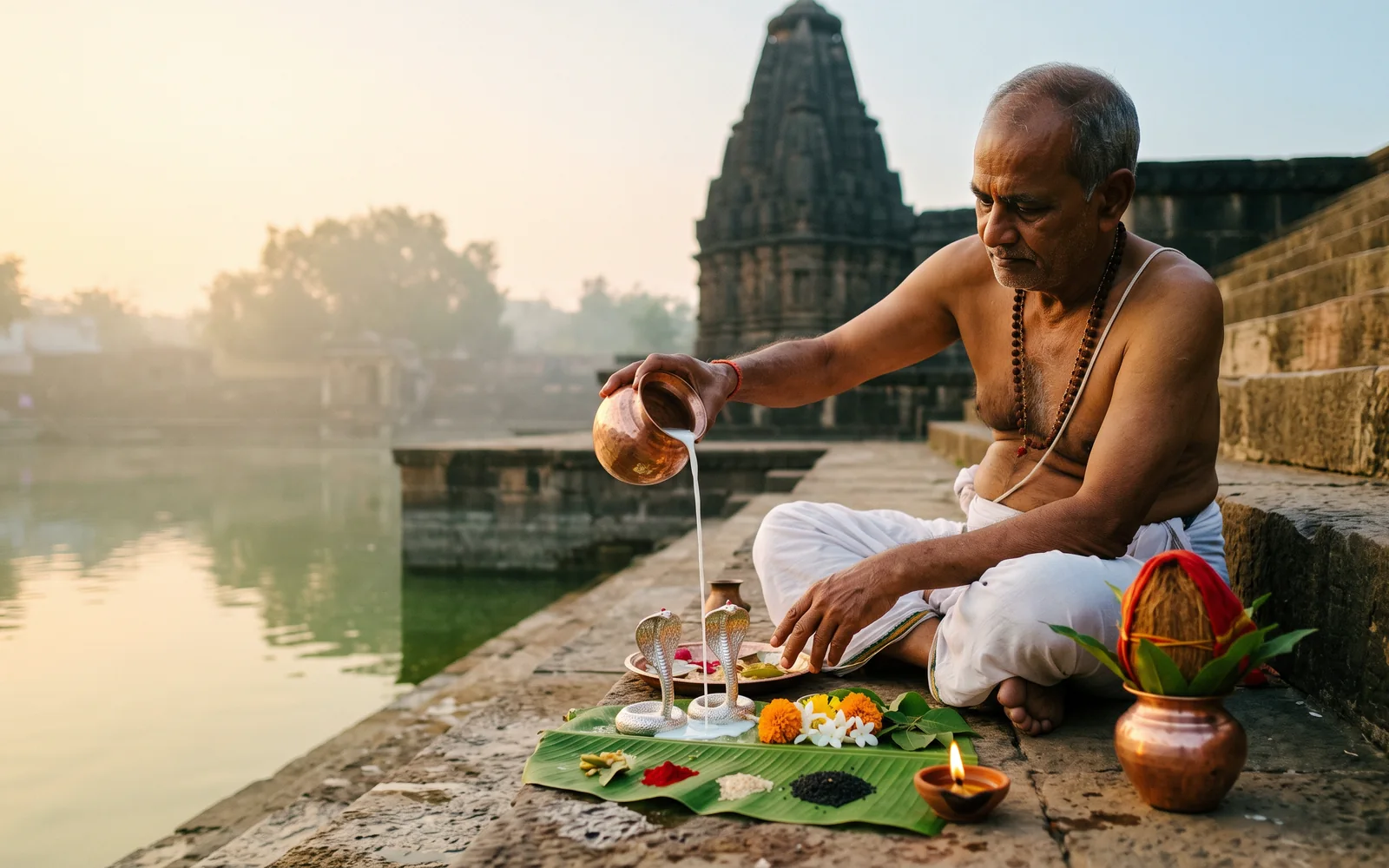 RitualsKaal Sarp Dosh Puja: Vidhi, Best Places, Samagri and CostHow kaal sarp dosh puja is performed, step by step. Compare Trimbakeshwar, Ujjain and Kashi, see the samagri list, what decides cost, and how online puja works.20 Nov 2026 · 10 min read
 RitualsShani Sade Sati: Which Rashis Are Affected, the Three Phases and Upay (Shani ki Sade Sati)Shani ki sade sati kis rashi par hai? Kumbh, Meen and Mesh are in sade sati in 2026. See each rashi's phase, exact end date, lakshan and traditional upay.25 Nov 2026 · 10 min read
 RitualsManglik Dosh: Meaning, How to Check It, Anshik and Nimn Manglik (Mangal Dosh Kya Hota Hai)Manglik dosh kya hota hai? Learn which houses create mangal dosh in kundli, how to check it from lagna, Moon and Venus, and what anshik and nimn manglik mean.24 Nov 2026 · 10 min read