
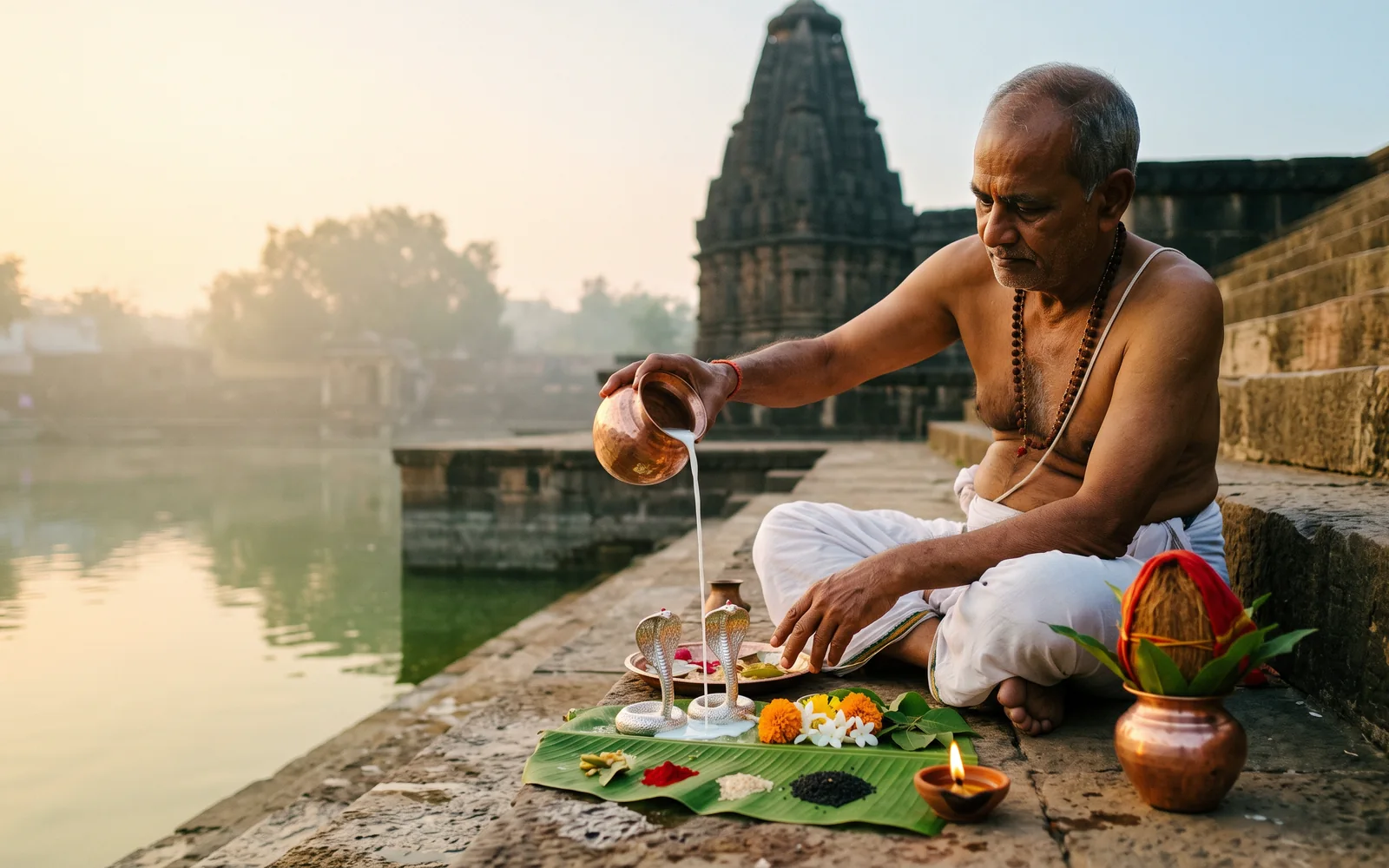
Kaal Sarp Dosh Puja: Vidhi, Best Places, Samagri and Cost
How kaal sarp dosh puja is performed, step by step. Compare Trimbakeshwar, Ujjain and Kashi, see the samagri list, what decides cost, and how online puja works.
Kaal sarp dosh puja is a shanti ritual for a kundli where all seven grahas sit between Rahu and Ketu. A purohit takes your sankalp, worships Ganesh, Shiva and the naga devatas, chants Rahu–Ketu mantras and usually ends with a havan. It runs a few hours, at a Shiva kshetra or on your behalf online.
A kundli with every graha caught between Rahu and Ketu looks dramatic on paper, and the name does not help: kaal for time, sarp for serpent. Yet the puja that answers it is one of the quietest rituals in the Shaiva tradition. No animal offering, no all-night vigil, no promise of overnight change. A pair of small silver snakes, a kalash of water, a few thousand repetitions of two short mantras, and a fire. Families have travelled to Nashik, Ujjain and Kashi for generations to have it done, and the reasons they pick one place over another say a lot about what the ritual is really for.
If an astrologer has already found the dosh in your chart, the next question is practical: what actually happens in the puja, and where it is best done.
What Happens in a Kaal Sarp Dosh Puja
At its core, kaal sarp dosh puja (some families write it kaal sarp dosh pooja) is a graha shanti ritual with a naga puja at the centre. Rahu is traditionally pictured as the serpent's head and Ketu as its tail, so the purohit worships the naga devatas as the living form of that axis, then asks Shiva, who wears the serpent Vasuki around his neck, to steady it.
Three things set it apart from a regular Rudrabhishek:
- The naag–naagin pratima. A small pair of silver snakes receives the abhishek and puja, then goes into flowing water or a temple kund at the end.
- Rahu–Ketu jaap. The purohit, or a group of them, chants the beej mantras of Rahu and Ketu a fixed number of times. Full vidhis in many traditions go up to 18,000 for Rahu and 17,000 for Ketu. Shorter versions use 108 or 1,008.
- Your sankalp. Your name, gotra and the reason for the puja are spoken at the start. Everything that follows is offered on your behalf.
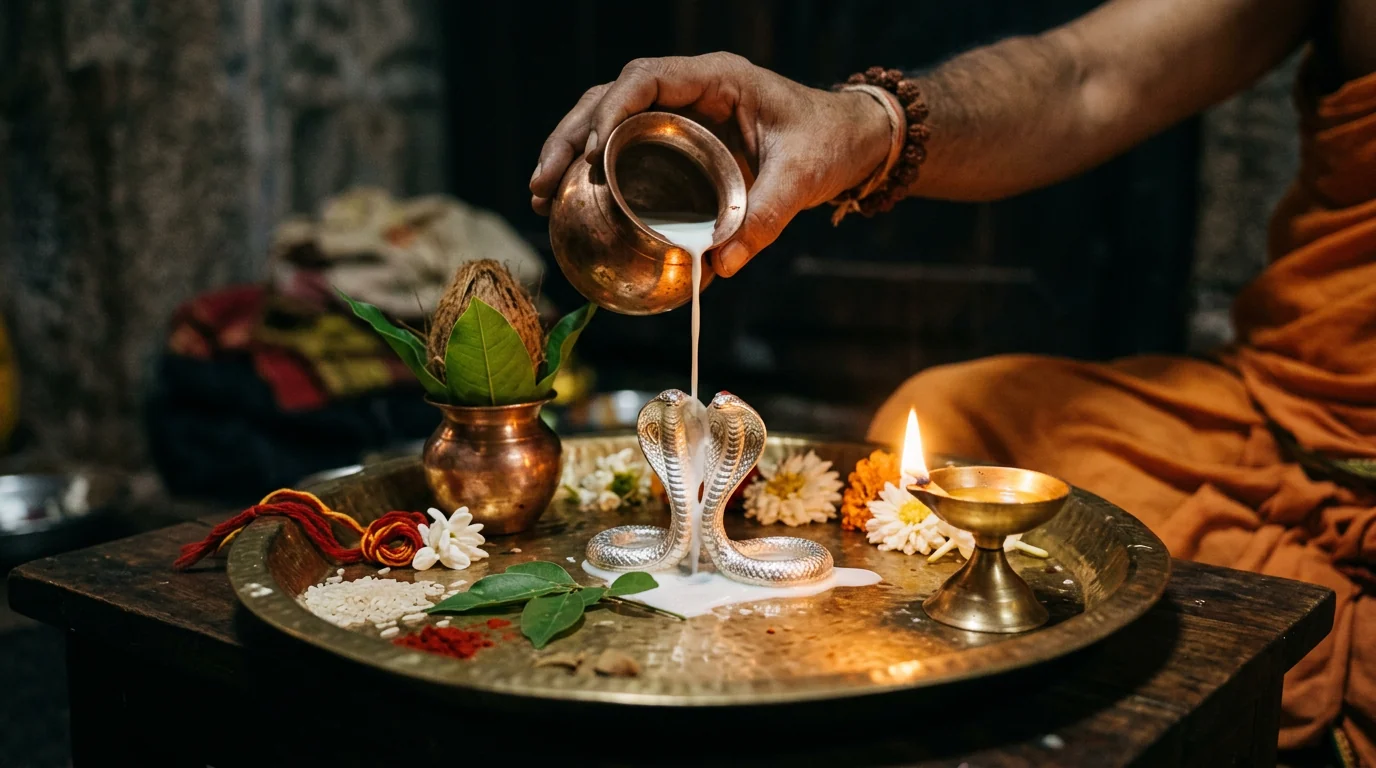
The nivaran in "kaal sarp dosh nivaran puja" means easing or pacifying. No authentic purohit will tell you a single sitting erases a graha placement; the puja is a prayer for steadiness through the periods the chart flags.
Best Place for Kaal Sarp Dosh Puja: Trimbakeshwar, Ujjain or Kashi
Ask where kaal sarp dosh puja kaha hoti hai, and three names come up almost every time. Each carries its own reasoning, and none is "the only valid one".
| Kshetra | Why devotees choose it | What the puja centres on | Good to know |
|---|---|---|---|
| Trimbakeshwar, Nashik (Maharashtra) | A jyotirlinga at the source of the Godavari, long tied to graha and pitru shanti rites | Naga puja, Rahu–Ketu jaap, havan, often with a dip at Kushavarta kund first | The rite happens in the Trimbak kshetra, not inside the jyotirlinga sanctum |
| Mangalnath, Ujjain (Madhya Pradesh) | Traditionally seen as the birthplace of Mangal on the Kshipra; a centre for graha shanti | Sankalp, Ganapati pujan, naga pujan, Rahu–Ketu mantras, havan and aarti | Ujjain is also the city of Mahakal, which adds weight for Shiva devotees |
| Markandey Mahadev, Kaithi (Varanasi) | The shrine where, in the Puranic story, Shiva shielded young Markandeya from Yama | Rahu–Ketu shanti woven into Shiva worship | Sits where the Gomti meets the Ganga, about 30 km from Kashi |
Trimbakeshwar is the name most people know. One detail is worth getting right: the Trimbakeshwar temple's own priests have said publicly that the kaal sarp puja is never performed inside the temple itself (Free Press Journal, 10 September 2025). It is done in the wider Trimbak kshetra by the town's purohits. Any listing that promises a seat beside the jyotirlinga for this rite is describing something that does not happen.
Mangalnath in Ujjain draws families who see Rahu–Ketu trouble and Mangal trouble showing up together in a chart, because the same temple handles both. Markandey Mahadev in Kaithi suits devotees who connect with the Shiva side of the ritual. Markandeya's story is about time itself being held back, which sits naturally beside a dosh named after kaal.
Other Shiva kshetras perform it too. Ghrishneshwar near Ellora and Aundha Nagnath in Maharashtra, both jyotirlingas, have their own kaal sarp shanti traditions, and Aundha Nagnath carries the naga connection in its very name.
Learn more: does the place matter more than the sankalp?
Most purohits put it the other way round. The kshetra adds sanctity, but a puja without a clear sankalp, with your name and gotra, is incomplete anywhere.
The same logic runs through pitru rites, which is why the best places for pitru dosh puja are chosen by tradition rather than ranking.
Kaal Sarp Dosh Puja Vidhi – Step by Step
The kaal sarp dosh puja vidhi below follows the order most Shaiva purohits use. Kshetras add or trim steps, so treat it as a map, not a script.
- Preparation (the day before). Many purohits ask for a sattvik meal the previous evening and a fast on the puja day until it ends. At Trimbak, devotees usually bathe at Kushavarta first and wear fresh clothes, often white.
- Sankalp. The purohit states the date, place, your name, gotra and purpose. If you are not present, a family member or the purohit takes it on your behalf.
- Ganapati pujan and kalash sthapana. Ganesh is worshipped first so the ritual proceeds without obstruction, and a kalash of water is set up as the seat of the devatas.
- Navagraha puja. All nine grahas receive a short invocation, because the dosh concerns their placement as a group, not Rahu and Ketu alone.
- Naag–naagin puja. The silver pair receives abhishek with milk, water and panchamrit, then flowers, akshat and kumkum.
- Rahu–Ketu jaap. The beej mantras are chanted the agreed number of times:
- Rahu: ॐ भ्रां भ्रीं भ्रौं सः राहवे नमः (Om bhraam bhreem bhraum sah raahave namah), a salutation to Rahu.
- Ketu: ॐ स्रां स्रीं स्रौं सः केतवे नमः (Om sraam sreem sraum sah ketave namah), a salutation to Ketu.
- Rudrabhishek or Shiva puja. Many vidhis add an abhishek on a Shivling with Rudra path or the Mahamrityunjaya mantra.
- Havan. Ahutis go into the fire with the same mantras, closing with a purnahuti.
- Visarjan and aarti. The naag–naagin pratima goes into flowing water or the kshetra's kund, followed by aarti and prasad.
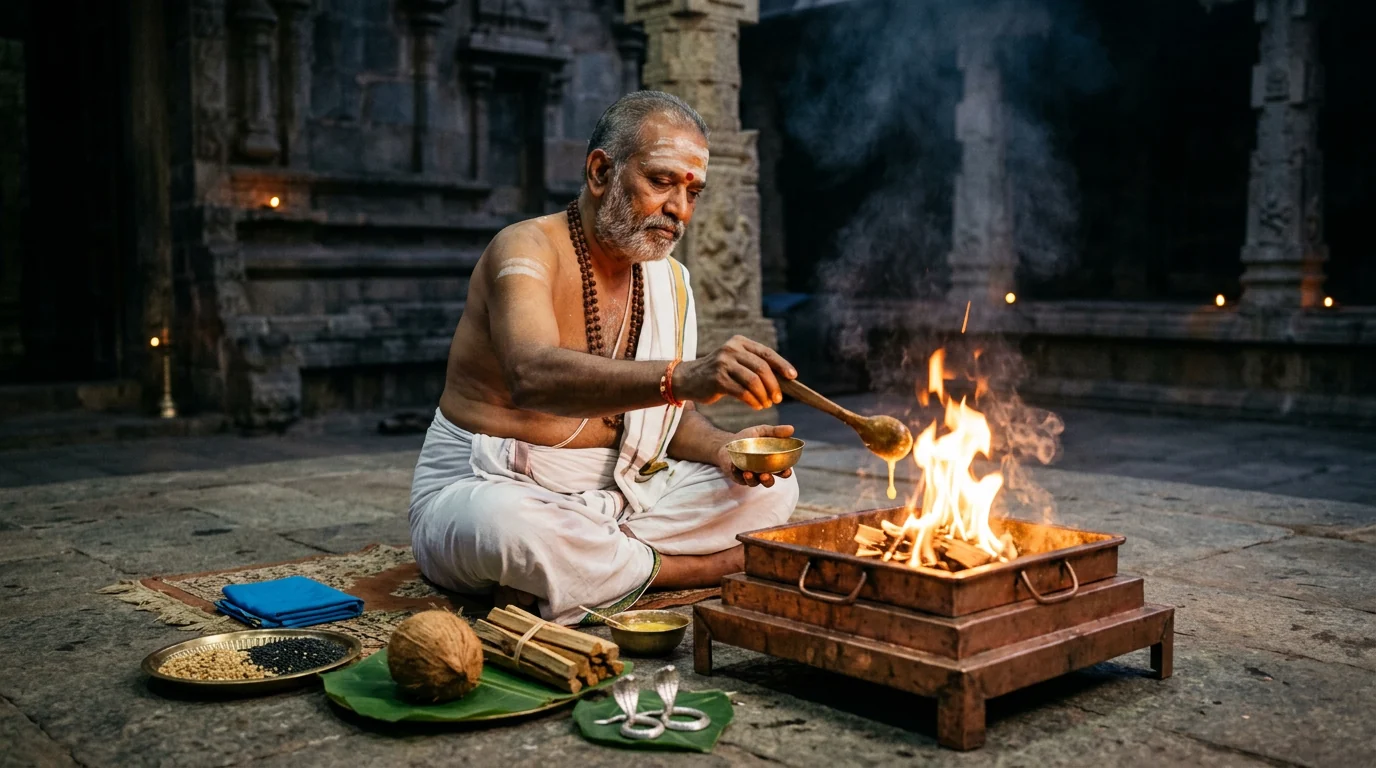
That is how the kaal sarp dosh ki puja kaise hoti hai question gets answered in practice: about the same shape as any graha shanti, with the naga worship as its distinct centre.
Can't travel to the kshetra? Ekishwar arranges the Mangalnath kaal sarp puja and the Markandey Mahadev puja at the temple, with your name and gotra in the sankalp and a video of the ritual afterwards.
 When Rahu–Ketu and Mangal show up togetherMangalnath Vishesh Kaal Sarp Dosh Shanti PujaKaal sarp dosh shanti at Mangalnath, Ujjain, on the Kshipra.Mangalnath Mandir, UjjainBook this puja
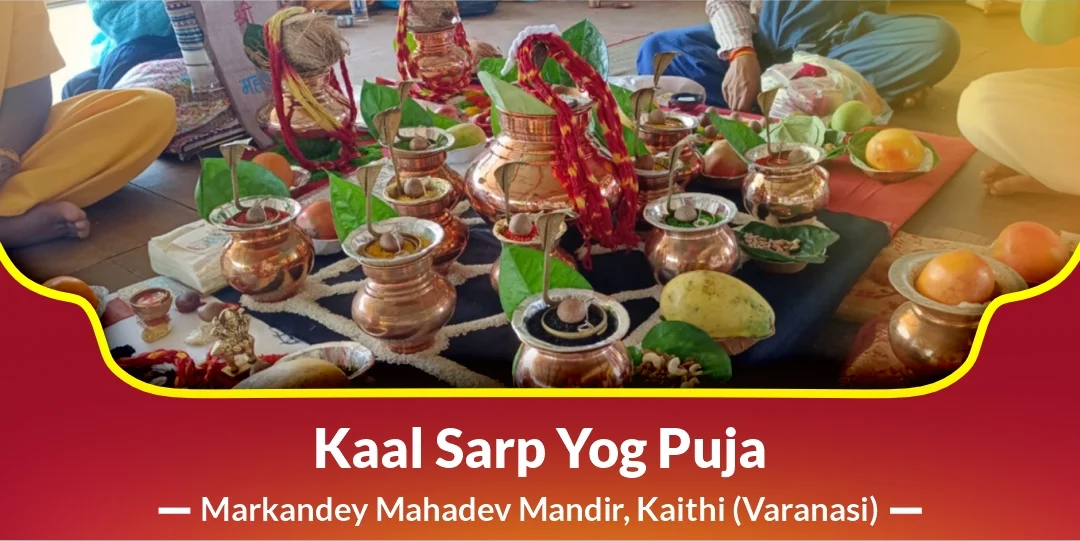 For the Shiva side of the ritualKaal Sarp Dosh PujaRahu–Ketu shanti with Shiva worship at Markandey Mahadev, Kaithi, where the Gomti meets the Ganga.Shri Markandey Mahadev Mandir, Kaithi, VaranasiBook this puja
Kaal Sarp Dosh Puja Samagri List
When the puja is done at a kshetra, the purohit's dakshina usually covers samagri. If you are preparing a home Rahu–Ketu shanti or want to know what goes into the temple ritual, this kaal sarp dosh puja samagri list covers it.
| Use | Items |
|---|---|
| For the naga puja | Silver naag–naagin pair, raw milk, Ganga jal, panchamrit (milk, curd, ghee, honey, sugar) |
| For the sankalp and kalash | Copper or brass kalash, mango leaves, coconut, mauli (red thread), akshat, roli or kumkum |
| For Shiva worship | Bel patra, white flowers, durva, sandalwood paste, janeu |
| For Rahu–Ketu | Black til, whole black urad, a blue or black cloth, coconut |
| For the havan | Samidha (mango wood), cow ghee, havan samagri, a havan kund or tray |
| For aarti and daily offering | Ghee diya, dhoop and incense, fruits, sweets for prasad, betel leaves and supari |
Dhoop and incense are the one part of this list you will use again long after the puja ends. A slow-burning dhoop cone suits the morning Shiva or Rahu mantra practice many families keep up afterwards, and a Shiva puja kit gathers the basics for a home abhishek in one box.
Yagna dhoop cones and the Shiv Kripa Puja Kosh
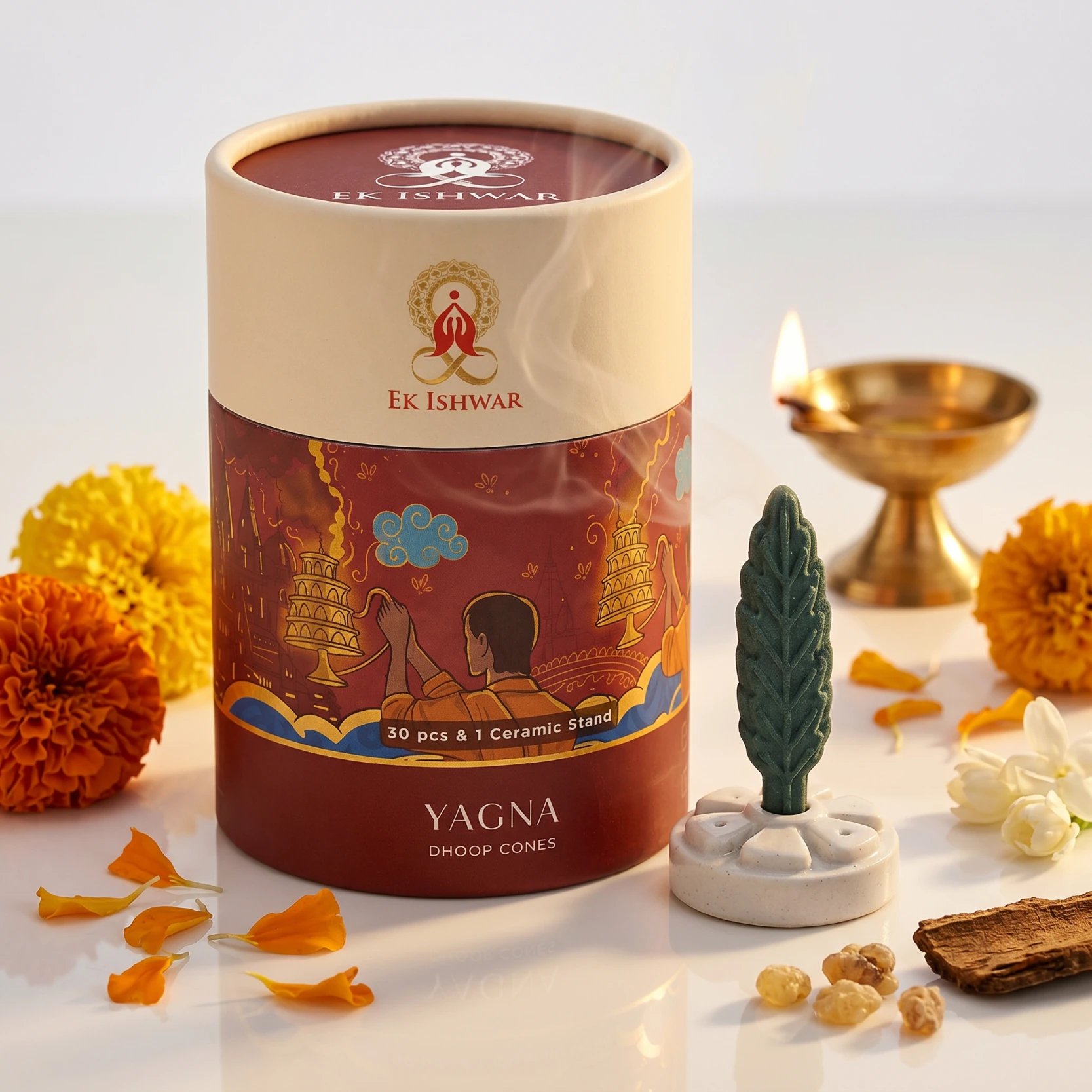 Yagna - Dhoop ConeThe Yagna Dhoop Cones from Ek Ishwar’s Sugandhik range are inspired by the sacred atmosphere of ancient yajnas, temple rituals, and the transformative energy of devotional fire offerings.View product
 Shiv Kripa Puja KoshThe Shiv Kripa Puja Kosh from Ek Ishwar is a thoughtfully curated collection of 21 essential puja items designed to support traditional worship of Lord Shiva with devotion, simplicity, and authenticity.View product
Kaal Sarp Dosh Puja Cost – What Decides It
There is no fixed rate for kaal sarp dosh puja cost, and a single number would mislead you more than help. These six things move it:
- The kshetra. Jyotirlinga towns with high demand sit at the upper end.
- Individual or group sankalp. In a group puja, several families share one ritual, each with their own sankalp. An individual puja has the purohit's full attention for your sankalp alone.
- Jaap count and number of purohits. 108 repetitions take minutes; 18,000 for Rahu needs several purohits or several hours.
- Havan and Rudrabhishek. Each addition lengthens the ritual and adds samagri.
- The silver pratima. Its weight changes the price.
- Travel and stay. For an in-person puja, this often costs more than the ritual itself.
Ask any provider, online or on the ground, four plain questions before paying: which kshetra and which purohit, whether your sankalp is individual or shared, how many jaap, and whether you receive a video.
Can Kaal Sarp Dosh Puja Be Done Online?
Yes. The tradition already allows it: a sankalp can be taken on someone's behalf, which is how families have long had pujas performed for a relative abroad or an elder too unwell to travel. A kaal sarp dosh puja online simply moves the booking and the proof, not the ritual. The purohit still sits at the kshetra, still speaks your name and gotra, still performs every step above.
What you lose is the travel, the dip at the kund and the experience of standing there. What you keep is the ritual itself. For many families, especially those living abroad or caring for someone at home, that trade makes sense.
If you are dealing with a pitru dosh and a kaal sarp dosh in the same chart, the two are often handled separately. The pitru dosha remedies cover the ancestral side.
Kaal Sarp Dosh Puja Benefits (What Devotees Believe)
The kaal sarp dosh puja benefits devotees describe are less about events and more about steadiness:
- A sense of having acted. Many people carry a vague worry once an astrologer names the dosh. Completing the puja gives that worry a full stop.
- Discipline. The fasting, the jaap and the weeks of mantra practice that often follow build a routine that steadies the mind.
- A Shiva connection. For many, the puja becomes the start of a longer Monday or Pradosh practice.
- Family involvement. When parents book it for a child, or children for a parent, the puja becomes an act of care.
Tradition holds that the puja eases Rahu–Ketu periods. It does not promise a job, a marriage or a cure, and no one should sell it that way. If a worry about the dosh is affecting sleep or health, speak to a doctor alongside any ritual.
What the Serpent Asks of You After the Puja
The puja lasts a few hours. What it points to lasts much longer. In naga worship, the serpent is not an enemy to be driven off; it is the coiled energy Shiva wears calmly around his neck. The kaal sarp dosh puja asks for the same calm in daily life: patience through delays instead of panic, honest work when progress feels slow, and kindness to every creature, snakes included, which many families honour by never harming a snake and feeding cows or birds on Mondays and Saturdays. Whatever the chart says about Rahu and Ketu, the discipline you build around the puja is the part you carry forward.
You can have the ritual performed at the temple with your own sankalp through Ekishwar.
Book a kaal sarp dosh puja
Mangalnath Vishesh Kaal Sarp Dosh Shanti PujaUjjain · MangalnathKaal Sarp Dosh PujaKaithi, Varanasi · Markandey Mahadev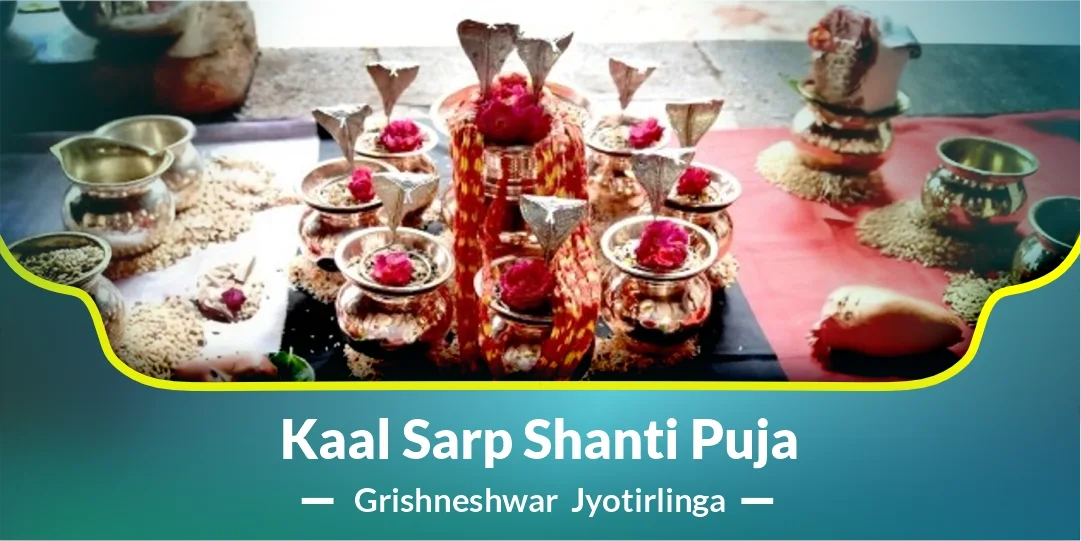 Kaal Sarp Shanti PujaEllora · Ghrishneshwar Jyotirlinga
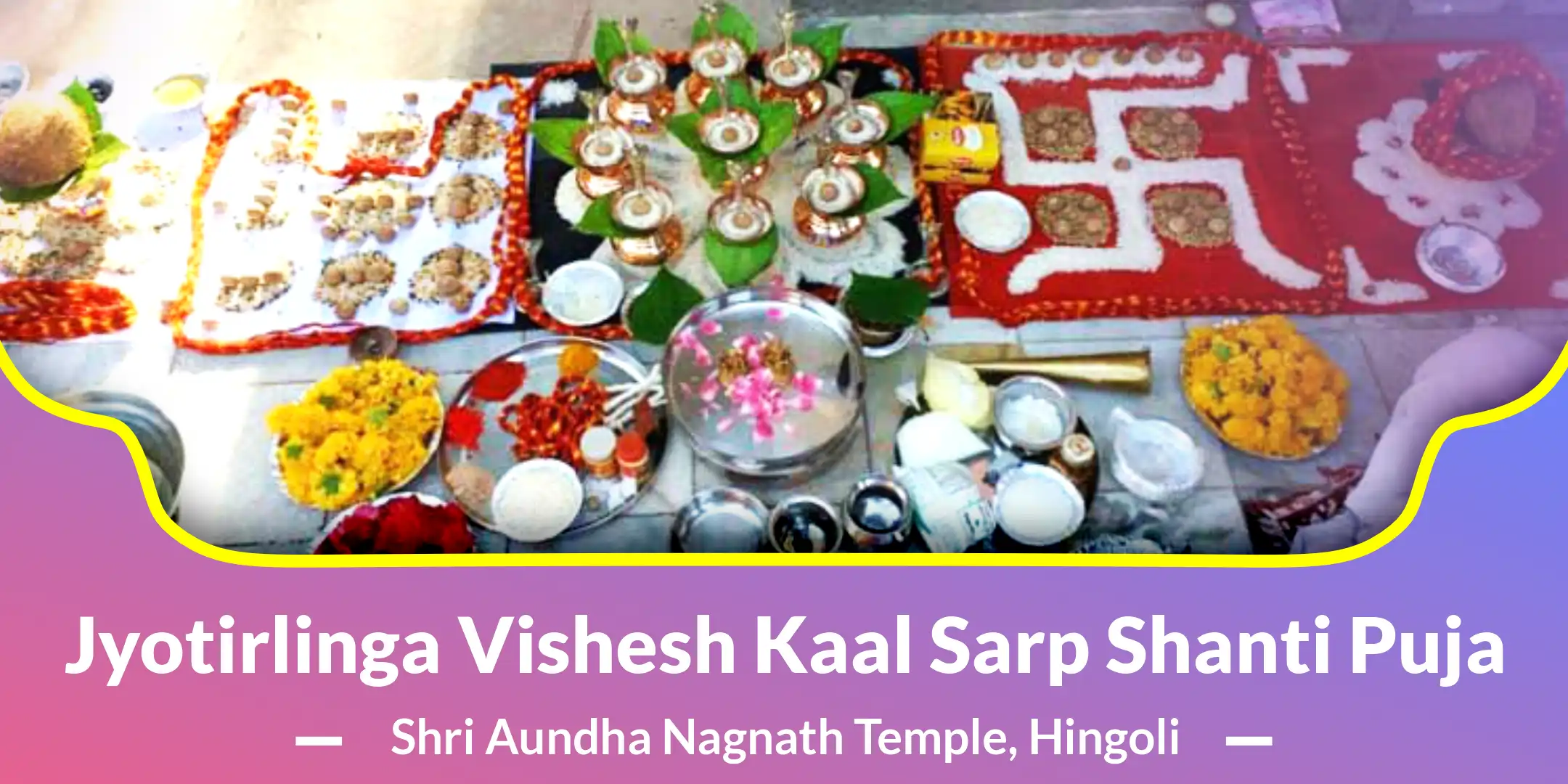 Jyotirlinga Vishesh Kaal Sarp Shanti PujaMaharashtra · Aundha Nagnath Jyotirlinga
Pujas for you
Swipe · 4 pujas- Mangalnath Vishesh Kaal Sarp Dosh Shanti PujaMangalnath Mandir, UjjainBook now
- Kaal Sarp Dosh PujaShri Markandey Mahadev Mandir, Kaithi, VaranasiBook now
- Kaal Sarp Shanti PujaShri Ghrishneshwar Jyotirlinga, Ellora, MaharashtraBook now
- Jyotirlinga Vishesh Kaal Sarp Shanti PujaShri Aundha Nagnath TempleBook now
FAQs on Kaal Sarp Dosh Puja
- Where is kaal sarp dosh puja performed?
- It is performed at Shiva kshetras with a naga or graha shanti tradition. Trimbakeshwar in Nashik, Mangalnath in Ujjain and Markandey Mahadev near Varanasi are the best known; Ghrishneshwar and Aundha Nagnath also perform it.
- Which is the best day for kaal sarp dosh puja?
- Nag Panchami, Amavasya, Mahashivratri and the Mondays of Shravan are traditionally preferred. The purohit fixes a muhurat from your chart and the panchang.
- How many times should kaal sarp dosh puja be done?
- Most families do it once with full vidhi. Some repeat a shorter shanti or keep up Rahu–Ketu jaap during a Rahu or Ketu dasha.
- Can kaal sarp dosh puja be done without being present?
- Yes. A sankalp can be taken on your behalf with your name and gotra, which is how online pujas and pujas for family members are performed.
- What should I do after kaal sarp dosh puja?
- Purohits usually advise sattvik food that day, mantra jaap or Shiva worship on Mondays for some weeks, and never harming a snake.
- Can women perform kaal sarp dosh puja?
- Yes. Women take the sankalp themselves. Many purohits avoid scheduling it during menstruation, so ask when fixing the date.
- Kaal sarp dosh puja
- Kaal sarp dosh nivaran puja
- Kaal sarp dosh puja vidhi
- Kaal sarp dosh puja cost
- Kaal sarp dosh puja samagri list
- Trimbakeshwar
- Mangalnath Ujjain
- Rahu Ketu shanti
Read next
All guides →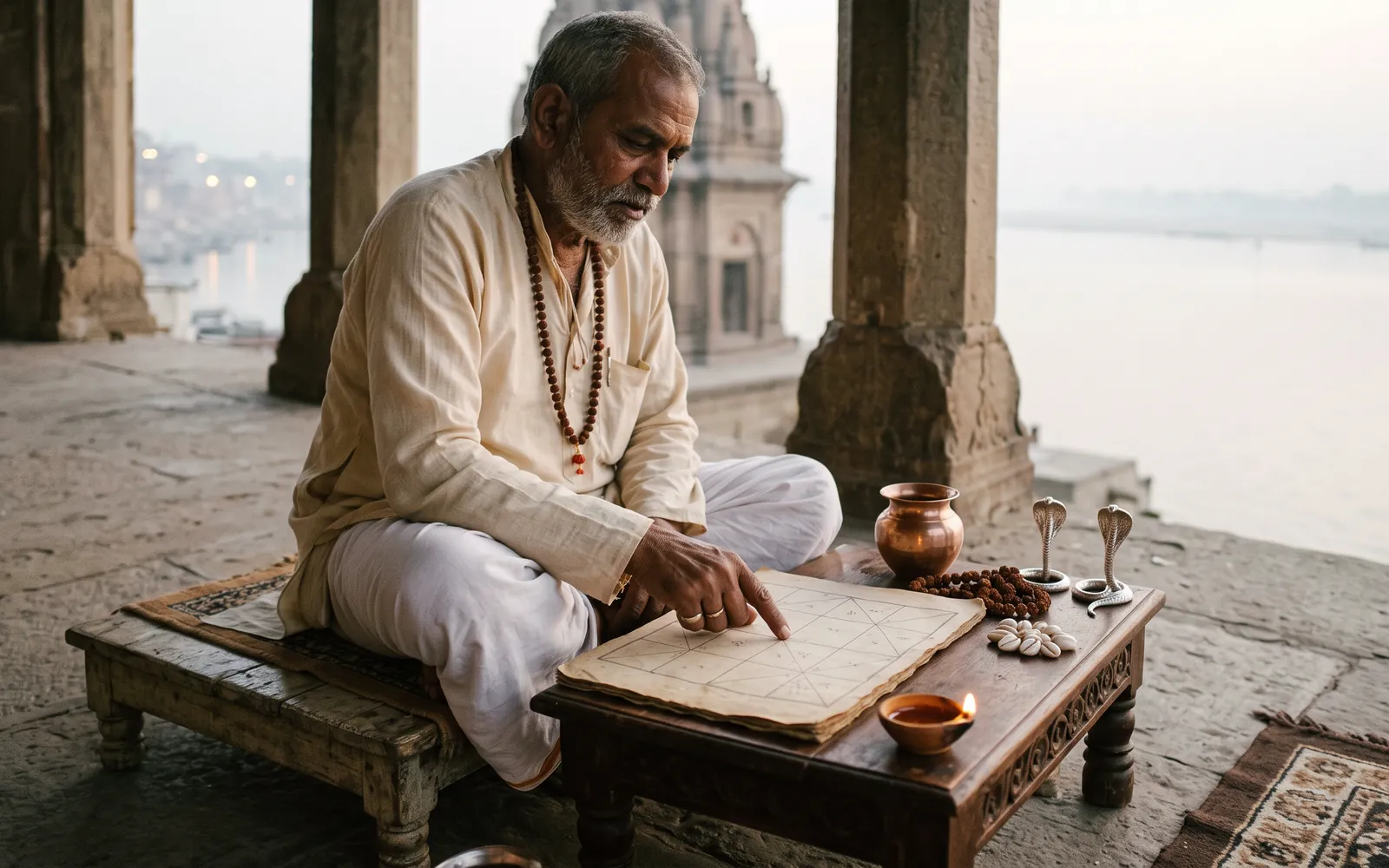 RitualsKaal Sarp Dosh: Meaning, Effects, Signs and Remedies (Kaal Sarp Dosh Kya Hota Hai)Kaal sarp dosh kya hota hai, how it forms in a kundli, full vs anshik, how to check it, the effects people describe, and the traditional upay and mantras.20 Nov 2026 · 9 min read
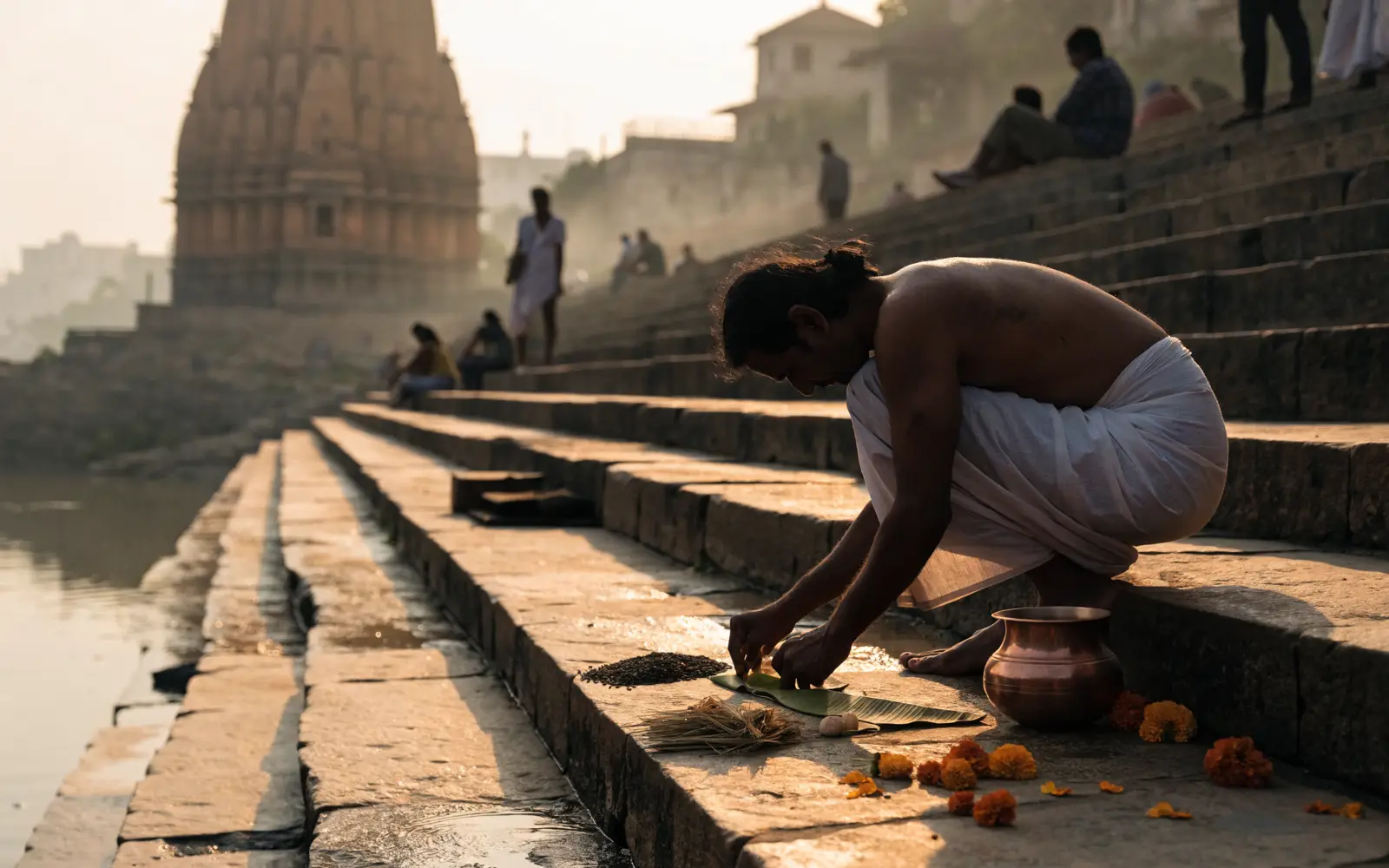 Pitru PakshaBest Places for Pitru Dosh Puja in India: Location Guide with Costs and RitualsSome rituals only work at one site in the whole country. Where each pitra dosh puja belongs, what it typically costs, and when you need not travel at all.6 Oct 2026 · 7 min read
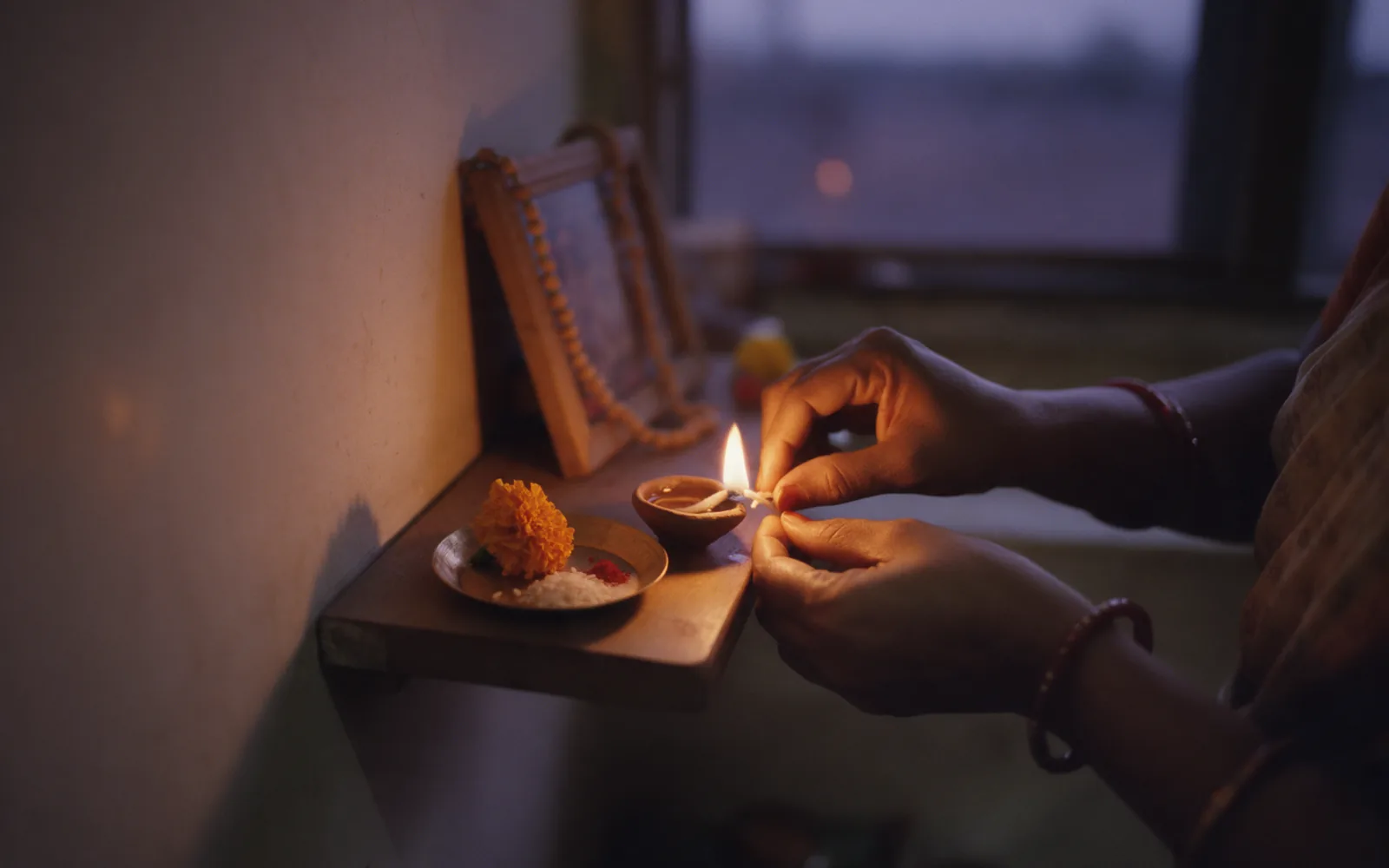 Pitru PakshaPitru Dosha Remedies: 11 Proven Ways to Remove Pitra DoshKnowing you have Pitru Dosha is only half the answer. Eleven remedies, from a one-minute daily ritual to the pujas that need a priest and a sacred site.30 Sept 2026 · 5 min read