

Kaal Sarp Dosh: Meaning, Effects, Signs and Remedies (Kaal Sarp Dosh Kya Hota Hai)
Kaal sarp dosh kya hota hai, how it forms in a kundli, full vs anshik, how to check it, the effects people describe, and the traditional upay and mantras.
Kaal sarp dosh is a kundli placement where all seven grahas, Sun to Saturn, fall on one side of the Rahu–Ketu axis. Astrologers read it as a pattern of delay and effort before results. Check it by locating Rahu and Ketu in your chart, then answer it with Shiva worship, naga puja and mantra jaap.
Draw a line through any birth chart from Rahu to Ketu and you split the twelve houses into two halves. In most charts, the grahas scatter across both. In some, every one of them, from the Sun to Saturn, crowds into a single half, as if the line were a wall. That is kaal sarp dosh: a shape in the chart, not a curse placed on a person. Plenty of people first hear the term in a consultation and leave more worried than informed.
What Is Kaal Sarp Dosh? (Kaal Sarp Dosh Kya Hota Hai)
Kaal sarp dosh is a yoga in Vedic astrology formed when the seven visible grahas, Surya, Chandra, Mangal, Budh, Guru, Shukra and Shani, all sit between Rahu and Ketu on the same side of the chart. The name joins kaal (time, and by extension death) with sarp (serpent). Rahu is traditionally pictured as the serpent's head and Ketu as its tail, so a chart with every graha between them reads like a body held inside a coil.
The kaal sarp dosh meaning, in plain terms, is this: the seven grahas that normally act on their own appear hemmed in by the two shadow points that govern sudden events, obsession, detachment and karmic debt. So if someone asks kaal sarp dosh kya hai, the shortest honest answer is "a particular arrangement of grahas, read as a tendency, not a verdict".
How Kaal Sarp Dosh Forms in a Kundli (Kaal Sarp Dosh Kyu Hota Hai)
Rahu and Ketu are always exactly opposite each other, 180 degrees apart, so they sit in houses six apart: if Rahu is in the 1st house, Ketu is in the 7th. That axis splits the chart into two arcs of five houses each, plus the two houses Rahu and Ketu occupy.
Kaal sarp dosh kaise banta hai, then, is a question of where the other seven grahas fall. If all seven sit in one arc, the yoga forms. Here is a simple example of how a kaal sarp dosh kundali can look:
| House | Grahas | Side of the axis |
|---|---|---|
| 1 | Rahu | Axis (head) |
| 2 | Surya, Budh | Inside |
| 3 | Shukra | Inside |
| 4 | — | Inside |
| 5 | Chandra | Inside |
| 6 | Mangal, Guru | Inside |
| 7 | Ketu | Axis (tail) |
| 8 | — | Empty side |
| 9 | — | Empty side |
| 10 | Shani | Outside the axis, so it breaks the yoga |
| 11 | — | Empty side |
| 12 | — | Empty side |
In this chart, if Shani sat anywhere from the 2nd to the 6th house, the dosh would be complete. Because Shani sits in the 10th, on the empty side, the chart has no full kaal sarp dosh at all. One graha changes the reading entirely.
Kaal sarp dosh kyu hota hai in the deeper, karmic sense is a question tradition answers through Rahu and Ketu themselves. They are read as unfinished business from earlier lives. The same pair also shapes how astrologers read pitra dosh, which is why the two often come up in the same consultation.
Full vs Anshik Kaal Sarp Dosh
Most pages blur these together. They are not the same, and the difference matters more than anything else on this page.
| Full kaal sarp dosh | Anshik kaal sarp dosh | |
|---|---|---|
| What it means | All seven grahas strictly between Rahu and Ketu | One graha falls outside the axis, or sits in Rahu's or Ketu's sign but outside their degrees |
| How astrologers read it | The complete yoga, read as stronger | A partial yoga, read as noticeably milder |
| Common advice | Full shanti puja, usually once, with regular Shiva worship after | Often only regular Shiva worship and mantra; many astrologers advise no special puja |
So, anshik kaal sarp dosh kya hota hai? It is the near-miss version, and many charts labelled "kaal sarp" in casual consultations are actually anshik. If an astrologer has named the dosh without saying which kind, that is the first question to ask.
Degrees matter too. When a graha shares a sign with Rahu or Ketu, many astrologers check whether its degree falls inside or outside the axis. A Mars at 25° in the same sign as a Rahu at 10° may sit outside the line, which turns a full reading into an anshik one.
How to Check Kaal Sarp Dosh in Kundli
You can do a first kaal sarp dosh check yourself with any birth chart, in five steps:
- Get an accurate chart. You need your date, exact time and place of birth. A birth time off by even an hour can move the lagna, though Rahu and Ketu move slowly enough that the yoga itself rarely changes.
- Find Rahu. Note the house it sits in. Ketu will always be in the seventh house counted from Rahu.
- Trace both arcs. List the five houses running one way from Rahu to Ketu, then the five running the other way.
- Place all seven grahas. If all seven fall in one arc, the yoga is present. If even one falls in the other arc, there is no full kaal sarp dosh.
- Check the edge cases. Any graha in the same sign as Rahu or Ketu needs a degree check (see above). This is where a trained astrologer earns their fee.
How to check kaal sarp dosh in kundli is the easy part. Reading what it means alongside the rest of the chart, the lagna, the dasha you are running and the strength of each graha, is the part that needs an astrologer.
Learn more: why are there "12 types"?
Astrologers name kaal sarp dosh by the house Rahu occupies, which gives twelve named forms, from Anant (Rahu in the 1st) onward.
The type changes which area of life the yoga is read against, not whether it exists.
Kaal Sarp Dosh Effects and Lakshan
Ask what happens in kaal sarp dosh, or kaal sarp dosh se kya hota hai, and the kaal sarp dosh effects astrologers describe share one theme: effort that takes longer than it should to bear fruit. The commonly cited kaal sarp dosh symptoms, or kaal sarp dosh ke lakshan, include:
- Work, studies or business that move forward and then stall, often more than once
- A sense of running hard while staying in the same place
- Delays around marriage or settling down
- Restlessness or worry without a clear cause
- Recurring dreams of snakes, which many families treat as a sign worth noting
- Strain in close relationships during Rahu or Ketu dasha periods
Two things are worth holding alongside this list. First, almost everyone recognises some of these symptoms, chart or no chart, so they cannot confirm a dosh on their own; only the chart can. Second, astrologers generally read the effects as strongest during Rahu or Ketu dasha and antardasha, and quieter outside them.
If worry about the dosh, or anything on this list, is affecting your sleep, health or mood, speak to a doctor or a mental-health professional. Tradition and medical care do not compete.
Kaal Sarp Dosh ke Upay and Remedies
Here is the uncomfortable truth first: no remedy moves Rahu or Ketu. Searches for "how to remove kaal sarp dosh permanently" assume the placement can be deleted. It cannot. What tradition offers is nivaran, easing the way you move through it. Every one of the kaal sarp dosh remedies below aims at kaal sarp dosh ka nivaran in that sense, not removal.
The traditional kaal sarp dosh ke upay, roughly in the order families take them up:
- Shiva abhishek on Mondays. Water or raw milk on a Shivling, with Om Namah Shivaya. This is the foundation most astrologers recommend first.
- Naga worship on Nag Panchami. Offering milk and flowers to a naga image, and keeping the day free of harm to any living creature.
- Mantra jaap. The mantras in the next section, kept up daily or weekly.
- A silver naag–naagin pair. Offered at a Shiva temple, a practice many families combine with a Monday visit.
- Seva. Feeding cows, birds or people in need on Saturdays. Rahu and Ketu are read as karmic, and tradition answers karma with service.
- A kaal sarp dosh nivaran puja. A full shanti puja at a Shiva kshetra, usually once, for those with a full dosh or a difficult dasha ahead.
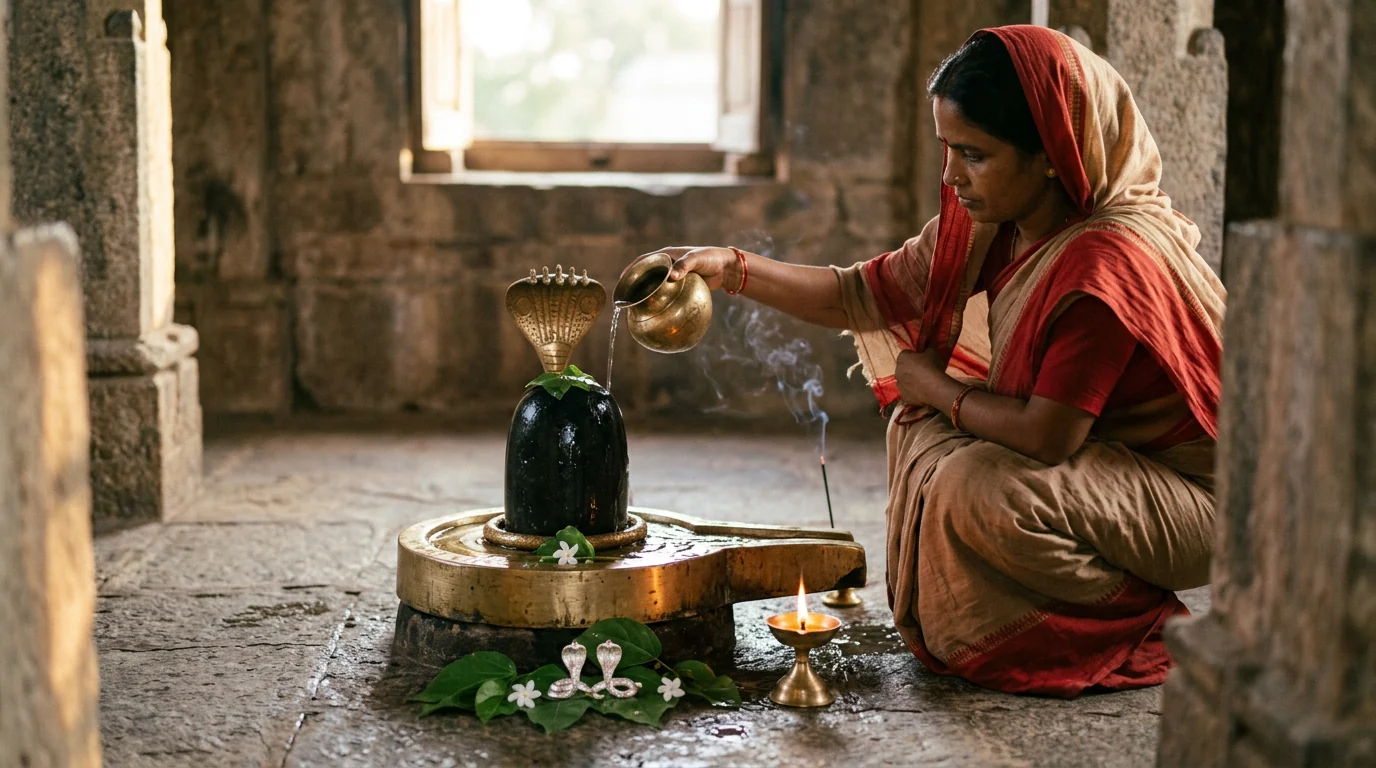
A clean, steady home practice matters more than any single grand gesture. A stick of natural incense lit before the Monday abhishek, or a Shiva puja kit kept ready, turns these upay into a routine instead of a one-off.
Yagna incense and the Shiv Kripa Puja Kosh
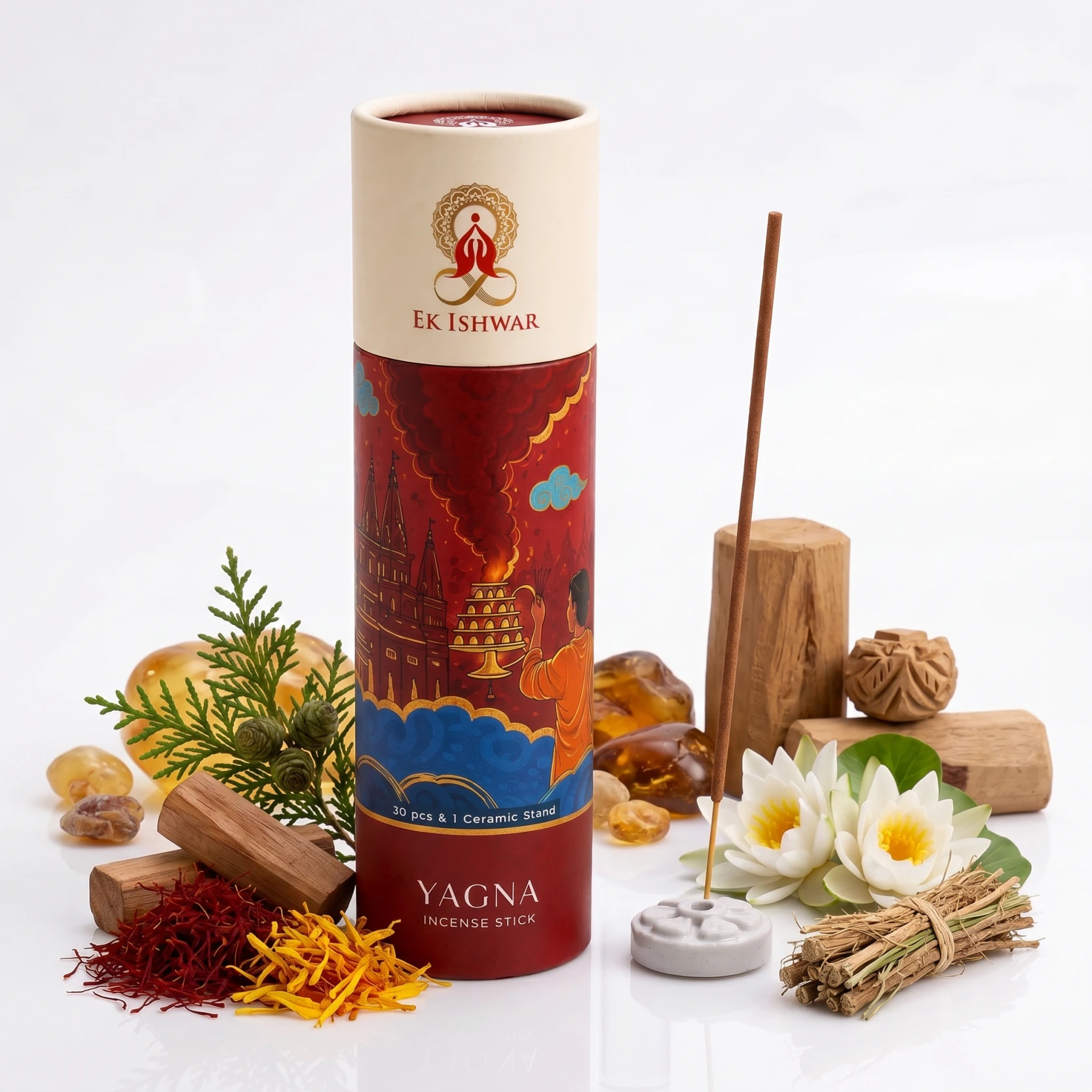 Yagna - Incense StickThe Yagna Incense Sticks from Ek Ishwar’s Sugandhik range are inspired by the sacred atmosphere of ancient yajnas, temple rituals, and the transformative energy of devotional fire offerings.View product
 Shiv Kripa Puja KoshThe Shiv Kripa Puja Kosh from Ek Ishwar is a thoughtfully curated collection of 21 essential puja items designed to support traditional worship of Lord Shiva with devotion, simplicity, and authenticity.View product
When a full puja makes sense: Ekishwar arranges the kaal sarp dosh shanti puja at Mangalnath, Ujjain, and the Ghrishneshwar kaal sarp puja at the jyotirlinga near Ellora, performed with your name and gotra in the sankalp. What happens at the puja, step by step, is in the kaal sarp dosh puja vidhi guide.
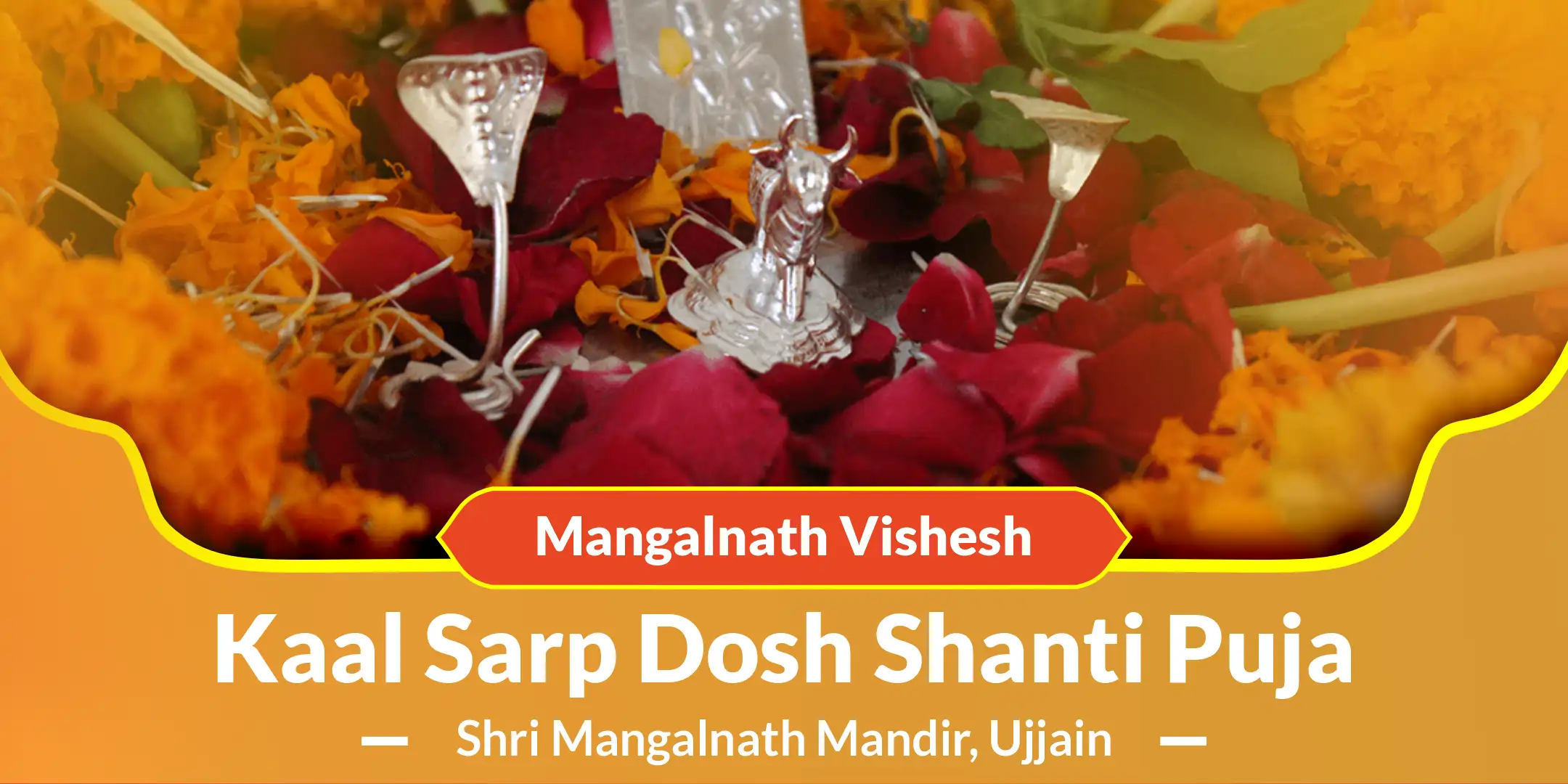 For a full dosh or a first shantiMangalnath Vishesh Kaal Sarp Dosh Shanti PujaKaal sarp dosh shanti at Mangalnath, Ujjain, with your name and gotra in the sankalp.Mangalnath Mandir, UjjainBook this puja
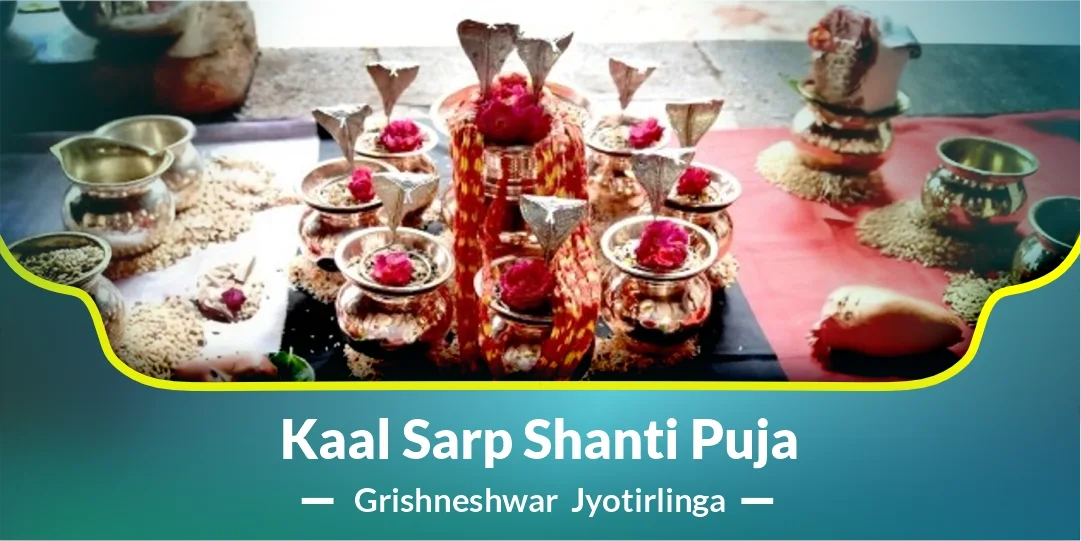 At a jyotirlingaKaal Sarp Shanti PujaKaal sarp shanti puja at Ghrishneshwar Jyotirlinga, near Ellora.Shri Ghrishneshwar Jyotirlinga, Ellora, MaharashtraBook this puja
For families also dealing with ancestral afflictions, the pitru dosha remedies cover that side separately.
Kaal Sarp Dosh Mantra and Nivaran Mantra
These three are the mantras most often given for kaal sarp dosh. Mantra jaap is the simplest kaal sarp dosh upay to keep up for years. Chant with a clean mind more than a high count; 108 a day is a traditional measure.
Naag Gayatri (often given as the kaal sarp dosh nivaran mantra)
ॐ नवकुलाय विद्महे विषदन्ताय धीमहि। तन्नो सर्पः प्रचोदयात्॥
Om navakulaaya vidmahe vishadantaaya dheemahi, tanno sarpah prachodayaat.
Meaning: We meditate on the lord of the nine naga clans; may the serpent deity guide our minds.
Navnaag Stotra (the nine naga names)
अनन्तं वासुकिं शेषं पद्मनाभं च कम्बलम्। शङ्खपालं धार्तराष्ट्रं तक्षकं कालियं तथा॥
Anantam Vaasukim Shesham Padmanaabham cha Kambalam, Shankhapaalam Dhaartaraashtram Takshakam Kaaliyam tathaa.
Meaning: The nine great nagas, Ananta, Vasuki, Shesha, Padmanabha, Kambala, Shankhapala, Dhartarashtra, Takshaka and Kaliya, remembered with reverence. Traditionally recited at dusk and dawn.
Mahamrityunjaya Mantra
ॐ त्र्यम्बकं यजामहे सुगन्धिं पुष्टिवर्धनम्। उर्वारुकमिव बन्धनान्मृत्योर्मुक्षीय माऽमृतात्॥
Om tryambakam yajaamahe sugandhim pushtivardhanam, urvaarukamiva bandhanaan mrityor mukshiya maamritaat.
Meaning: We worship the three-eyed Shiva, who nourishes all; as a ripe cucumber is freed from its vine, may we be freed from death, not from immortality.
The Mahamrityunjaya fits kaal sarp dosh especially well. A dosh named after kaal is answered with a prayer to the one who stands beyond time.
Living With the Coil, Not Against It
Kaal sarp dosh is a shape in a chart, and a chart describes tendencies, not a fixed fate. The traditional response asks for exactly the qualities the dosh is said to test: patience when results come slowly, steady effort without bitterness, and care for every living being, from the cow at the gate to the snake in the field that tradition says you must never harm. The Monday abhishek, the mantra and the act of seva matter as much for the person they build as for the grahas they address. A dosh, read this way, is a reason for discipline, not a reason for fear.
You can have the shanti puja performed at the temple in your name through Ekishwar.
Book a kaal sarp dosh shanti puja
Mangalnath Vishesh Kaal Sarp Dosh Shanti PujaUjjain · MangalnathKaal Sarp Shanti PujaEllora · Ghrishneshwar Jyotirlinga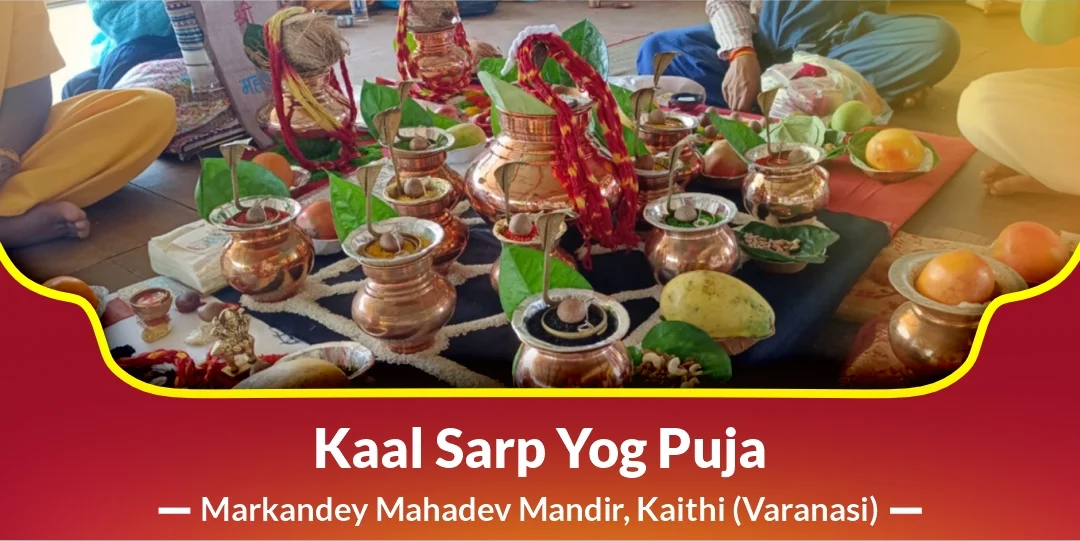 Kaal Sarp Dosh PujaKaithi, Varanasi · Markandey Mahadev
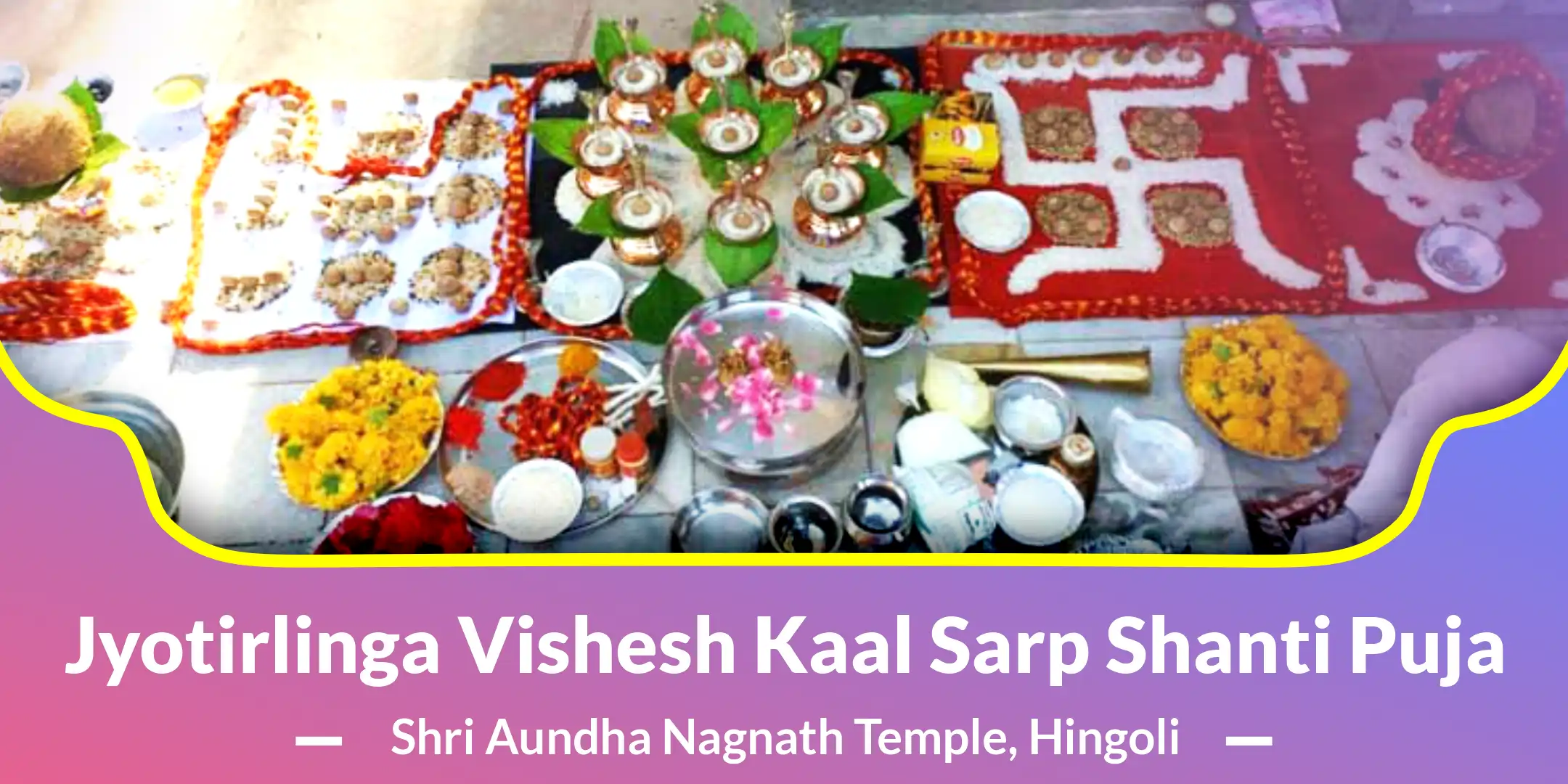 Jyotirlinga Vishesh Kaal Sarp Shanti PujaMaharashtra · Aundha Nagnath Jyotirlinga
Pujas for you
Swipe · 4 pujas- Mangalnath Vishesh Kaal Sarp Dosh Shanti PujaMangalnath Mandir, UjjainBook now
- Kaal Sarp Shanti PujaShri Ghrishneshwar Jyotirlinga, Ellora, MaharashtraBook now
- Kaal Sarp Dosh PujaShri Markandey Mahadev Mandir, Kaithi, VaranasiBook now
- Jyotirlinga Vishesh Kaal Sarp Shanti PujaShri Aundha Nagnath TempleBook now
FAQs on Kaal Sarp Dosh
- What is kaal sarp dosh in simple words?
- It is a birth-chart placement where all seven grahas sit on one side of the Rahu–Ketu axis. Astrologers read it as delay and effort before results.
- Is kaal sarp dosh real?
- It is an accepted yoga in modern jyotish practice, though astrologers disagree on how much weight it carries, and some classical texts do not name it. Treat it as one factor in a chart, not the whole reading.
- How do I know if I have kaal sarp dosh?
- Find Rahu and Ketu in your kundli and check whether all seven grahas fall between them on one side. If even one falls outside, there is no full kaal sarp dosh.
- What is the difference between full and anshik kaal sarp dosh?
- A full dosh has all seven grahas between Rahu and Ketu. An anshik, or partial, dosh has one graha outside the axis and is read as much milder.
- Can kaal sarp dosh be removed permanently?
- No. Rahu and Ketu's position in a birth chart never changes. Tradition offers nivaran, easing its effects through Shiva worship, mantra, seva and, where advised, a shanti puja.
- At what age does kaal sarp dosh end?
- There is no fixed age. Astrologers read its effects as strongest during Rahu and Ketu dasha periods, so the timing depends on your own dasha sequence.
- Kaal sarp dosh
- Kaal sarp dosh kya hota hai
- Anshik kaal sarp dosh
- Kaal sarp dosh in kundli
- Kaal sarp dosh ke upay
- Kaal sarp dosh mantra
- Rahu Ketu
- Kaal sarp dosh nivaran
Read next
All guides → RitualsKaal Sarp Dosh Puja: Vidhi, Best Places, Samagri and CostHow kaal sarp dosh puja is performed, step by step. Compare Trimbakeshwar, Ujjain and Kashi, see the samagri list, what decides cost, and how online puja works.20 Nov 2026 · 10 min read
 RitualsManglik Dosh: Meaning, How to Check It, Anshik and Nimn Manglik (Mangal Dosh Kya Hota Hai)Manglik dosh kya hota hai? Learn which houses create mangal dosh in kundli, how to check it from lagna, Moon and Venus, and what anshik and nimn manglik mean.24 Nov 2026 · 10 min read
 Pitru PakshaWhat Is Pitru Dosha? Signs, Types, Effects, and How to Remove ItThe same problems keep circling back — marriage, money, health. Sometimes the cause is older than your choices. The 14 types of Pitra Dosh, and what each does.30 Sept 2026 · 7 min read