Triveni Sangam, Prayagraj
Where three sacred rivers meet.
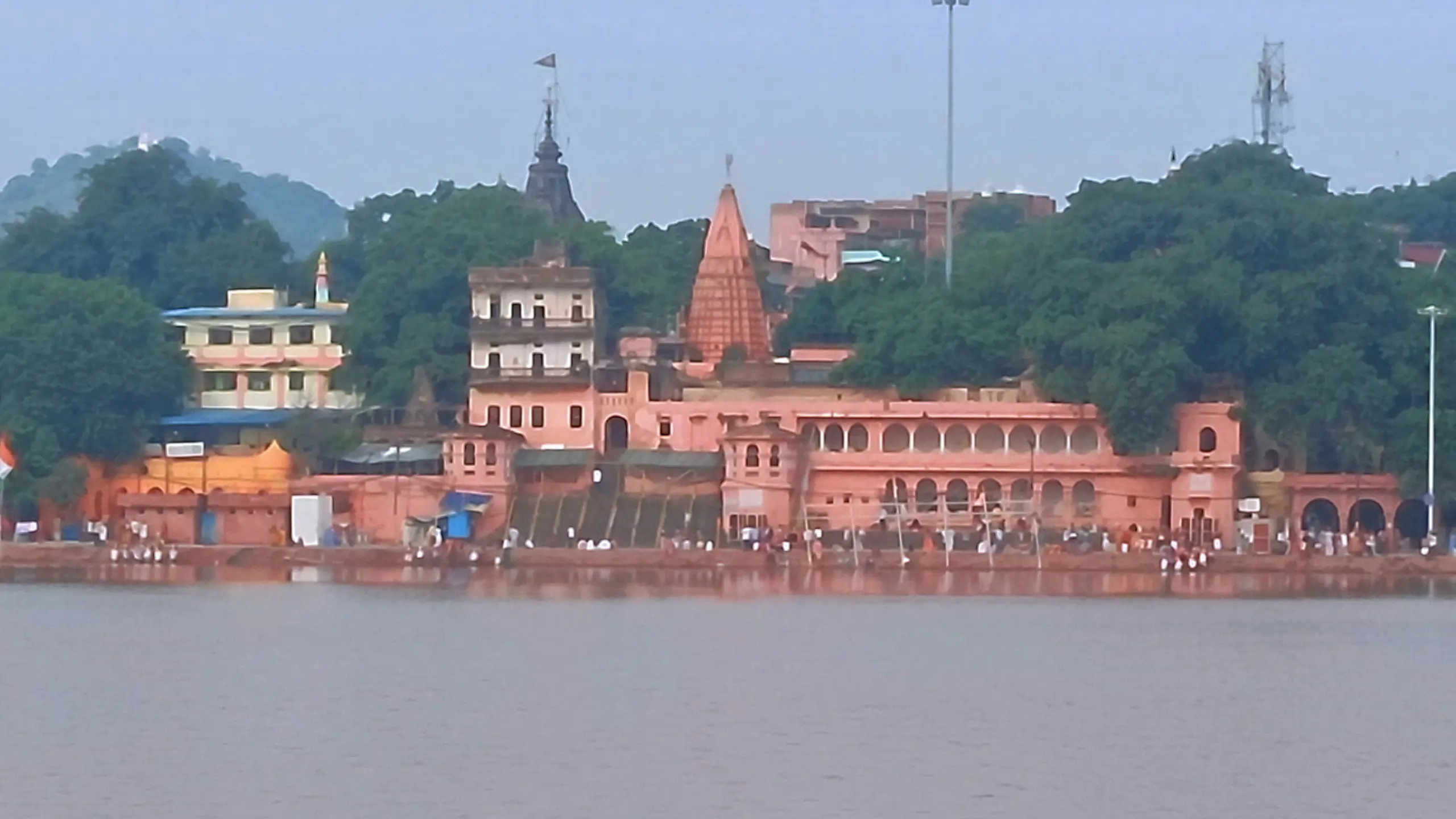
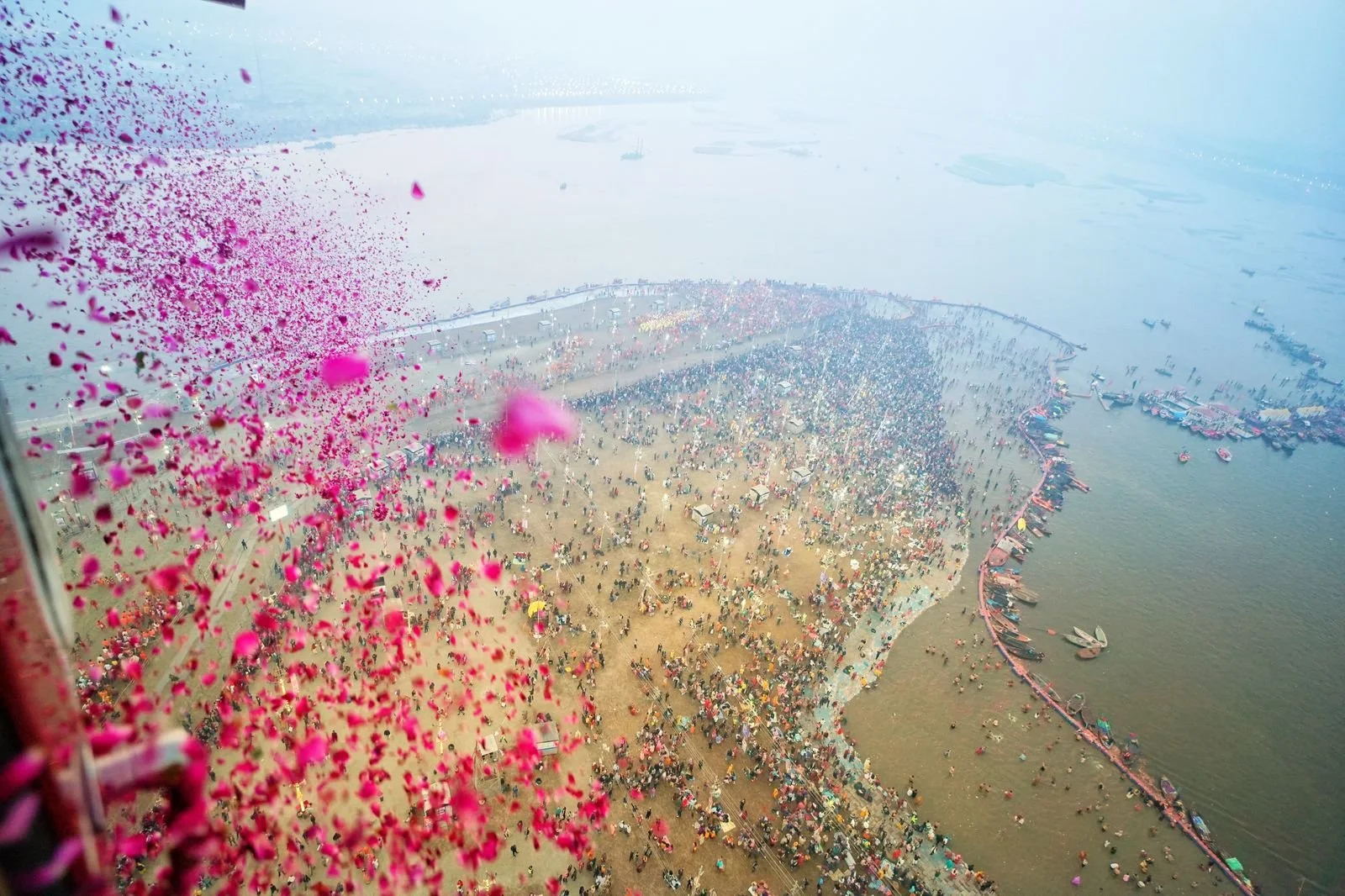
Triveni Sangam in Prayagraj is one of India’s most revered pilgrimage sites, where the Ganga, Yamuna, and the mystical Saraswati are believed to meet. This sacred confluence, known as the Sangam, holds immense importance in Hindu tradition and attracts millions of devotees throughout the year./n /n Pilgrims visit the Sangam to take a holy dip, offer prayers, perform rituals, and seek spiritual purification. The site becomes especially significant during major religious gatherings, including the Kumbh and Magh Mela, when devotees from across India and beyond gather here./n /n The confluence is also associated with ancestral rituals, including Pind Daan and Tarpan, making it an important destination for those seeking to honour their ancestors. The meeting of the three sacred rivers is traditionally regarded as a powerful spiritual symbol of unity and purification./n /n Surrounded by the historic landscape of Prayagraj, Triveni Sangam continues to remain an enduring centre of faith, devotion, and pilgrimage.
Prayagraj, historically known as Prayag, has been associated with sacred river confluences and pilgrimage since ancient times. Hindu texts and traditions describe Prayaga as a highly sacred Tirtha, or crossing place between the worldly and spiritual realms./n /n The Triveni Sangam became an important centre for pilgrimage, religious gatherings, and ritual bathing over the centuries. Historical accounts also mention the significance of Prayaga during the periods of ancient Indian kingdoms and later empires./n /n The site gained further prominence through the tradition of the Kumbh Mela, one of the world’s largest religious gatherings. Today, the Sangam remains central to Prayagraj’s spiritual identity, continuing an ancient tradition of pilgrimage, ritual bathing, and devotion.
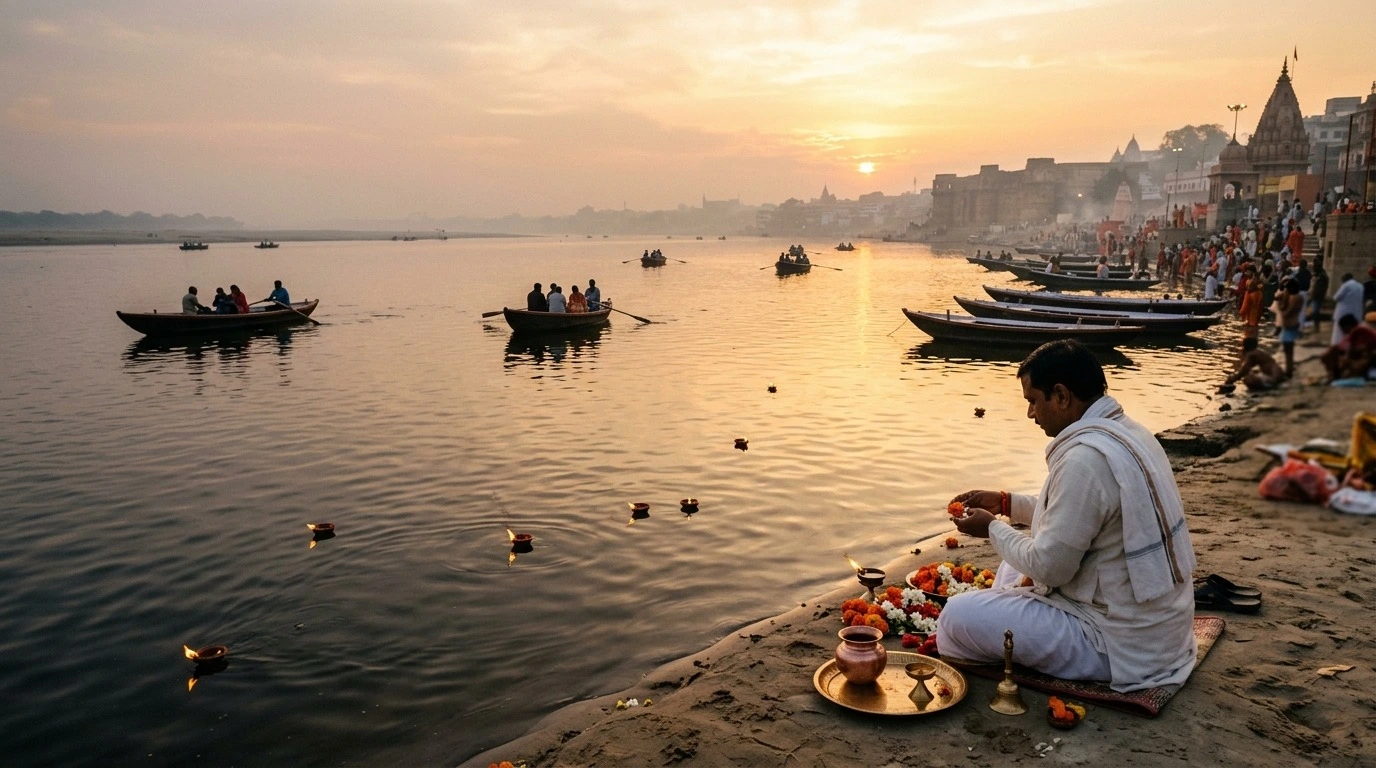
Triveni Sangam is revered as the meeting point of the Ganga, Yamuna, and the invisible Saraswati. In Hindu tradition, bathing at the Sangam is considered spiritually significant, while prayers, Tarpan, and other sacred rituals are also performed here./n /n Unlike a conventional temple complex, the Sangam is primarily a natural sacred landscape. Devotees typically reach the confluence by boat, where designated areas allow pilgrims to perform rituals and take a holy dip./n /n The riverbanks and surrounding ghats accommodate large numbers of pilgrims, particularly during major religious festivals. Temporary structures, prayer spaces, boats, and ritual platforms transform the area during large gatherings, creating a distinctive pilgrimage environment.
A yatra to Triveni Sangam is traditionally experienced as a journey of spiritual purification, prayer, and devotion. Pilgrims usually travel by boat toward the confluence, where the waters of the Ganga and Yamuna can be observed meeting, while the Saraswati is traditionally believed to join them invisibly./n /n Devotees may take a holy dip, offer Tarpan, perform prayers, or make offerings according to their family and religious traditions. Those undertaking ancestral rituals may also consult a local priest regarding the appropriate ceremonies./n /n Early morning is often considered an especially peaceful time to visit, when the river landscape is calm and the atmosphere is devotional. During major festivals and the Kumbh or Magh Mela, the area can become extremely crowded, so planning ahead is important.