
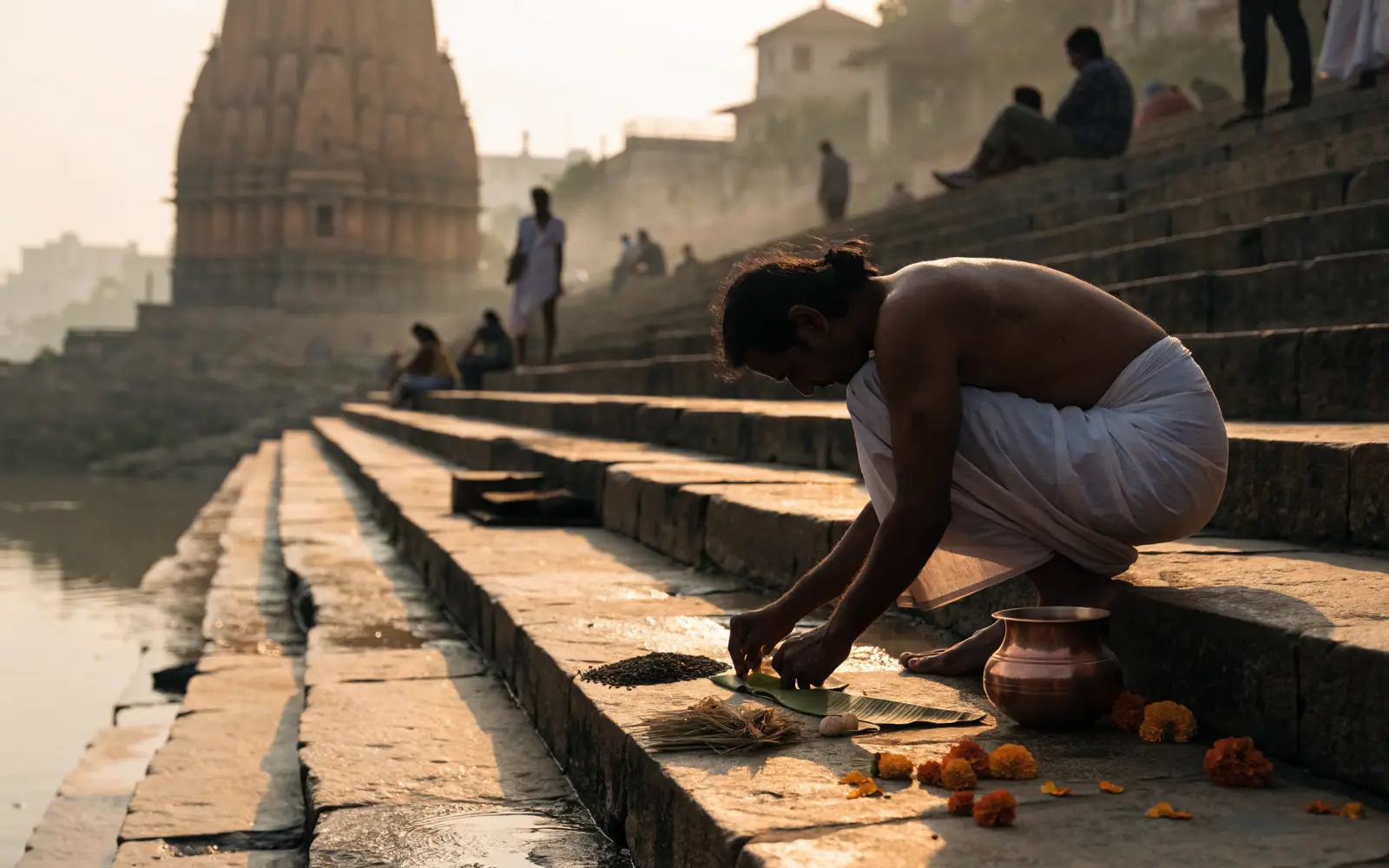
Best Places for Pitru Dosh Puja in India: Location Guide with Costs and Rituals
Some rituals only work at one site in the whole country. Where each pitra dosh puja belongs, what it typically costs, and when you need not travel at all.
Not every pitru dosh puja needs the same place. Some rituals only work at one specific site in the entire country, others can be performed at any of several sacred locations, and a few can genuinely be done without travelling at all. Getting this wrong usually means one of two costly mistakes: travelling to a site that cannot actually perform the ritual you need, or paying for an elaborate puja when a simpler one closer to home would have worked just as well. This guide breaks down where each pitra dosh puja is traditionally performed, what it costs, and how to tell which location actually fits your situation.
Why Location Matters for Pitru Dosha Rituals
If you've asked pitra dosh ki puja kahan hoti hai, the honest answer is that it depends entirely on which type of Pitru Dosha you're addressing. Hindu tradition does not treat every sacred site as interchangeable. Certain rituals are tied to a specific site because of its scriptural history, its river or confluence, or a particular deity associated with ancestral liberation.
Narayan Nagbali, for instance, is performed almost exclusively at Trimbakeshwar. Pind Daan has its most scripturally significant home in Gaya. A general Pitra Dosh Nivaran puja, by contrast, can be performed at several different sacred sites with equal validity. If you're not yet sure which type of Pitru Dosha applies to your situation, this breakdown of the 14 types is worth reading before you choose a location, since knowing this distinction up front saves both money and a wasted trip.
Quick Comparison Table
| Location | State | Best for | Typical cost range (market-wide) |
|---|---|---|---|
| Gaya | Bihar | Pind Daan, general Shradh | Varies widely by package, from a few hundred rupees for materials to several thousand for a full pandit-led ceremony |
| Trimbakeshwar | Maharashtra | Narayan Nagbali, Pitra Dosh Nivaran | Commonly ₹15,000 to ₹35,000+ depending on the exact ritual and number of pandits |
| Varanasi (Kashi) | Uttar Pradesh | Tarpan, Shradh Mahanushthan | Commonly ₹5,000 to ₹25,000 depending on scope |
| Haridwar | Uttarakhand | Pitra Dosh Shanti, Tarpan with Gau Seva | Commonly ₹3,000 to ₹15,000 |
| Pehowa | Haryana | Pind Daan (Puranic significance) | Generally lower-cost, often a few thousand rupees |
| Gokarna | Karnataka | Pitru Dosha pooja | Commonly ₹5,000 to ₹20,000 |
| Srirangapatna | Karnataka | Ancestral rites at Paschima Vahini Kaveri | Commonly ₹2,000 to ₹10,000 |
| Somnath | Gujarat | Pind Daan and Tarpan at Triveni Sangam | Commonly ₹3,000 to ₹12,000 |
Gaya, Bihar: The Most Sacred Site for Pind Daan
Gaya is widely considered the single most important site in India for Pind Daan. The Vishnupad Temple, built on the banks of the Falgu river, houses a rock bearing what is believed to be Lord Vishnu's footprint, left after he subdued the demon Gayasura. Pind Daan performed here is considered uniquely powerful, with tradition holding that it can liberate up to seven generations of ancestors and is said to remove the need for further annual Shradh ceremonies for that lineage.
Beyond Vishnupad, pilgrims also perform rites at Gaya Sir and Gaya Koop, two sites regarded as especially significant for ancestors believed to be facing particular obstacles after death. The nearby Akshay Vat, an ancient banyan tree, is also part of the traditional pilgrim circuit.
Gaya is busiest during the Pitru Paksha fair each September to October, when the town sees millions of pilgrims. Outside this window, rituals can still be performed any day of the year.
Trimbakeshwar, Nashik: Specialised for Pitra Dosh Nivaran
If your Pitru Dosha is linked to an ancestor's untimely or unnatural death, Trimbakeshwar is the site most specifically built to address it. This is one of the twelve Jyotirlingas, situated at the base of Brahmagiri hill, the source of the Godavari river, and is where the Narayan Nagbali ritual is traditionally performed.
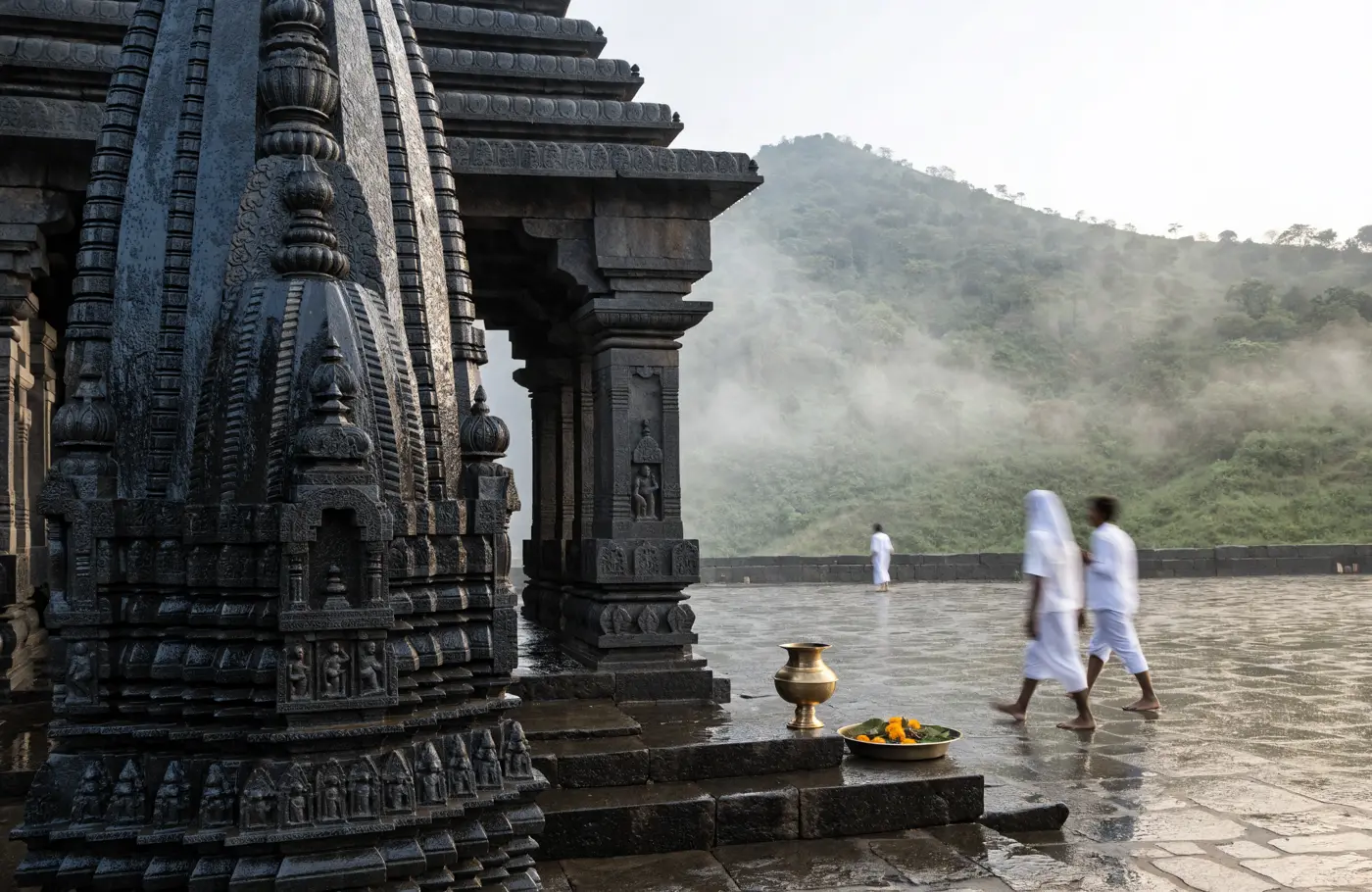
Narayan Nagbali combines two distinct rituals: Narayan Bali, addressing the unrest of a soul that died unnaturally, and Nag Bali, addressing a separate category of ancestral affliction. Many pandits at Trimbakeshwar also perform this alongside Kaal Sarp Dosha puja for families dealing with both concerns together, since the two are frequently linked in a birth chart reading. If you're weighing this against the other remedies available, the full list of Pitru Dosha remedies covers where a dedicated puja like this one fits alongside daily and weekly practices.
If you are searching for pitra dosh puja in Nashik, Trimbakeshwar is almost always what that search is pointing to.
 For an untimely or unnatural deathNarayan Nagbali Puja (Pitra dosh Puja)Narayan Nagbali at Trimbakeshwar Jyotirlinga, the site this ritual belongs to.Shri Trimbakeshwar Jyotirlinga Teerth, NashikBook this puja
Learn more: how long a Trimbakeshwar puja takes
Trimbakeshwar pujas typically run several hours, and often need advance booking.
This matters most around Pitru Paksha and other auspicious dates, when wait times can stretch into days if you arrive without a confirmed slot.
Varanasi (Kashi): Tarpan at the Sacred Ghats
Varanasi offers a different kind of significance. Rather than one single flagship ritual, Kashi is where the full range of Shradh karma, Tarpan, Pind Daan, and Shradh Mahanushthan, can be performed together, most notably at Pishach Mochan Kund, a site specifically associated with freeing souls who died in distressing circumstances.
Pind Daan in Kashi is considered a strong alternative for families who cannot travel to Gaya, and Varanasi's status as one of Hinduism's holiest cities means these rituals carry significant weight here regardless. If you'd rather attempt a simpler version yourself before booking a pandit-led version, our step-by-step guide to performing Tarpan at home covers the same offering in a form you can do without travelling.
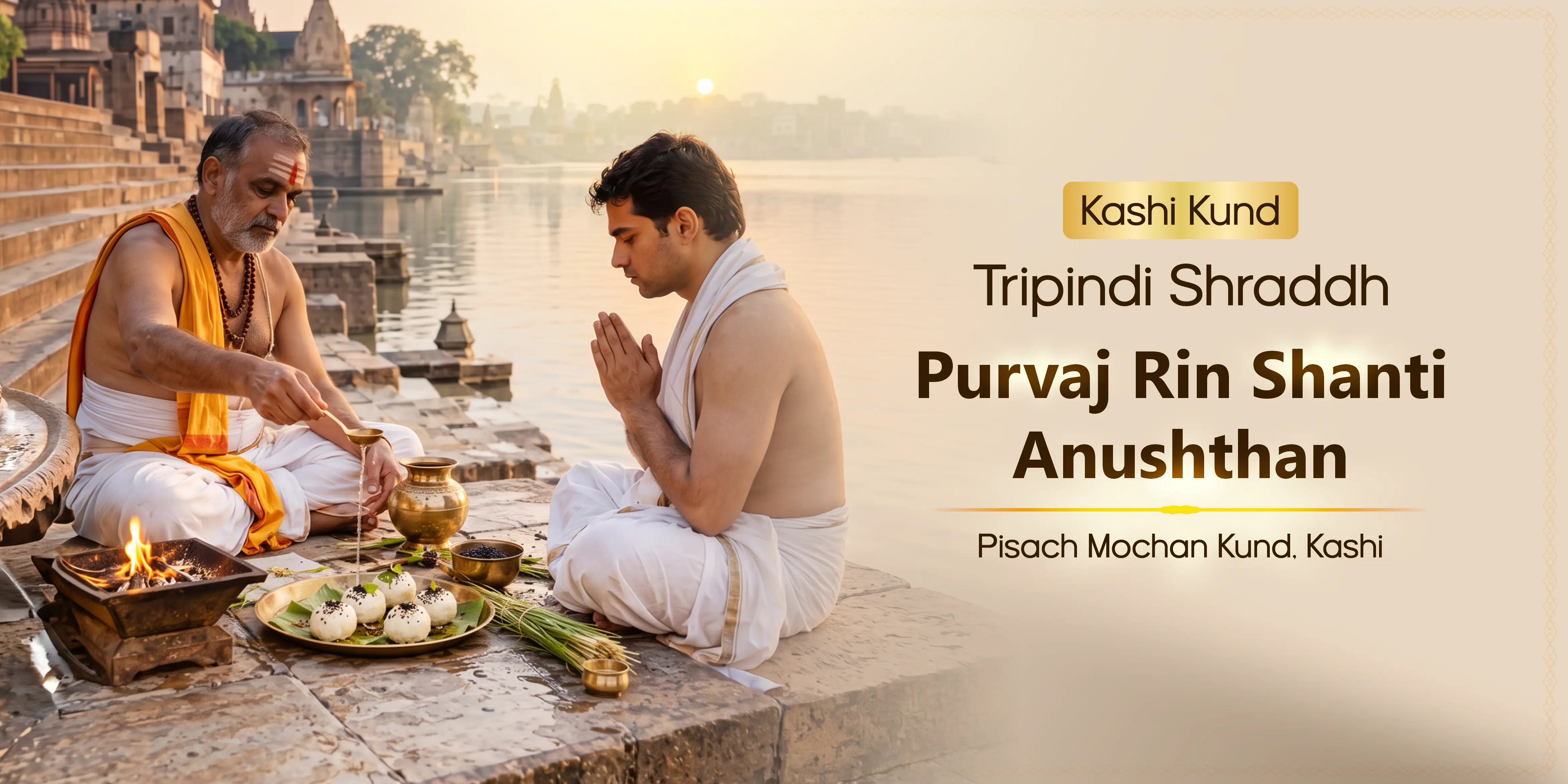 For problems that repeat across generationsKashi Kund Tripindi Shraddh Purvaj Rin Shanti AnushthanTripindi Shraddh covering three generations of ancestors in one rite.Pishach Mochan Kund, VaranasiBook this puja
Haridwar: Har Ki Pauri and the Ganga Connection
Haridwar's significance comes directly from the Ganga. Har Ki Pauri, the most famous ghat in the city, is where the river is believed to touch the earth most directly, making it a widely chosen site for Pitra Dosh Shanti and Tarpan.
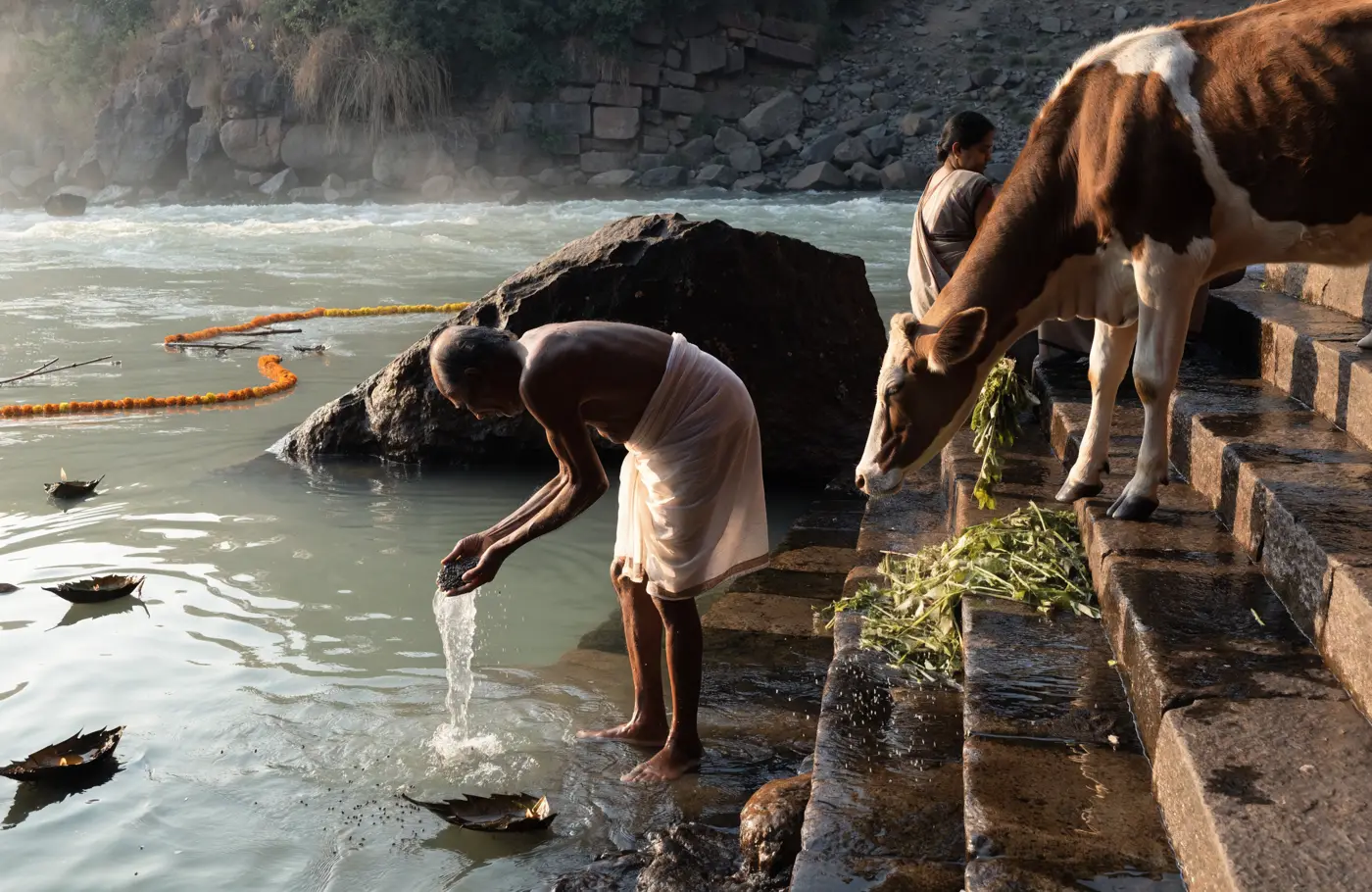
What sets pitra dosh puja in Haridwar apart from some other locations is how often Gau Seva, cow feeding and care, is included as part of the ritual itself, rather than as a separate add-on.
 On the Ganga, upstream of HaridwarAmavasya-Purnima Pind Daan - Purvaj Kripa VisheshAmavasya–Purnima Pind Daan at Namami Gange Ghat, Rishikesh, performed on your behalf.Namami Gange Ghat, Rishikesh, UttarakhandBook this puja
Pehowa, Kurukshetra: The Lesser-Known Powerhouse
Pehowa, in Haryana's Kurukshetra district, is one of the least-known names on this list, yet it carries genuine scriptural weight. Its old name, Pitrudhak Teertha, translates roughly to "the sacred place for ancestors", and its significance is recorded in the Skanda Purana, Markandeya Purana and Vamana Purana. It sits on the banks of the Saraswati river and forms part of the 48 kos parikrama of Kurukshetra.
Pehowa pind daan has drawn pilgrims, Hindu and Sikh alike, for centuries, and the site remains considerably less crowded than Gaya or Varanasi, which some families prefer for a quieter, more unhurried ritual experience.
Gokarna, Srirangapatna and Somnath
Three southern and western sites round out this list, each with a distinct claim to significance.
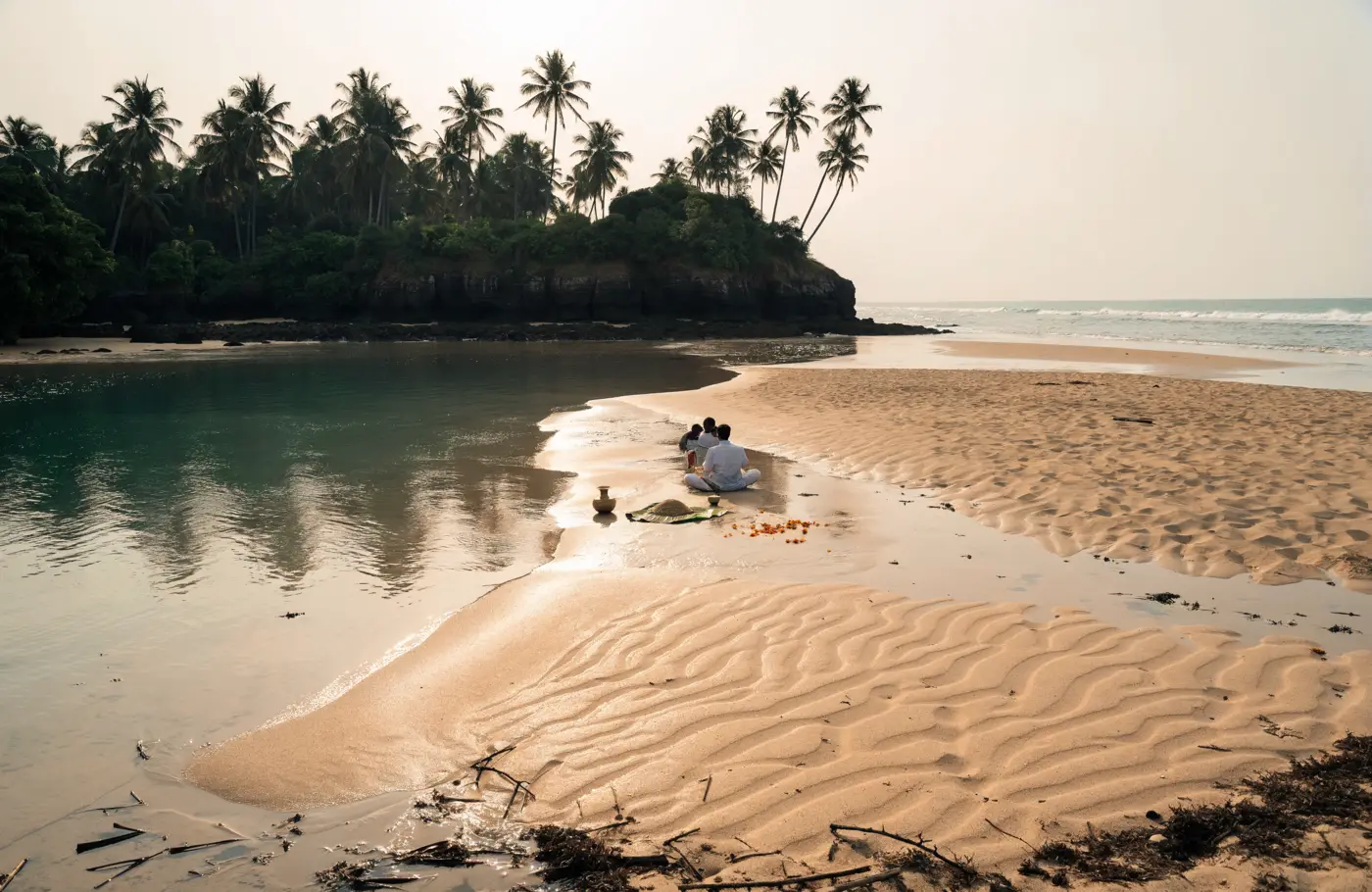
Gokarna, Karnataka. Known as Dakshina Kashi, the Kashi of the South, home to the Mahabaleshwar Temple and its Atmalinga, situated where the Gangavali and Agnashini rivers meet the sea. Pitru dosha pooja in Gokarna draws on this same confluence significance that makes Varanasi important in the north.
Srirangapatna, Karnataka. Centres on the Paschima Vahini, the west-flowing stretch of the Kaveri river, considered especially sacred for immersing ashes and performing ancestral rites. Pitru dosha pooja in Srirangapatna is built around this specific stretch of river, with the historic Ranganathaswamy temple nearby.
Somnath, Gujarat. Offers the Triveni Sangam, where the Hiran, Kapila and Saraswati rivers meet the Arabian Sea, near the Somnath Jyotirlinga. Pind Daan and Tarpan performed here draw on the same confluence tradition found at Prayagraj and Gaya.
Remote Puja Booking: Authentic Temple Rituals
Travelling to any of these sites isn't always possible, and for many families, that's exactly why the puja keeps getting postponed year after year.
Ekishwar covers Varanasi, Trimbakeshwar and Somnath from this list, and the Ganga at Rishikesh, with a qualified pandit performing the ritual at the correct site on your behalf, sankalp taken in your name and gotra, and a recording shared with you afterwards. For Gaya, Haridwar, Pehowa, Gokarna or Srirangapatna specifically, it's worth checking directly which platforms or local pandits currently cover those sites, since not every provider operates at every location.
Most of these rituals also carry extra weight when timed to the fortnight itself. The full 2026 Pitru Paksha calendar has the exact dates if you're planning a trip around it.
Book a Pitru Dosha puja
Narayan Nagbali Puja (Pitra dosh Puja)Trimbakeshwar · Narayan NagbaliKashi Kund Tripindi Shraddh Purvaj Rin Shanti AnushthanVaranasi · Tripindi Shraddh Pitru TarpanSomnath · Pitru TarpanAmavasya-Purnima Pind Daan - Purvaj Kripa VisheshRishikesh · Pind Daan on the Ganga
Pujas for you
Swipe · 4 pujas- Narayan Nagbali Puja (Pitra dosh Puja)Shri Trimbakeshwar Jyotirlinga Teerth, NashikBook now
- Pitru TarpanShri Somnath Jyotirlinga Teerth, Prabhas PatanBook now
- Kashi Kund Tripindi Shraddh Purvaj Rin Shanti AnushthanPishach Mochan Kund, VaranasiBook now
- Amavasya-Purnima Pind Daan - Purvaj Kripa VisheshNamami Gange Ghat, Rishikesh, UttarakhandBook now
Frequently asked questions
- Which is the best place for pitra dosh puja in India?
- There is no single best site, because the right one depends on the ritual. Gaya is the most significant site for Pind Daan, Trimbakeshwar is where Narayan Nagbali is traditionally performed, and Varanasi and Haridwar both suit general Pitra Dosh Shanti and Tarpan. Identify the type of Pitru Dosha first, then choose the site that matches it.
- How much does a pitra dosh puja cost?
- It varies widely by site, ritual and the number of pandits involved. Simpler Tarpan and Shanti rituals commonly fall in the ₹3,000 to ₹15,000 range, while a full Narayan Nagbali at Trimbakeshwar commonly runs ₹15,000 to ₹35,000 or more. These are general market ranges rather than a quote, so confirm the exact vidhi, pandit count and samagri included before booking.
- What are the main pind daan places in India?
- Gaya in Bihar is the foremost, followed by Varanasi, Pehowa in Haryana, Somnath in Gujarat and Srirangapatna in Karnataka. Gaya is the only one tradition holds can remove the need for further annual Shradh ceremonies for that lineage.
- Can pitra dosh puja be done without travelling to the temple?
- Yes. A qualified pandit can perform the ritual at the correct site on your behalf, with the sankalp taken in your name and gotra and a recording shared with you afterwards. This is how most families outside the region address these rituals now, and it is why a puja no longer needs to be postponed year after year for want of a trip.
- Is Trimbakeshwar or Gaya better for Pitru Dosha?
- They address different things. Go to Trimbakeshwar if the Dosha is linked to an ancestor's untimely or unnatural death, since Narayan Nagbali is performed there specifically for that. Go to Gaya if the need is Pind Daan for the lineage as a whole. Travelling to one when you needed the other is the most common and most expensive mistake.
- When is the best time of year to perform these rituals?
- Pitru Paksha, the fortnight dedicated to ancestors each September or October, carries the most weight for every ritual on this list. Amavasya each month is the next best window. Outside these, the rituals can still be performed on any day, though the major sites need advance booking around Pitru Paksha itself.
- Pitra dosh puja
- Pind Daan
- Gaya
- Trimbakeshwar
- Narayan Nagbali
- Pitra dosh nivaran puja
- Tarpan
- Pitru Dosha
Read next
All guides → Pitru PakshaWhat Is Pitru Dosha? Signs, Types, Effects, and How to Remove ItThe same problems keep circling back — marriage, money, health. Sometimes the cause is older than your choices. The 14 types of Pitra Dosh, and what each does.30 Sept 2026 · 7 min read
 Pitru PakshaPitru Dosha Remedies: 11 Proven Ways to Remove Pitra DoshKnowing you have Pitru Dosha is only half the answer. Eleven remedies, from a one-minute daily ritual to the pujas that need a priest and a sacred site.30 Sept 2026 · 5 min read
 Pitru PakshaHow to Perform Tarpan at Home: Step-by-Step Ritual Guide with Mantras and Samagri ListMost people skip Tarpan for fear of getting it wrong. The samagri you actually need, the seven steps in order, and the mantras written out in full.1 Oct 2026 · 6 min read