Maa Kalratri Mantra, Katha, Aarti and Bhog: Navratri Day 7 Puja Vidhi
Why the fiercest Devi is called Shubhankari, her form explained, the Raktabija katha, her mantras, and the Day 7 puja vidhi, jaggery bhog and aarti.
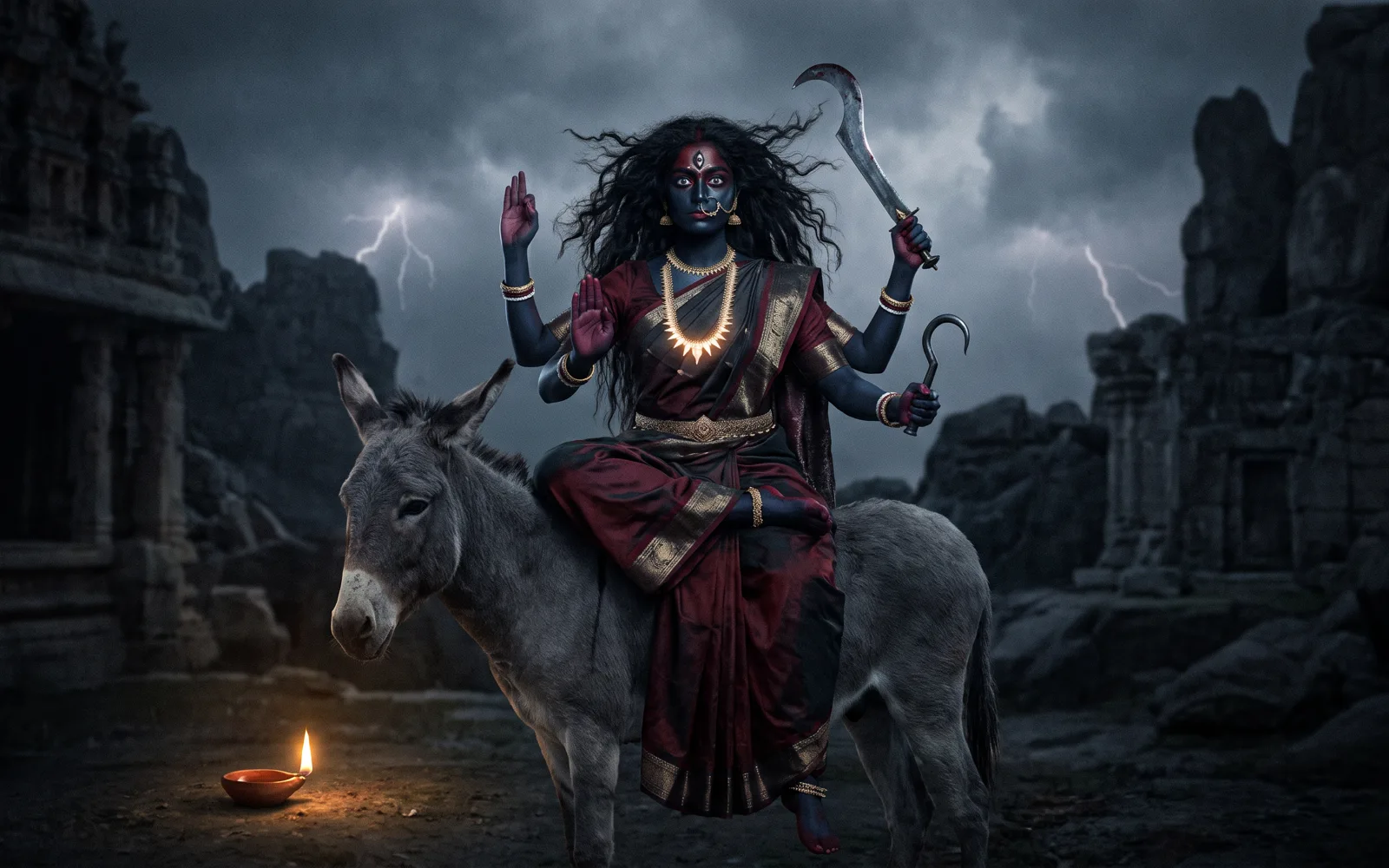
She has no golden glow, no gentle smile and no lion. Her skin is as dark as a moonless night, her hair is wild, and she rides a donkey. Of all nine forms worshipped in Navratri, Maa Kalratri is the one who looks least like what most people imagine a goddess to be. That is exactly the point.
Her name joins kaal (time, and death) with ratri (night). She is the night that swallows death itself, and on Day 7 she is worshipped to remove fear from the lives of her devotees.
Why Is the Fiercest Devi Called Shubhankari?
The most surprising thing about Kalratri is her second name, Shubhankari, "she who brings auspiciousness." It seems a strange title for a goddess with a terrifying form.
The answer lies in what her fierceness is for. Her fury is aimed only at what harms her devotees: negativity, fear and evil forces. Toward those who come to her, two of her four hands stay raised in blessing and protection. Like a mother who looks frightening only to whoever threatens her child, her dark form is a promise of safety, not a threat.
Maa Kalratri's Form: What Each Detail Means
Every part of her appearance carries meaning. Read together, they explain why devotees find her reassuring rather than frightening.
| Detail | What it stands for |
|---|---|
| Skin as dark as a moonless night | The darkness that absorbs all evil and fear |
| Wild, open hair | Raw, untamed energy |
| Three eyes | She sees everything, past, present and future |
| A necklace that flashes like lightning | Light that cuts through the darkest night |
| A donkey as her mount | Humility: power that needs no display |
| Sword and iron hook in her left hands | Destruction of negativity and evil |
| Right hands in abhaya and varada mudras | Fearlessness and blessings for her devotees |
Kalratri Mata ki Katha: The Battle with Raktabija
The demons Shumbha and Nishumbha had overrun the three worlds, and their general, Raktabija, held a terrifying boon: every drop of his blood that touched the ground would instantly become another Raktabija.
When the Goddess struck him in battle, his blood fell and thousands of copies rose from the earth. The more she fought, the larger his army grew. To end this, she took on her darkest form. Shedding her golden skin, she became Kalratri.
As Kalratri, she struck Raktabija and drank his blood before a single drop could reach the ground. With nothing left to multiply, he fell, and with him the demon army. The fiercest form of the Goddess had to appear because only she could stop an evil that grew every time it was attacked.
Maa Kalratri Mantra (with Meaning)
Kalratri mata mantra:
ॐ देवी कालरात्र्यै नमः॥
Om Devi Kalratryai Namah
"Salutations to Goddess Kalratri." This is the mantra most commonly chanted on Day 7, especially by those praying to be free of fear.
Beej (seed) mantra, used in havan:
ॐ ह्रीं क्रां क्रीं क्रौं कालरात्र्यै नमः स्वाहा॥
Om Hreem Kraam Kreem Kraum Kalratryai Namah Swaha
Dhyana mantra, describing her form:
एकवेणी जपाकर्णपूरा नग्ना खरास्थिता। लम्बोष्ठी कर्णिकाकर्णी तैलाभ्यक्तशरीरिणी॥ वामपादोल्लसल्लोहलताकण्टकभूषणा। वर्धनमूर्धध्वजा कृष्णा कालरात्रिर्भयङ्करी॥
Ekaveni Japakarnapura Nagna Kharasthita, Lambhoshthi Karnikakarni Tailabhyakta Sharirini, Vamapadollasalloha Latakantaka Bhushana, Vardhana Murdhadhvaja Krishna Kalaratrirbhayankari
"With a single braid, hibiscus flowers at her ears, seated on a donkey, her body anointed with oil, her left foot adorned with an iron ornament, dark and fearsome: that is Kalratri."
Maa Kalratri Puja Vidhi on Navratri Day 7
Unlike the earlier days, many households keep Kalratri's main puja for the evening or night, the time she is said to be most present.
- Continue the Navratri routine. Water the barley and refresh the kalash in the morning, as usual.
- Prepare the space after sunset. Clean the altar and place her picture, ideally with night-blooming jasmine or any white or blue flowers.
- Light the lamp in a darkened room. A single diya glowing in the dark is the heart of her puja, the light that overcomes the night. Light dhoop alongside it.
- Recite the dhyana mantra. Picture her form as you say "Ekaveni Japakarnapura..."
- Chant her mantra. Recite "Om Devi Kalratryai Namah" 108 times, with a prayer to be free of whatever you fear.
- Offer jaggery as bhog.
- Close with the aarti, then share the bhog as prasad.
Maa Kalratri Bhog and Colour
Jaggery, or gur, is her bhog. Earthy and strengthening, it is offered for inner resilience, and many families make a simple gur-til laddoo or offer a plain piece of gur. Every devi has her own offering, and the reasoning behind each is explained in the Navratri bhog for 9 days list.
Grey is the colour for her day. Neither black nor white, it suits a goddess who stands at the line between darkness and light. You can see where it falls in the full Navratri colours 2026 sequence.
Kalratri Mata ki Aarti
Many households sing the dedicated Kalratri aarti on Day 7, while others sing the Durga aarti, Jai Ambe Gauri, as on every other day of Navratri:
जय अम्बे गौरी, मैया जय श्यामा गौरी। तुमको निशिदिन ध्यावत, हरि ब्रह्मा शिवरी॥
Jai Ambe Gauri, Maiya Jai Shyama Gauri, Tumko Nishidin Dhyavat, Hari Brahma Shivari.
"Victory to Mother Gauri, who is meditated upon day and night by Hari, Brahma and Shiva."
Day 7 at the Temples
At the Tripura Sundari Shakti Peeth in Tripura, Day 7 is marked with the Shri Chakra Maha Havan of 11,000 ahutis. Those praying for protection from negativity, Kalratri's own domain, also often offer the Nazar Mukti Nariyal chadhawa at Kalighat, where Maa Kali herself is worshipped.
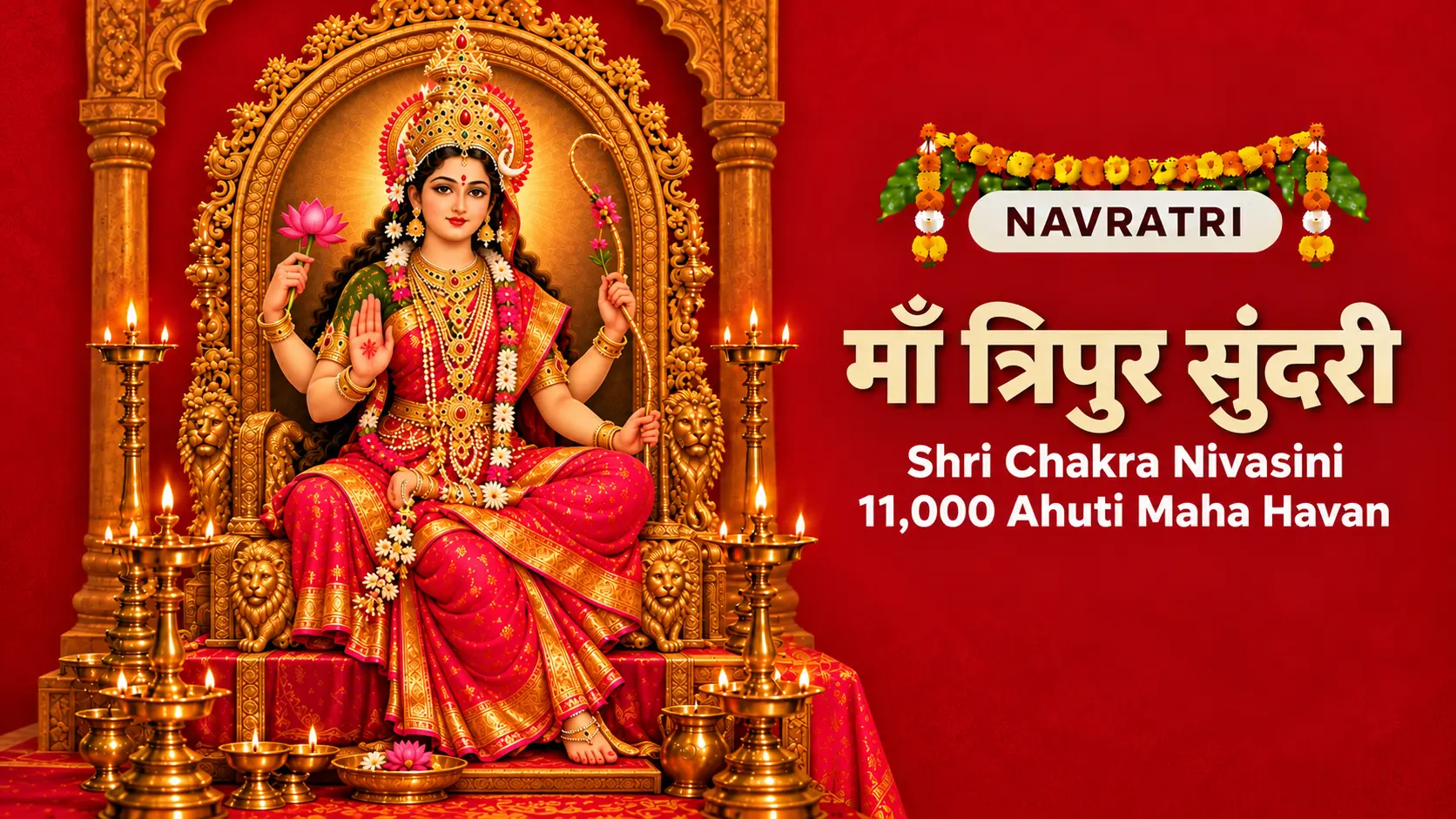 Day 7 · Tripura Sundari Shakti PeethMaa Tripura Sundari Shri Chakra Nivasini 11,000 Ahuti Maha HavanShri Chakra Maha Havan of 11,000 ahutis at Maa Tripura Sundari's Shakti Peeth, performed in your name.Tripura Sundari Temple (Matabari), TripuraBook this puja
Benefits of Worshipping Kalratri Devi
- Freedom from fear. She is above all the goddess of fearlessness, prayed to by anyone living with anxiety or dread.
- Protection from negativity. Devotees believe her worship removes harmful influences, enemies and the effects of the evil eye.
- Relief during a Shani period. As the goddess said to govern Saturn, she is prayed to during difficult Shani phases.
- Spiritual awakening. Many traditions link her to the Sahasrara (crown) chakra, which is why sadhaks hold her day as especially powerful.
A Lamp for the Darkest Night
Kalratri asks devotees to look directly at what frightens them. Her form is dark because fear is dark, and her worship is simple: a single lamp lit against the night, a prayer, a piece of jaggery. By Day 7, Navratri has moved from Shailputri's beginnings to the goddess who stands between her devotees and every darkness, and for many families this is the night their prayers feel most personal.
If you'd like a Navratri puja performed at a temple on your behalf, Ekishwar can arrange it at a Shakti Peeth, in your name.
Book a Navratri puja at a Devi temple
Maa Tripura Sundari Shri Chakra Nivasini 11,000 Ahuti Maha HavanTripura · Shri Chakra Maha Havan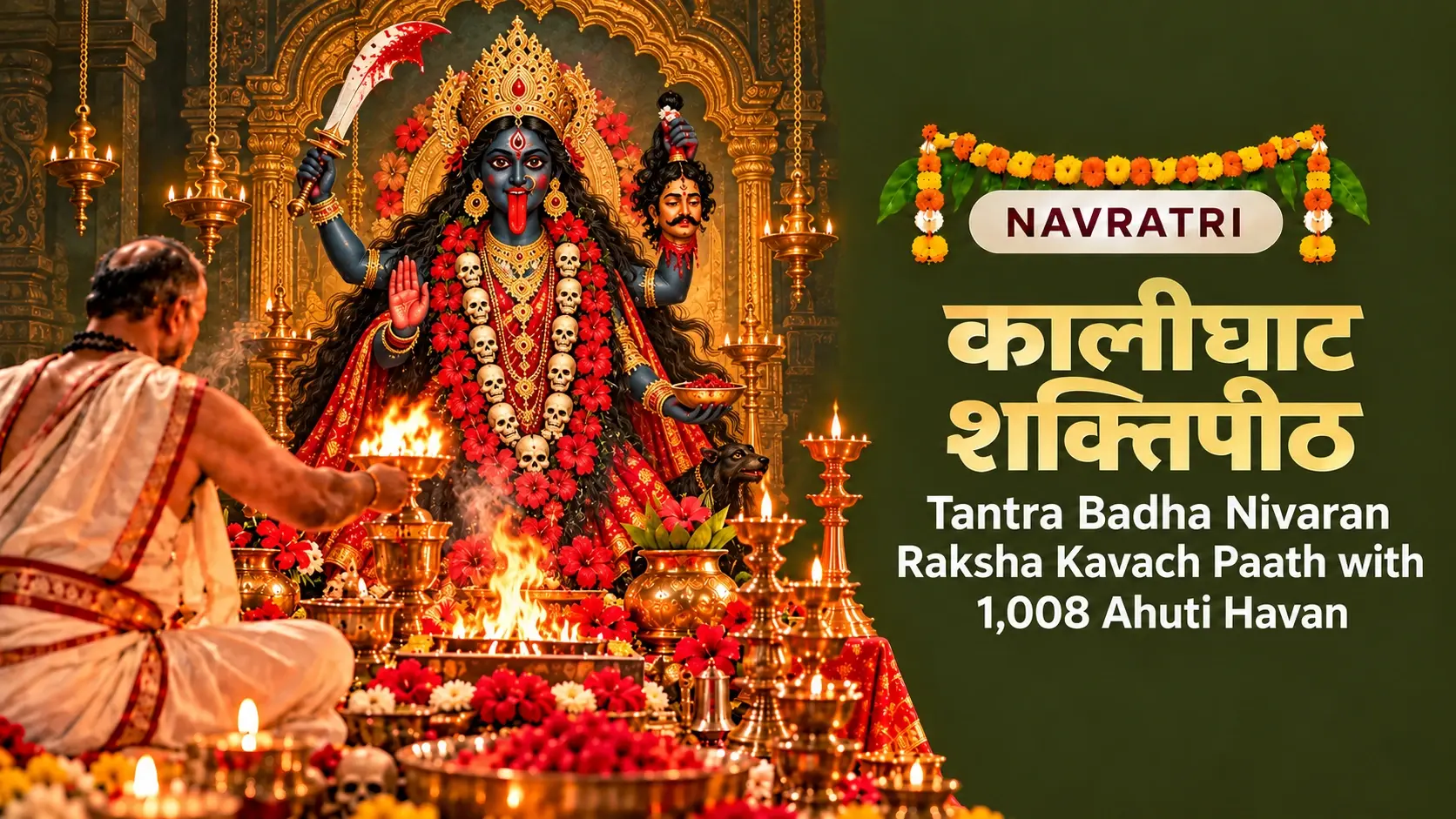 Kalighat Shaktipeeth Tantra Badha Nivaran Raksha Kavach Paath with 1,008 Ahuti HavanKalighat · Raksha Kavach Paath
 Navratri Rare Temple Shree Yantra Abhishek – Apne Ghar Layen Ashirwadit Shree YantraHaridwar · Shree Yantra Abhishek
 Navratri Navami 9 Devi Shakti Maha Havan with 9 Kanya PujanVaishno Devi · 9 Kanya Pujan
 Mahalakshmi Ambabai Rare Shaktipeeth Shodashopachar 4 Prahar Mahapuja (Get Dhanlakshmi Potli delivered after Puja)Kolhapur · Ambabai Mahapuja
 Navratri Maa Tulja Bhavani Shakti-Vaibhav 108 Bhavani Ashtakam PaathKashi · Durga Saptashati path
Pujas for you
Swipe · 6 pujas- Maa Tripura Sundari Shri Chakra Nivasini 11,000 Ahuti Maha HavanTripura Sundari Temple (Matabari), TripuraBook now
- Kalighat Shaktipeeth Tantra Badha Nivaran Raksha Kavach Paath with 1,008 Ahuti HavanShakiteepth Kalighat, KolkataBook now
- Navratri Rare Temple Shree Yantra Abhishek – Apne Ghar Layen Ashirwadit Shree YantraShree Yantra Mandir, HaridwarBook now
- Navratri Navami 9 Devi Shakti Maha Havan with 9 Kanya PujanNav Devi Mandir, Vaishno Devi Teerth KshetraBook now
- Mahalakshmi Ambabai Rare Shaktipeeth Shodashopachar 4 Prahar Mahapuja (Get Dhanlakshmi Potli delivered after Puja)Shri Mahalaxmi Ambabai Temple, KolhapurBook now
- Navratri Maa Tulja Bhavani Shakti-Vaibhav 108 Bhavani Ashtakam PaathTulja Bhavani Durga Mata Mandir Rameshwar Rajatalab VaranasiBook now
Frequently asked questions
- What does Kalratri mean?
- It joins "kaal" (time, or death) and "ratri" (night). She is the dark night that destroys death and fear.
- What is the Maa Kalratri mantra?
- The most common mantra is "Om Devi Kalratryai Namah," meaning "Salutations to Goddess Kalratri."
- What is the story of Kalratri Mata?
- She took her darkest form to defeat the demon Raktabija, whose every drop of spilled blood created a new demon. She drank his blood before it could touch the ground and destroyed him.
- Why is Maa Kalratri called Shubhankari?
- Shubhankari means "she who brings auspiciousness." Though her form is fierce, it is aimed only at evil, and she always blesses and protects her devotees.
- What bhog is offered to Maa Kalratri?
- Jaggery (gur), offered for inner strength and resilience.
- Kalratri kab hai in 2026?
- Maa Kalratri is worshipped on Navratri Day 7, Saptami, which falls on Saturday, 17 October 2026.
- Kalratri
- Maa Kalratri
- Kalratri Mata
- Kalratri Mantra
- Navratri Day 7
- Navratri 2026
- Navdurga
- Aarti
Read next
All guides →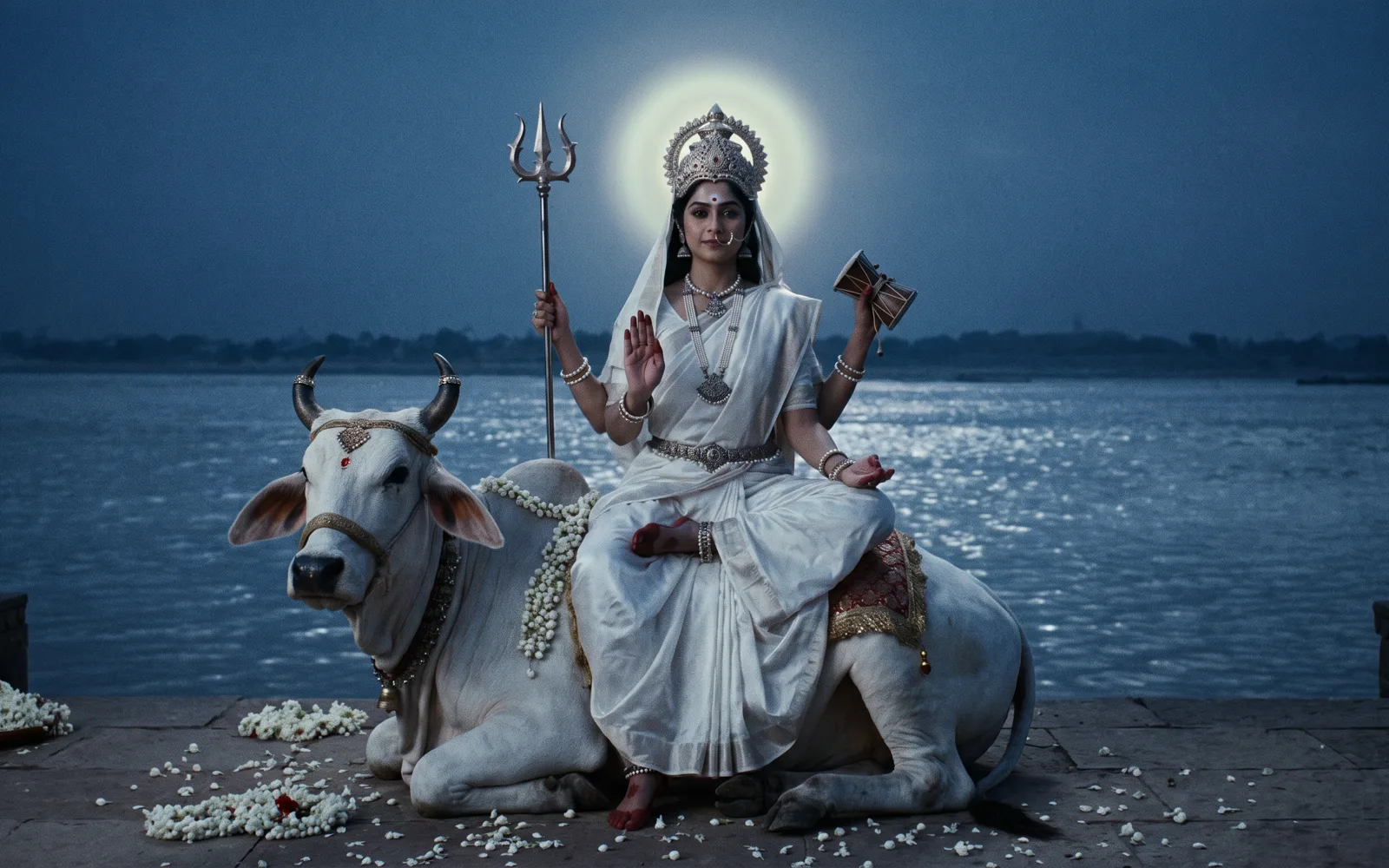 NavratriMaa Mahagauri Mantra, Katha, Aarti and Bhog: Navratri Day 8 (Durga Ashtami) Puja VidhiWho Maa Mahagauri is, how Parvati became Gauri, her mantras, and the Durga Ashtami puja vidhi with Kanya Pujan, Sandhi Puja, coconut bhog and aarti.15 Oct 2026 · 6 min read
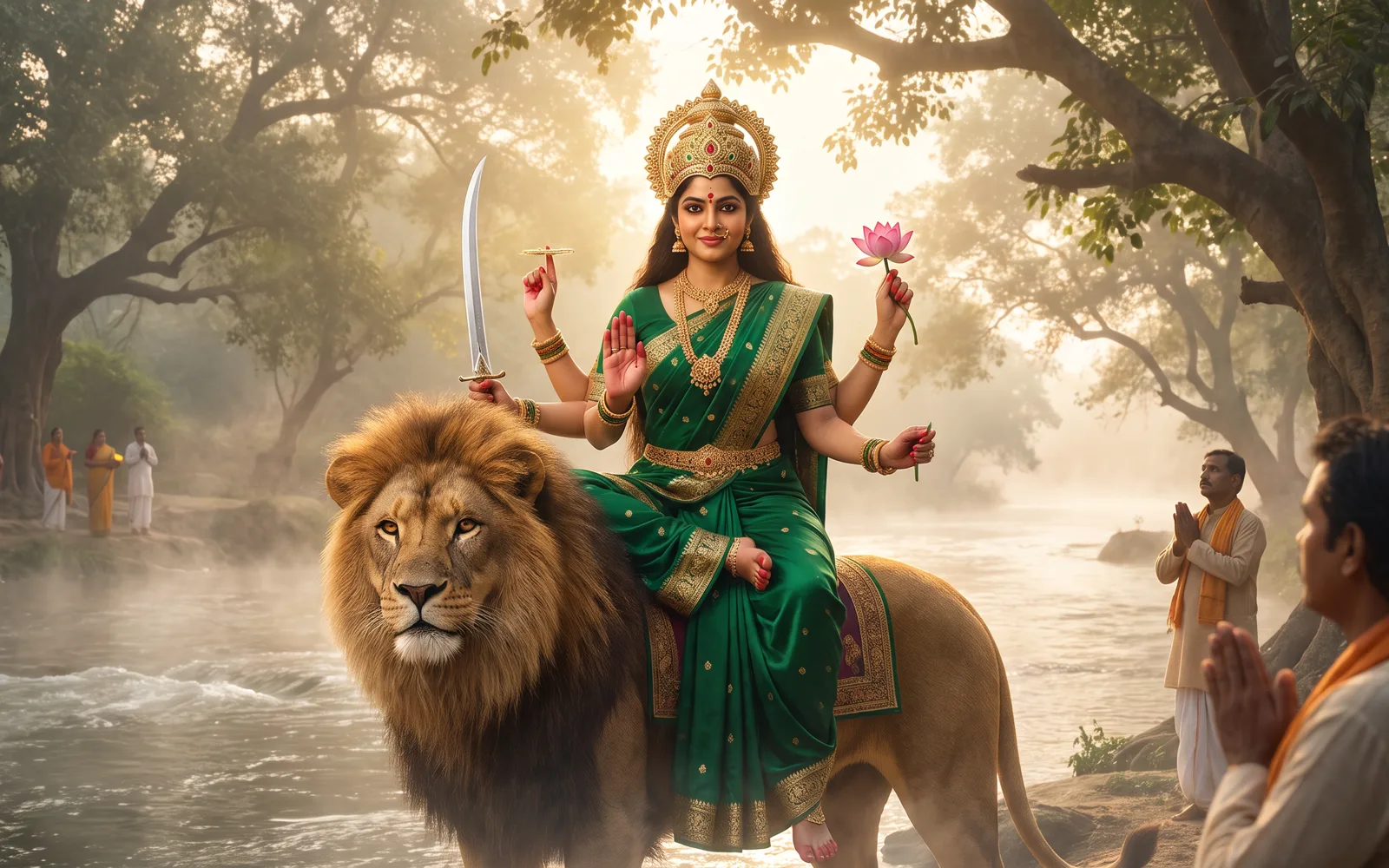 NavratriMaa Katyayani Mantra, Katha, Aarti and Bhog: Navratri Day 6 Puja VidhiThe Katyayani mantra for marriage, word by word, plus her other mantras, her katha, the gopis' vrat, and the Day 6 puja vidhi, bhog, colour and aarti.14 Oct 2026 · 6 min read
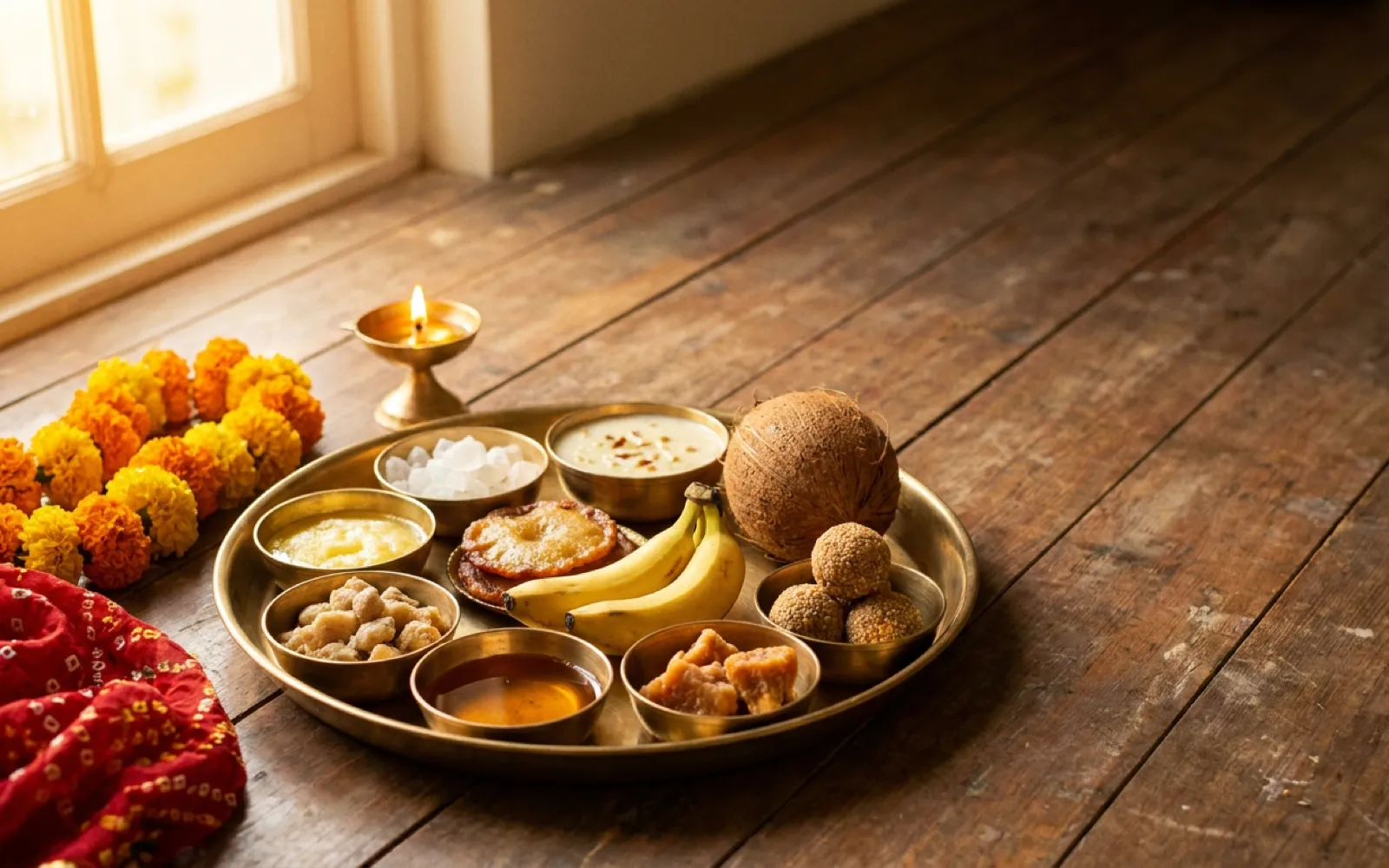 0:59NavratriNavratri Bhog for 9 Days: Day-wise Bhog List for Each Devi (Navratri ke 9 Din ke Bhog)From ghee for Maa Shailputri to til for Maa Siddhidatri: the bhog for each of the nine days of Navratri 2026, what it means, and how to prepare it simply.9 Oct 2026 · 6 min read