Narayan Nagbali: Meaning, Who Performs It, the Three-Day Process and Rules After
What is Narayan Nagbali puja? Why families perform it, how the three days at Trimbakeshwar run, who conducts it, and the rules after Narayan Nagbali pooja.
Most Hindu funeral rites assume a death that came in its time and a body that received its sanskar. Narayan Nagbali exists for the cases that fall outside that assumption: a relative lost to an accident, drowning or sudden illness, whose rites were rushed, incomplete or impossible. Families usually come to it after years of feeling that something was left unfinished, often at a purohit's suggestion when the signs of pitru dosha keep appearing in a chart.
What Is Narayan Nagbali?
Narayan Nagbali is a shraddh-related rite, not a regular puja. It belongs to the family of rituals that settle a debt to the dead, alongside tarpan, pind daan and tripindi shraddh, but it is reserved for specific situations rather than performed every year.
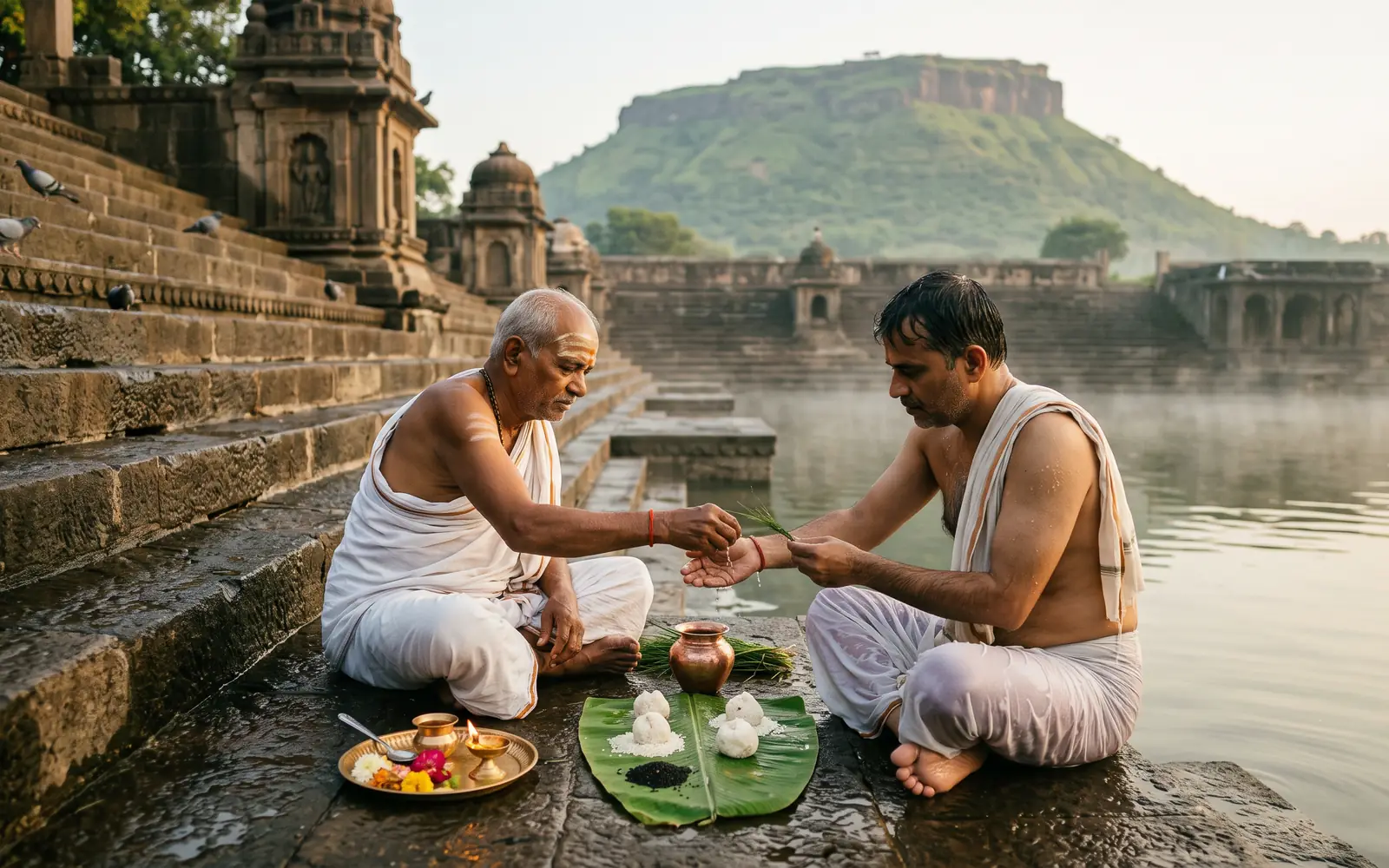
The Garuda Purana and later dharma texts describe Narayan Bali as the rite for those who died an akaal mrityu (untimely death) and did not receive proper antim sanskar. Because the body is no longer available, the purohits shape an effigy from kusha grass and flour and perform the funeral rites on it, invoking Narayan (Vishnu) to grant the soul its passage.
So if someone asks what is Narayan Nagbali puja in one line: it completes funeral and atonement rites that were left undone, so the family can move forward.
Narayan Bali and Nag Bali: Two Rites in One
The name joins two separate rites that Trimbakeshwar tradition performs as a set.
| Narayan Bali | Nag Bali | |
|---|---|---|
| Addresses | An ancestor's untimely death without proper last rites | The sin of killing a cobra (naag), by the family or an ancestor |
| Effigy | Kusha and flour figure of the deceased | Flour or gold figure of a cobra |
| What happens | Full funeral rites and pind daan for the effigy | Cremation rites and atonement for the snake |
| Deity invoked | Narayan (Vishnu) | Naag devta, with Shiva as the lord of serpents |
Nag Bali is often confused with kaal sarp dosh puja, because both involve serpent worship and both are common at Trimbakeshwar. They answer different problems. Kaal sarp shanti addresses a placement of Rahu and Ketu in the birth chart; Nag Bali addresses an act, the killing of a snake. Some families need one, some need both, and a purohit will usually ask which before fixing the rite.
Narayan Bali can also be performed on its own at certain Shiva kshetras. At Trilochan Mahadev Dham in Jaunpur, for example, a Narayan Bali puja is performed on chosen nakshatras for a single departed soul. The combined Narayan Nagbali, however, remains a Trimbakeshwar rite.
Why Families Perform Narayan Nagbali
Purohits usually suggest Narayan Nagbali in four situations:
- An untimely death in the family, such as an accident, drowning, fire, snakebite or sudden death, especially where the body could not receive proper rites.
- Rites that were never completed, for example when a family member died far from home and the shraddh lapsed.
- A known or suspected killing of a cobra in the family's past.
- A pattern of trouble across generations that an astrologer reads as pitru dosh linked to one of the reasons above.
Narayan Nagbali is not a general remedy. For a broader sense of ancestral unrest without one of these causes, purohits more often suggest tarpan, tripindi shraddh or the regular pitru dosh remedies first.
Who Performs Narayan Nagbali?
At Trimbakeshwar, the rite is conducted by the town's hereditary purohit families, often called tamrapatradhari purohits because their right to perform these rites is traditionally recorded on copper plates (tamrapatra). They keep genealogical registers of the families they serve, and some devotees find their own grandparents' names in those books.
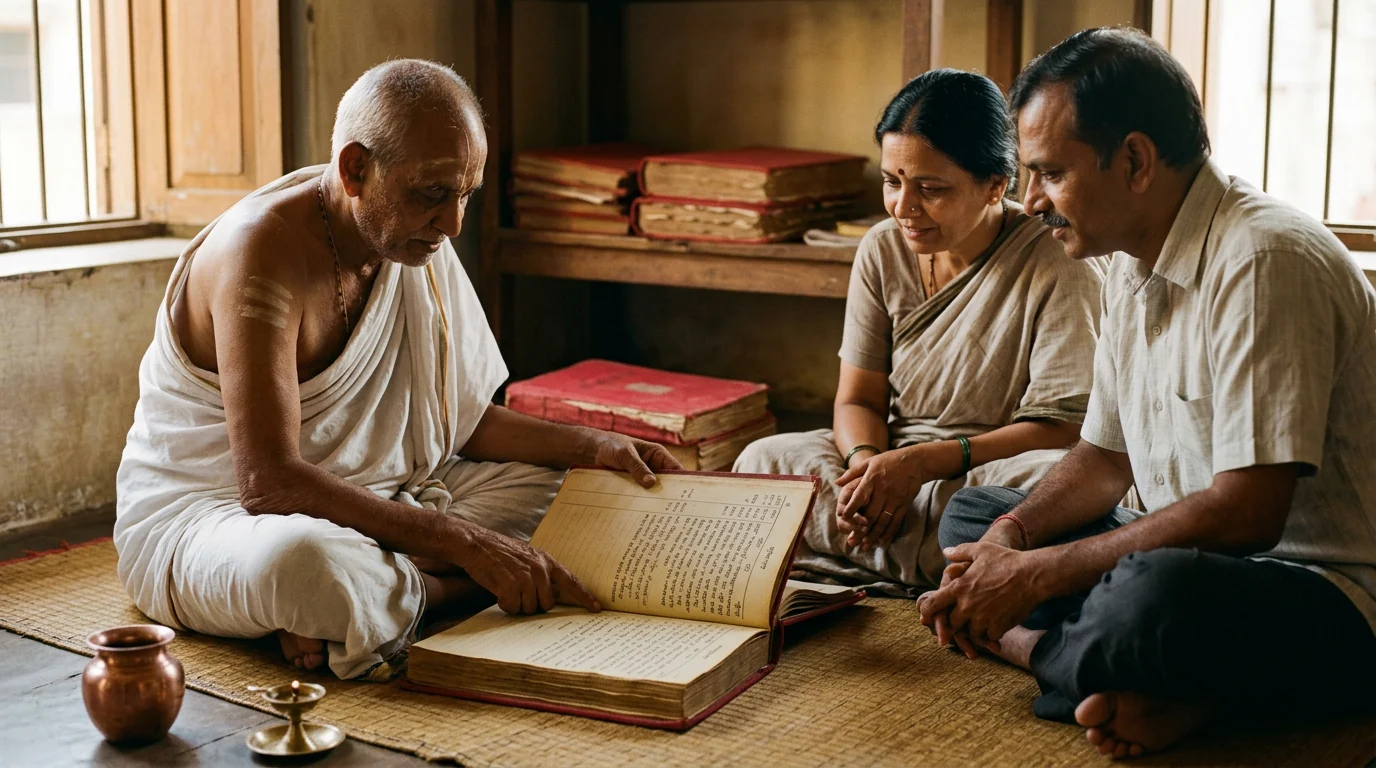
On the family's side, the yajman is usually a son or another male descendant of the person the rite is for. Married couples commonly sit together. Where there is no male descendant, families decide the yajman with the purohit, since practice varies. When the family cannot travel, the purohit performs the rite on their behalf, with the yajman's name and gotra spoken in the sankalp.
The Three-Day Process at Trimbakeshwar
The exact order varies a little between purohit families, but the rite usually runs over three days:
| Day | What happens |
|---|---|
| Day 1 | Ritual bath at Kushavarta Kund, sankalp, then Narayan Bali: the kusha-and-flour effigy receives full funeral rites and pind daan |
| Day 2 | Nag Bali: the serpent effigy receives cremation rites, followed by atonement prayers and further pind daan |
| Day 3 | Completion with Ganesh puja, daan and feeding of Brahmins, and darshan at Trimbakeshwar Jyotirlinga |
Each day takes several hours, mostly in the morning. Families who travel usually stay all three nights in Trimbak. Dates are set by the purohits, and Pitru Paksha and Amavasya slots fill well in advance.
For families who cannot travel to Nashik, the Narayan Nagbali puja can be performed at Trimbakeshwar on their behalf, with the family's name and gotra in the sankalp and a video of the rite shared afterwards. Where the concern is the last three generations rather than one untimely death, the same purohits also perform tripindi shraddh in a single day.
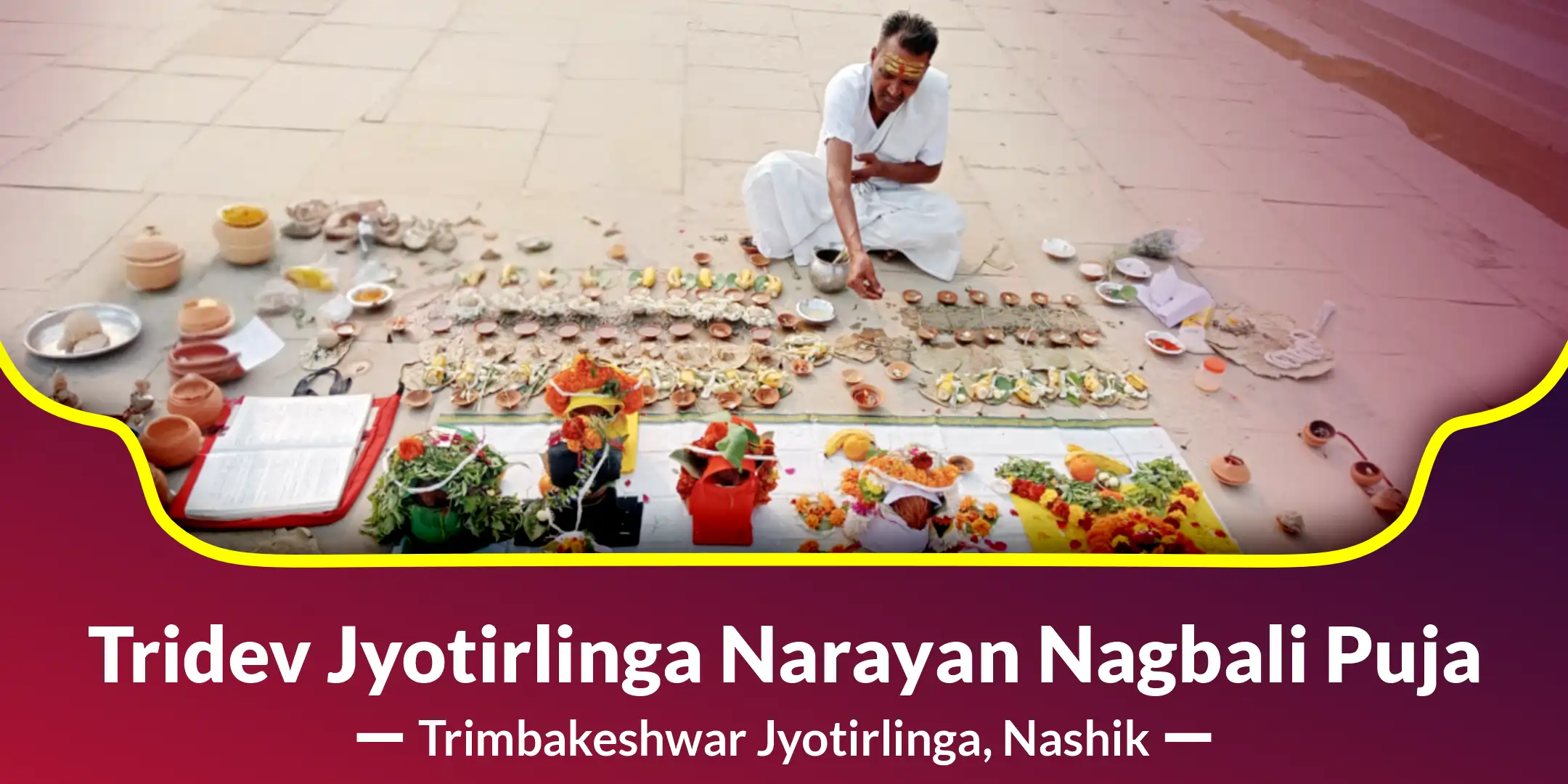 Performed at Trimbakeshwar, in your nameNarayan Nagbali Puja (Pitra dosh Puja)Narayan Nagbali at Trimbakeshwar Jyotirlinga, Nashik, with your family's name and gotra in the sankalp.Shri Trimbakeshwar Jyotirlinga Teerth, NashikBook this puja
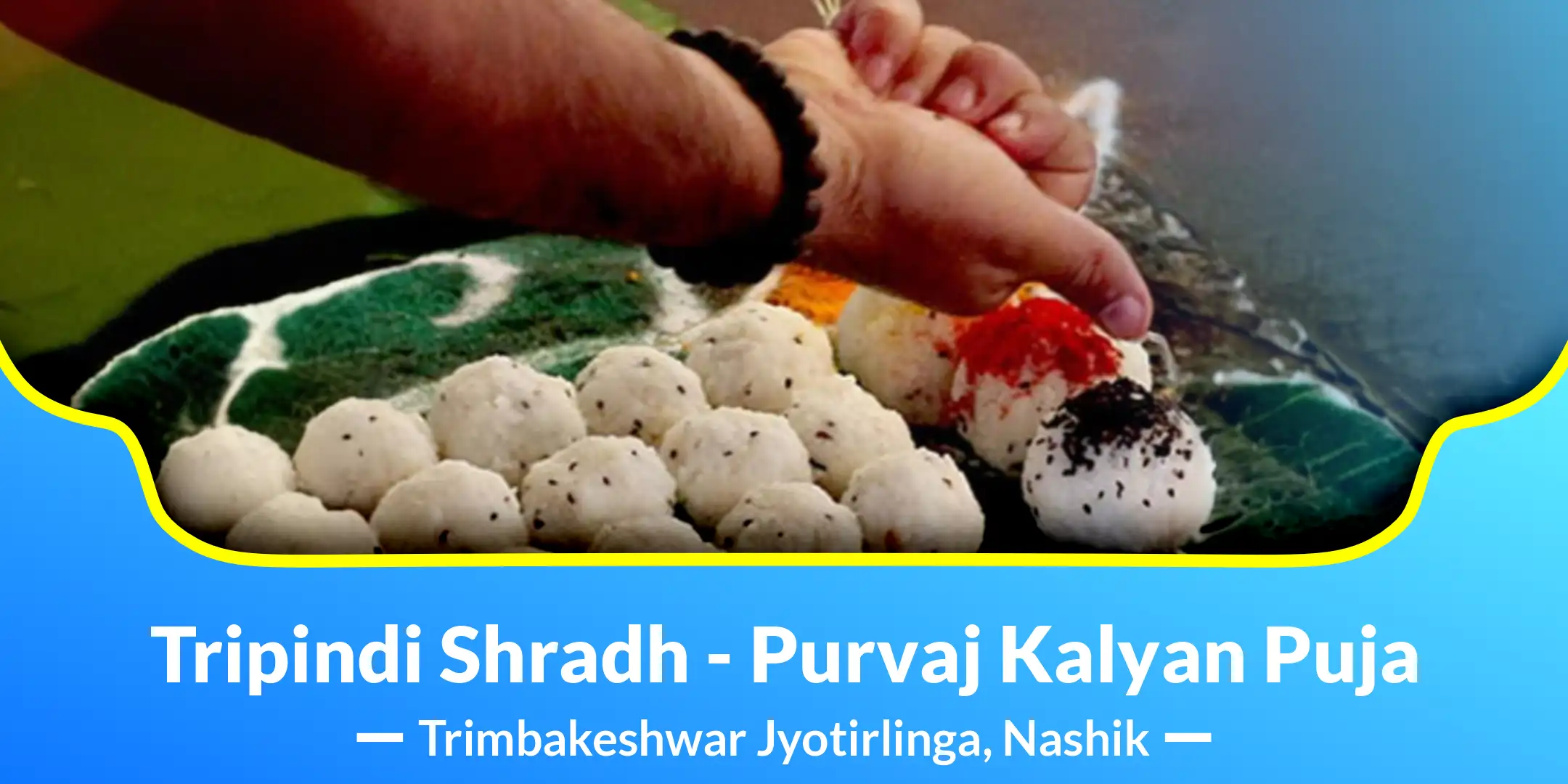 For the last three generationsTripindi Shradh - Purvaj Kalyan PujaTripindi shraddh at Trimbakeshwar, completed in a single day.Shri Trimbakeshwar Jyotirlinga Teerth, NashikBook this puja
Rules After Narayan Nagbali Pooja
The rules after Narayan Nagbali pooja come from purohit guidance rather than a single fixed text, and families should confirm them with the purohit who performed the rite. The ones given most often:
- Go straight home. Many purohits advise travelling directly home after completion, without stopping at relatives' houses on the way.
- Keep the days sattvic. No meat, alcohol, onion or garlic during the three days, and many families continue this until the next Amavasya.
- Observe restraint. Brahmacharya and simple living through the days of the rite.
- Keep up the yearly shraddh. Narayan Nagbali completes what was missed; it does not replace the annual shraddh or tarpan at home during Pitru Paksha.
- Give daan on the next Amavasya. Feeding a cow, a Brahmin or someone in need in the ancestor's name is the most common follow-up.
- Do not repeat it for the same ancestor. Once performed correctly, the rite is considered complete for that soul.
Learn more: can Narayan Nagbali be done during pregnancy?
Many purohits ask a pregnant woman not to sit as yajman for the cremation rites and suggest another family member take the sankalp instead.
Practice varies, so ask the purohit before fixing the date.
Narayan Nagbali Pooja Benefits (What Tradition Says)
Tradition describes the Narayan Nagbali pooja benefits in terms of completion rather than reward:
- Peace for the departed. The soul receives the rites it missed and is believed to move on.
- Release for the family. The sense of an unpaid debt to an ancestor, often carried for years, is settled.
- Atonement for a past act. Nag Bali offers formal expiation where a cobra was killed.
- A clean start. The rite ends with Ganesh puja, the traditional marker of a new beginning.
Devotees describe these as relief and closure. No authentic purohit promises that the rite alone will change health, money or family events, and anyone who does is worth questioning.
Finishing What Was Left Undone
Narayan Nagbali rests on an old idea: that the dead are owed their rites, and that a family carries the debt until someone pays it. The three days at Trimbakeshwar are less about fear of the ancestor than about care for them, the same care a family would have shown at a proper funeral had circumstances allowed.
That is also why the rules after the rite are so plain. Go home, eat simply, feed someone on the next Amavasya, and keep remembering the dead every year. The rite closes one account; the remembering continues.
Families who cannot make the journey to Nashik can have Narayan Nagbali performed at Trimbakeshwar in their name through Ekishwar.
Book a Narayan Nagbali or pitru puja
Narayan Nagbali Puja (Pitra dosh Puja)Trimbakeshwar · Narayan NagbaliTripindi Shradh - Purvaj Kalyan PujaTrimbakeshwar · Tripindi shraddh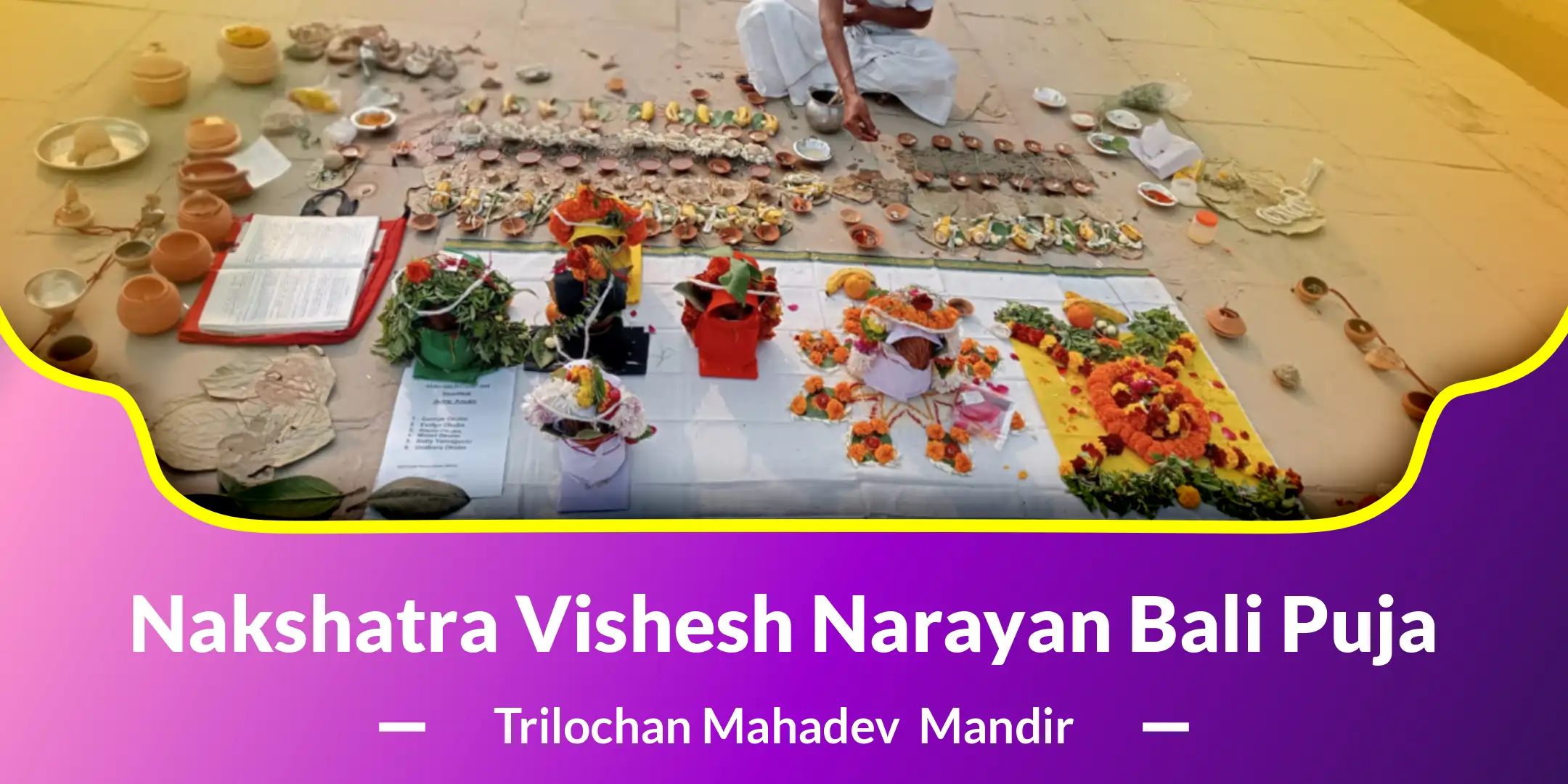 Nakshatra Vishesh Narayan Bali PujaJaunpur · Narayan Bali
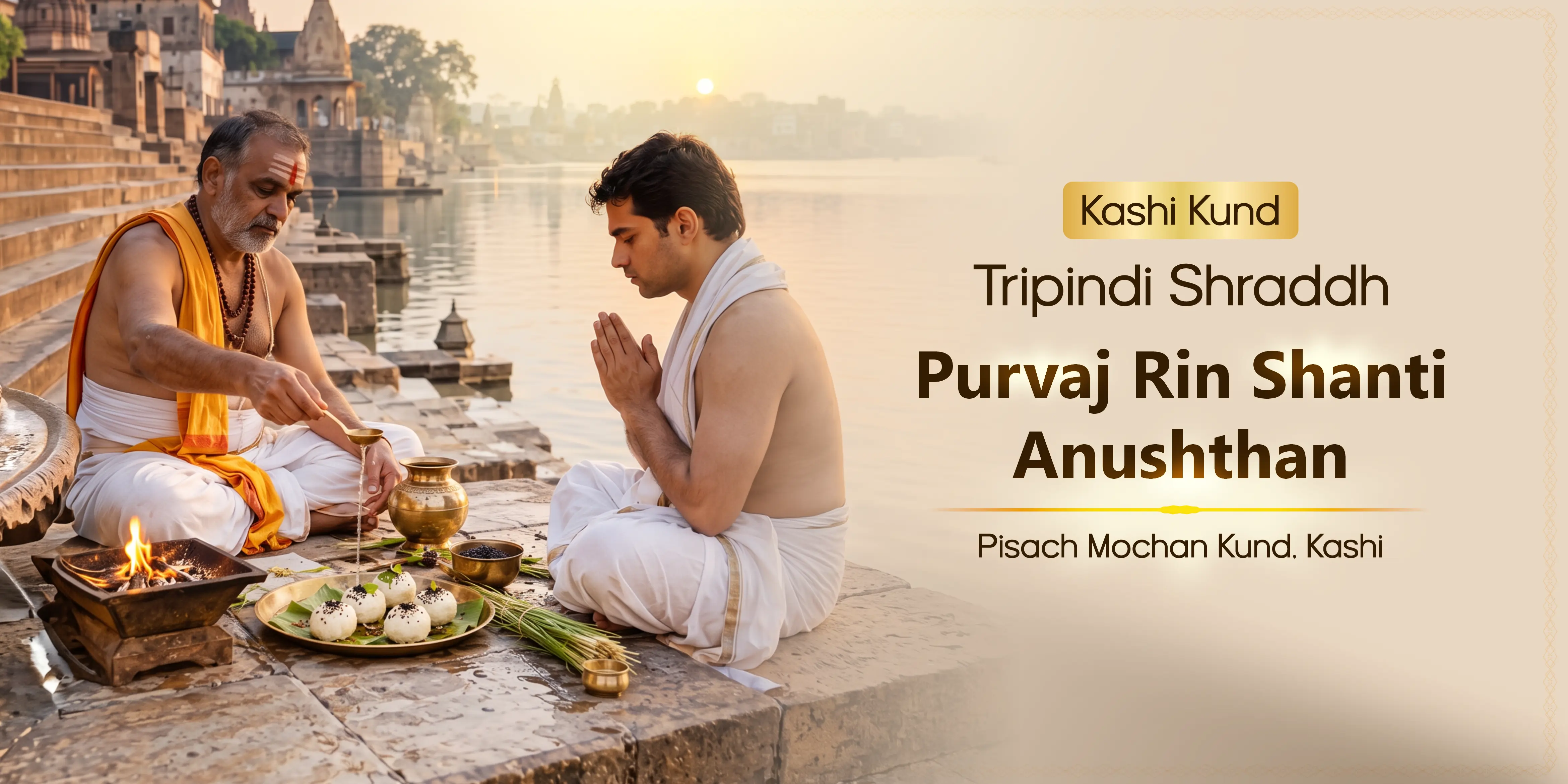 Kashi Kund Tripindi Shraddh Purvaj Rin Shanti AnushthanKashi · Pishach Mochan Kund
Pujas for you
Swipe · 4 pujas- Narayan Nagbali Puja (Pitra dosh Puja)Shri Trimbakeshwar Jyotirlinga Teerth, NashikBook now
- Tripindi Shradh - Purvaj Kalyan PujaShri Trimbakeshwar Jyotirlinga Teerth, NashikBook now
- Nakshatra Vishesh Narayan Bali PujaTrilochan Mahadev Dham, Jaunpur Book now
- Kashi Kund Tripindi Shraddh Purvaj Rin Shanti AnushthanPishach Mochan Kund, VaranasiBook now
FAQs on Narayan Nagbali
- What is Narayan Nagbali puja?
- It is a set of two atonement rites performed at Trimbakeshwar: Narayan Bali, which completes the last rites of an ancestor who died an untimely death, and Nag Bali, which atones for the killing of a cobra.
- How many days does Narayan Nagbali take?
- Three days at Trimbakeshwar, with several hours of ritual each morning. The final day ends with Ganesh puja, daan and darshan.
- Can Narayan Nagbali be done anywhere other than Trimbakeshwar?
- The combined Narayan Nagbali is traditionally performed only at Trimbakeshwar. Narayan Bali on its own is performed at some other Shiva kshetras.
- Is Narayan Nagbali the same as kaal sarp dosh puja?
- No. Kaal sarp dosh puja addresses a Rahu-Ketu placement in the birth chart. Nag Bali addresses the killing of a snake, and Narayan Bali addresses an untimely death.
- Does Narayan Nagbali need to be done every year?
- No. It is performed once for a given ancestor. The yearly shraddh and tarpan continue as usual.
- Who should perform Narayan Nagbali?
- Usually a son or male descendant of the person it is for, often with his wife. Where that is not possible, the family and purohit decide the yajman together.
- Narayan Nagbali
- Narayan Nagbali puja
- Narayan Bali
- Nag Bali
- Trimbakeshwar
- Rules after Narayan Nagbali
- Tripindi shraddh
- Pitru dosh
Read next
All guides → Pitru PakshaWhat Is Pitru Dosha? Signs, Types, Effects, and How to Remove ItThe same problems keep circling back — marriage, money, health. Sometimes the cause is older than your choices. The 14 types of Pitra Dosh, and what each does.30 Sept 2026 · 7 min read
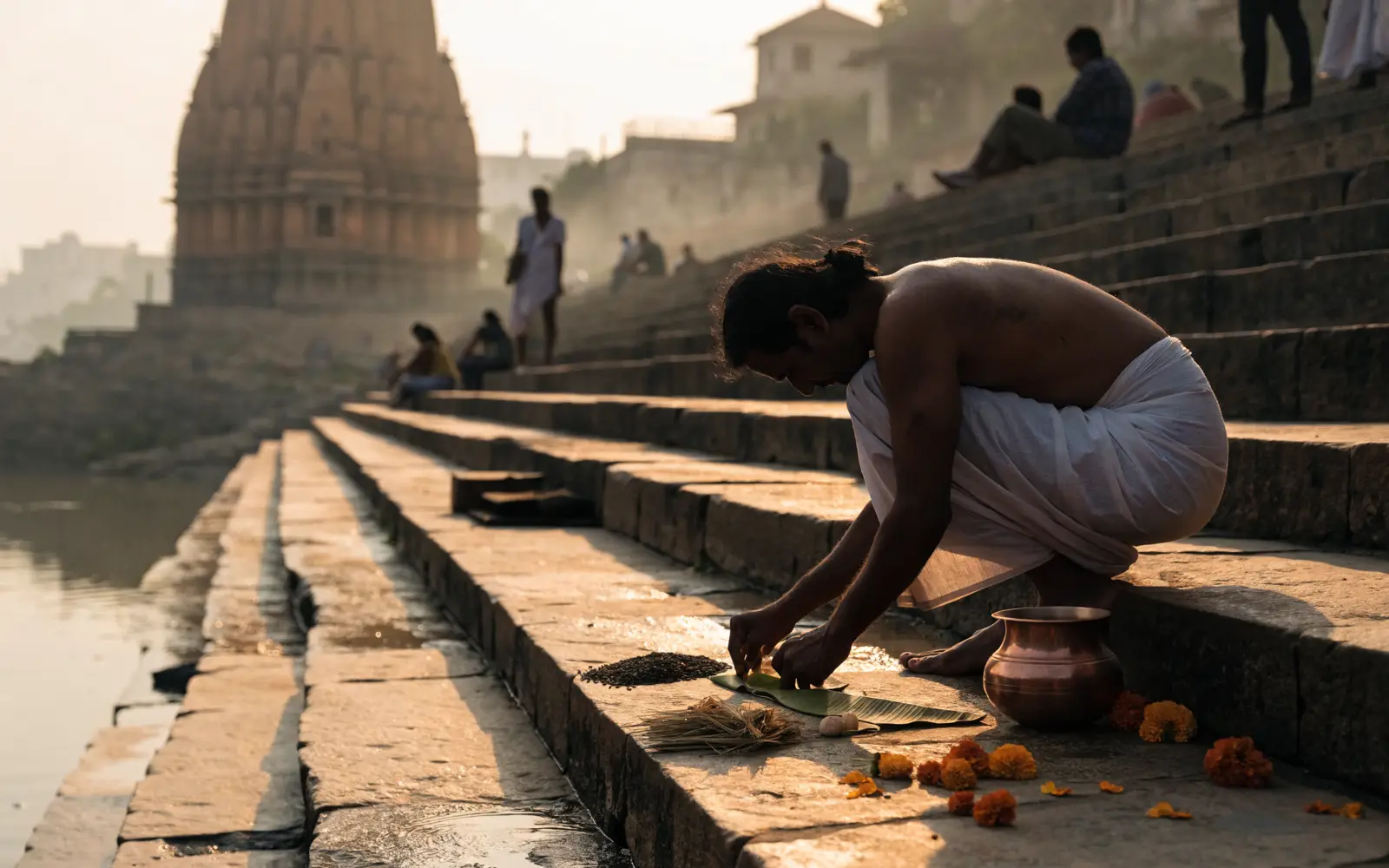 Pitru PakshaBest Places for Pitru Dosh Puja in India: Location Guide with Costs and RitualsSome rituals only work at one site in the whole country. Where each pitra dosh puja belongs, what it typically costs, and when you need not travel at all.6 Oct 2026 · 7 min read
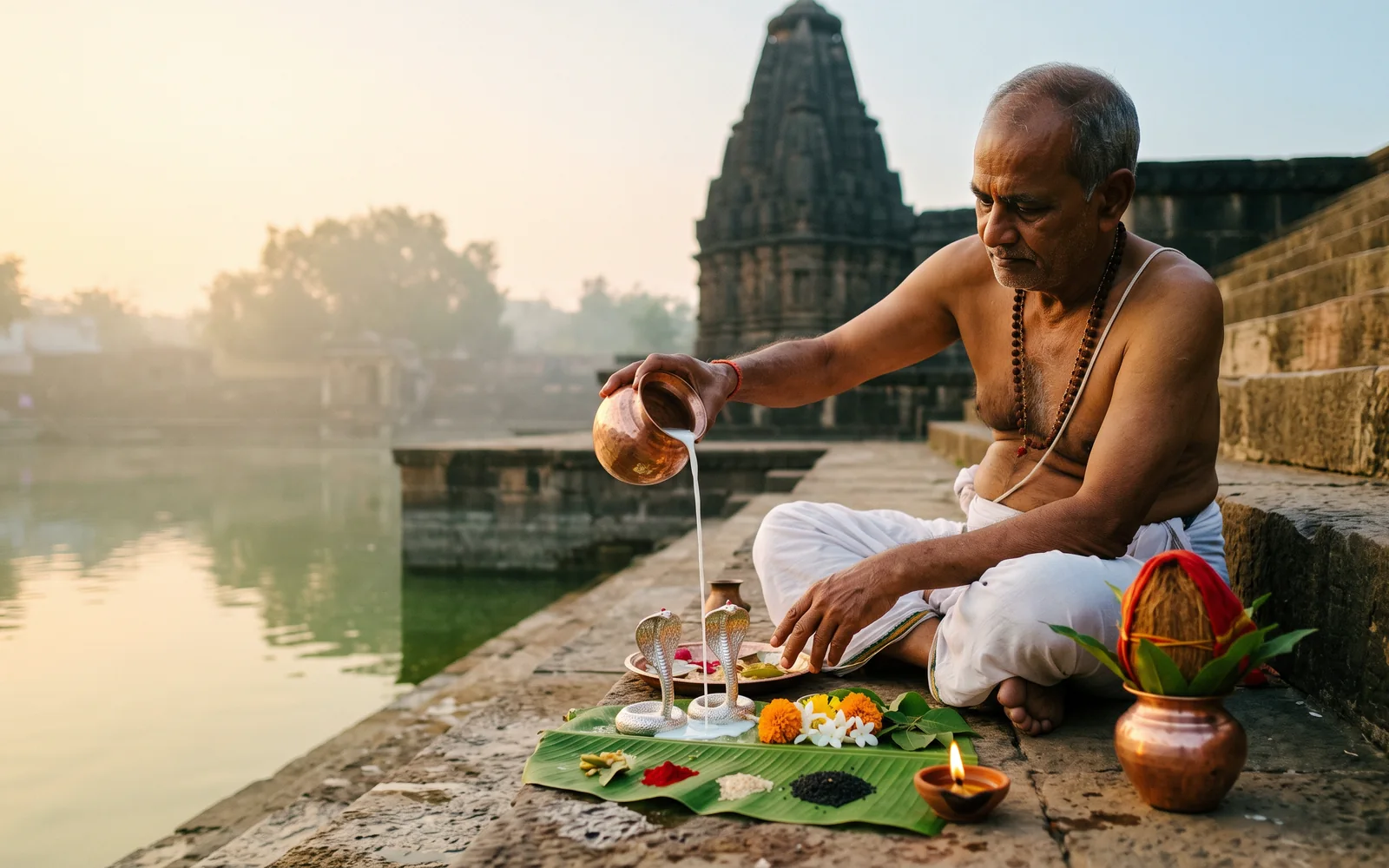 RitualsKaal Sarp Dosh Puja: Vidhi, Best Places, Samagri and CostHow kaal sarp dosh puja is performed, step by step. Compare Trimbakeshwar, Ujjain and Kashi, see the samagri list, what decides cost, and how online puja works.20 Nov 2026 · 10 min read