
Mangal Dosh Remedies and Nivaran Puja (Mangal Dosh ke Upay)
Mangal dosh ke upay tradition actually recommends: which remedy suits which grade of dosh, the Mangal mantra with meaning, and what a nivaran pooja involves.
At Mangalnath Mandir in Ujjain, on the bank of the Kshipra, pujaris press cooked rice over the Shivling until it forms a white mound. Local tradition holds that Mangal was born at this spot, and that rice, the most cooling of offerings, settles his heat. That single image explains how tradition approaches mangal dosh: it does not try to defeat Mars. It tries to cool him.
The remedy you need depends on the grade of dosh in your chart. A Mars that counts as manglik dosh from the lagna, the Moon and Venus together is read very differently from a nimn or anshik placement, or one that a cancellation rule already neutralises. So the first upay is free: have the chart read properly before you spend anything.
What follows are the mangal dosh ke upay devotees actually practise, from a daily mantra to a full nivaran pooja, and how families usually choose between them. The same remedies apply to women and men.
Mangal Dosh ke Upay: What Tradition Recommends
Astrologers choose a remedy based on how strong the dosh is. A mild dosh needs a small remedy, and a strong one needs more. The classical word for remedy is mangal dosh parihar. It can mean a simple Tuesday habit or a puja that runs over several days. Most families need far less than they fear.
| What the chart shows | What astrologers usually suggest |
|---|---|
| Nimn or anshik mangal dosh (Mars manglik from only one reference point, or in the 1st, 2nd or 12th house) | Tuesday Hanuman worship and regular Mangal mantra jaap at home |
| Full mangal dosh from the lagna and the Moon | A mangal dosh nivaran pooja or Mangal Bhaat puja, plus a fixed jaap count |
| Mars strong in the 7th or 8th house, with marriage delays | A temple puja, kundli matching with a manglik partner, and in some families a symbolic pre-marriage rite |
| Dosh cancelled by a parihar rule | Usually no formal remedy; many families still keep a simple Tuesday practice |
Two principles run through every tradition. The remedy should be steady rather than dramatic: a mantra chanted every Tuesday for a year counts for more than a single expensive ritual. And each dosh is treated on its own terms. If the same kundli also shows ancestral affliction, the pitru dosha remedies are a separate set of rites, not a substitute for Mangal worship.
Is the Manglik Dosh Solution Different for a Girl and a Boy?
The texts prescribe the same remedies for women and men, because the dosh is a placement of Mars, not a flaw of gender. Older customs that put the burden on a manglik daughter have no basis in classical Jyotish. So the advice for a manglik daughter is the same as for a son: mantra, Tuesday worship and, where the chart calls for it, a nivaran pooja.
A few observances do differ by tradition:
- Mangla Gauri vrat. Women traditionally keep this fast on the Tuesdays of Shravan and worship Gauri for a steady married life. Many families also offer a Mangla Gauri rudrabhishek at the Ram Ghat temple in Varanasi, where the Devi is worshipped under that name.
- Kumbh vivah or Ashwattha vivah. A symbolic marriage of a manglik woman to a clay pot (kumbh), a peepal tree or a Vishnu idol before the actual wedding.
- Arka vivah. The equivalent rite for a manglik man, a symbolic marriage to the arka (aak) plant.
- Matching with a manglik partner. The most widely followed parihar for both sexes; two charts of similar Mars strength are read as balancing each other.
For a manglik son, the remedies are no gentler and no harsher than for a daughter. Both start with the same chart reading and the same Tuesday discipline.
Learn more: is kumbh vivah still practised?
Yes, in some families, mostly in North and Central India, though far less often than a generation ago. The symbolic marriage carries no legal standing.
Many astrologers now prefer kundli matching and a nivaran pooja, and some openly discourage the symbolic rites because they can single out a woman. Whether to perform one is a family's choice, best made with a pandit who explains it fully.
Mantra for Mangal Dosh
Mantra is the remedy tradition places first, because anyone can practise it and it costs nothing. Three mantras come up most often. Chant any one of them; you do not need all three.
1. Mangal Beej Mantra
ॐ क्रां क्रीं क्रौं सः भौमाय नमः
Om Kraam Kreem Kraum Sah Bhaumaya Namah
Meaning: Salutations to Bhauma, the son of the Earth. The three syllables kraam, kreem and kraum are seed sounds (beej) associated with Mangal and carry no word meaning of their own. This is the mantra temples use for formal jaap, and the one most astrologers recommend for mangal dosh.
2. Mangal Gayatri Mantra
ॐ अङ्गारकाय विद्महे शक्तिहस्ताय धीमहि तन्नो भौमः प्रचोदयात्
Om Angarakaya Vidmahe Shaktihastaya Dhimahi Tanno Bhaumah Prachodayat
Meaning: We meditate on Angaraka, the one who holds the shakti (spear) in his hand. May Bhauma inspire and guide us.
3. Navagraha Stotra Verse for Mangal
धरणीगर्भसंभूतं विद्युत्कान्तिसमप्रभम्। कुमारं शक्तिहस्तं तं मङ्गलं प्रणमाम्यहम्॥
Dharanigarbha Sambhutam Vidyutkanti Samaprabham, Kumaram Shaktihastam Tam Mangalam Pranamamyaham
Meaning: I bow to Mangal, born from the womb of the Earth, who shines like lightning, the youthful one who holds the spear. This verse comes from the Navagraha Stotra traditionally attributed to Vyasa, and many households recite it daily rather than only on Tuesdays.
How to Chant It
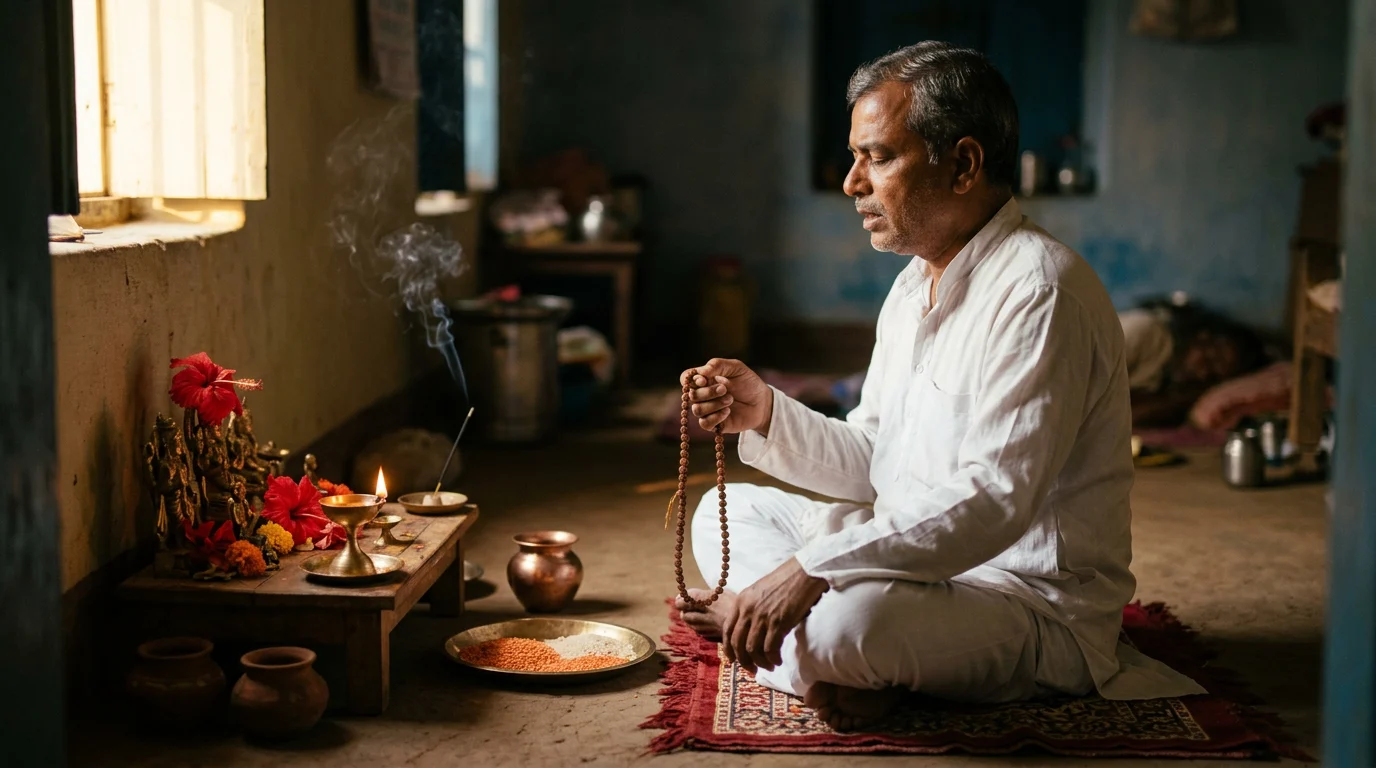
Start on a Tuesday, after a bath, facing south or east. Sit on a red cloth or asana and light a lamp and dhoop. Count 108 repetitions on a mala; a rudraksha mala of 108 beads plus the guru bead suits every graha mantra, so one mala serves the whole practice. Keep the same time and place each week.
Mangal Dosh Nivaran Pooja
A mangal dosh nivaran pooja is the formal version of the home practice, performed by pujaris with a sankalp in the devotee's name and gotra. Families usually book one when the dosh is full rather than partial, when marriage talks keep stalling, or before finalising a match. The sequence varies by temple, but most follow the same outline:
- Sankalp with the devotee's name, gotra and the purpose of the puja.
- Ganesh puja, so the rite begins without obstacles.
- Mangal puja with red flowers, red sandalwood, red cloth and masoor dal, the grain traditionally linked with Mars.
- Jaap of the Mangal beej mantra to a fixed count.
- Havan, often with khair (Acacia catechu) wood, the samidha tradition assigns to Mangal.
- Aarti, daan and prasad.
Where the puja is performed matters to many families, because each temple brings its own deity to the rite. The table below shows what each puja focuses on, so you can pick the one that fits your concern, not just the biggest one.
| Puja and temple | What it centres on | Families usually choose it when |
|---|---|---|
| Mangalik Dosh Nivaran, Shri Kalyani Devi Shakti Peeth, Prayagraj | Devi worship and mantra paath for a stable married life | The concern is marriage and the family prefers to approach it through the Devi |
| Mangal Bhaat Puja Panchan Karm, Mangalnath Mandir, Ujjain | Shivling abhishek and the rice offering, with added steps | Mars-related problems have lasted for years |
| Mangal Bhaat Puja Jaap, 11 pujaris, 44,000 jaap, Mangalnath Mandir | The Bhaat offering plus a full jaap anushthan | Anger or repeated conflict keeps returning |
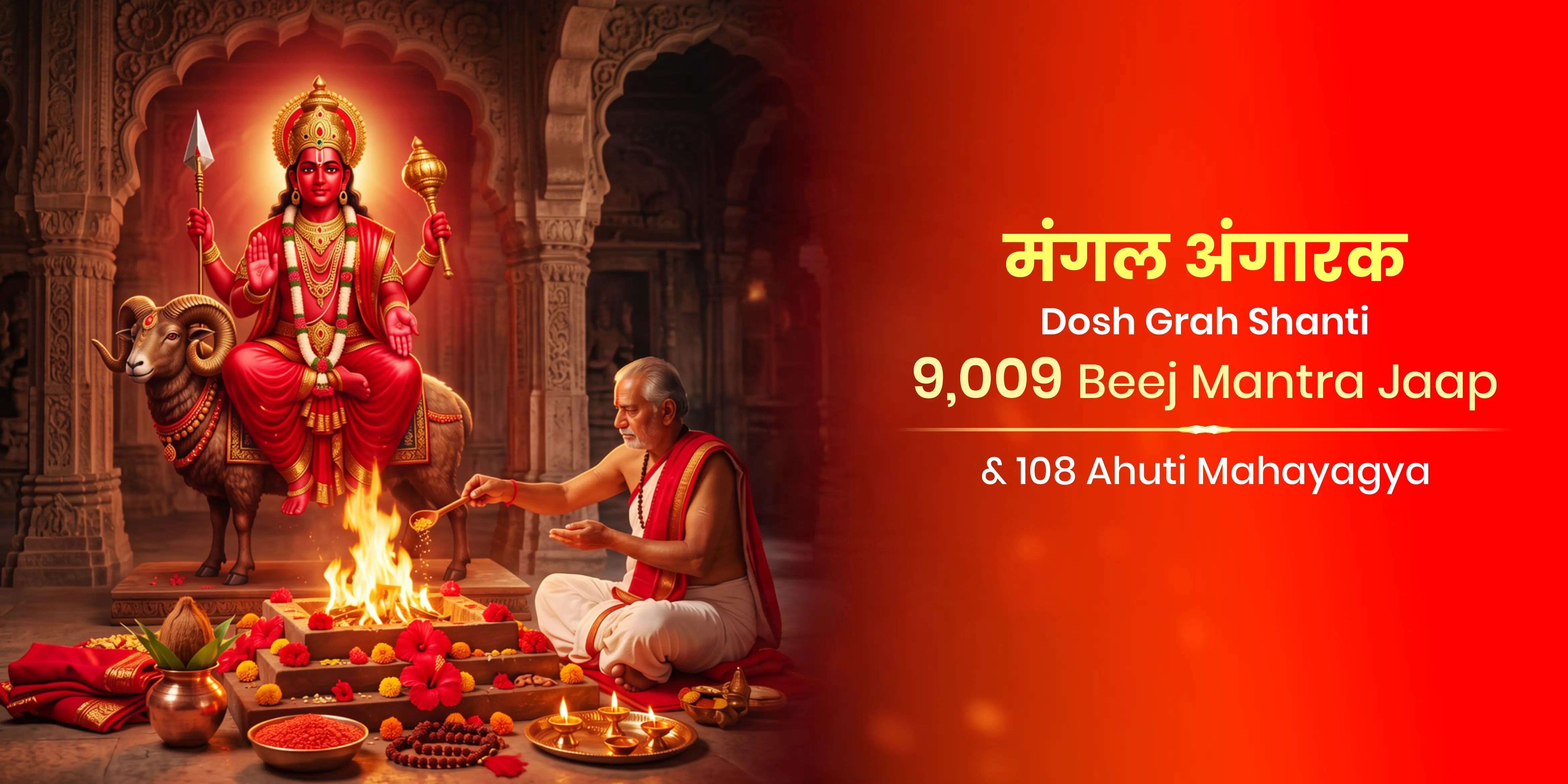
| Mangal Angarak Dosh Grah Shanti, 9,009 jaap and 108 ahuti, Mangalnath Mandir | Beej mantra jaap and havan | Mars is joined or aspected by Rahu (angarak yoga) |
| Vivah Siddhi Shukra Kripa Mahalakshmi Mahaanushthan, Shri Adi Mahalakshmi Mandir, Varanasi | Shukra and Mahalakshmi worship | An astrologer reads the marriage delay through Venus as well as Mars |
Families who cannot travel to Prayagraj can have the mangal dosh nivaran pooja performed at Kalyani Devi through Ekishwar, with the devotee's name and gotra in the sankalp and a video of the puja shared afterwards. When Rahu also touches Mars in the chart, the Mangal Angarak grah shanti at Mangalnath combines the beej mantra jaap with 108 havan ahutis.
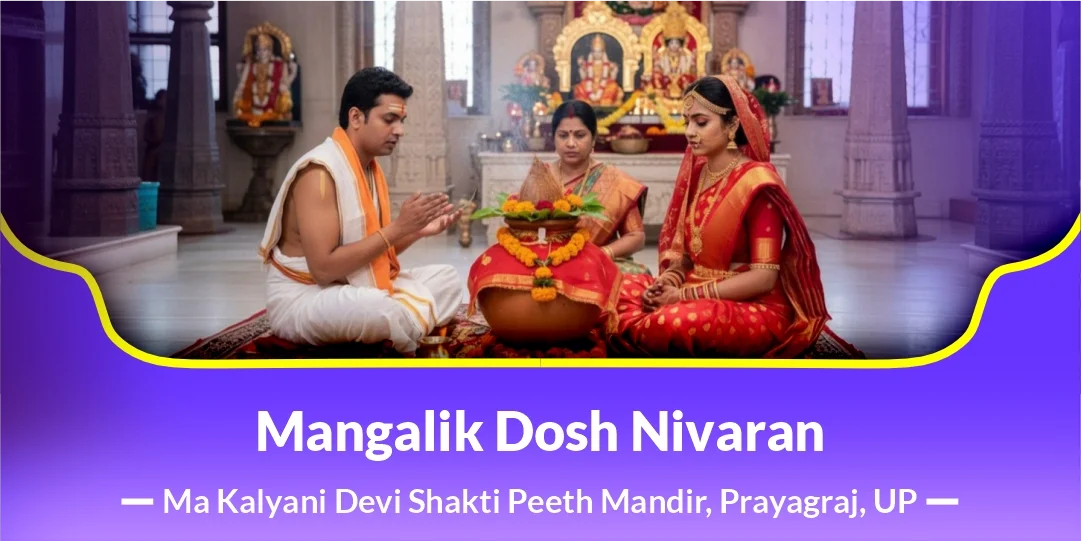 Performed at Kalyani Devi, in your nameMangalik Dosh NivaranMangalik dosh nivaran at Shri Kalyani Devi Shakti Peeth, Prayagraj, with your name and gotra in the sankalp.Shri Kalyani Devi Shakti Peeth Mandir, PrayagrajBook this puja
Where Venus is part of the reading, the Vivah Siddhi Mahaanushthan in Kashi worships Mahalakshmi along with Shukra. Many households keep a short Lakshmi mantra at home on Fridays while the anushthan is under way, so the home practice supports the temple puja.
Mangal Bhaat Puja at Mangalnath, Ujjain
Mangalnath Mandir stands on a rise above the Kshipra on the northern edge of Ujjain. The Avanti Khand of the Skanda Purana places Mangal's birth here, from a drop of Shiva's sweat that fell to the Earth, which is why the deity in the sanctum is a Shivling worshipped as Mangalnath rather than an image of Mars.
That detail shapes the whole puja. Mangal Bhaat is, at its core, an abhishek on a Shivling, the same principle behind a rudrabhishek, with one addition: after the liquids, the pujari covers the linga with bhaat, cooked rice usually mixed with curd or ghee, and shapes it into a mound before the aarti. Rice and curd are the coolest offerings in the ritual repertoire, and the idea is simple. A fiery graha receives something that soothes rather than feeds the fire.
The puja runs in this order: sankalp in the devotee's name, Ganapati pujan, abhishek of the Shivling, the bhaat offering with Mangal mantras, and aarti. The Mangal Bhaat puja in its Panchan Karm form adds further steps and longer chanting. Families choose it when Mars-related problems have lasted for years.
The jaap version keeps the same offering and adds a full anushthan. Eleven pujaris share a count of 44,000 Mangal mantras, so the jaap that would take a household months is completed in a single sitting. Families often book the 44,000 jaap when anger or conflict, rather than marriage timing, is the main concern.
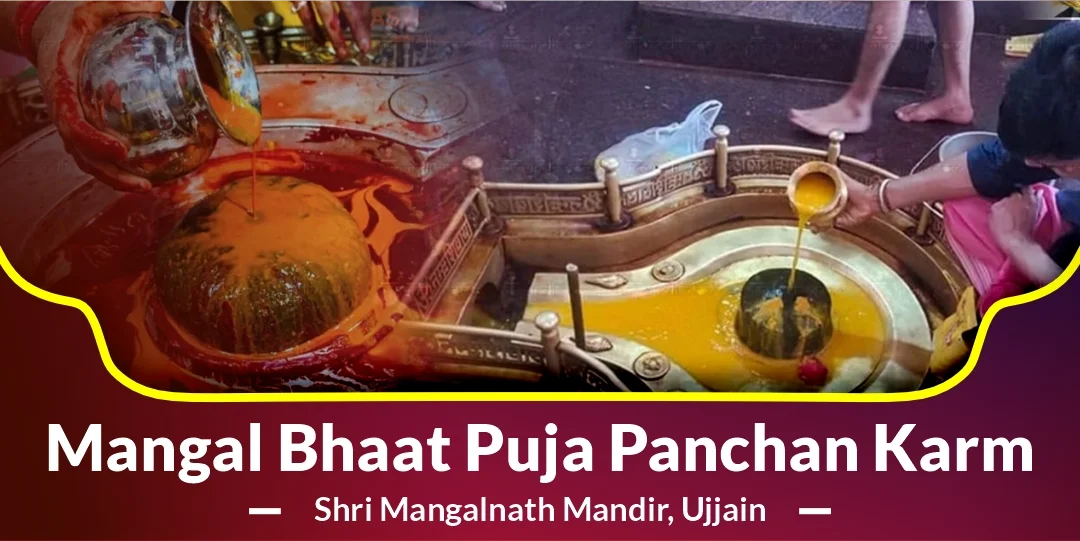 Performed at Mangalnath, in your nameMangal Bhaat Puja
Panchan KarmMangal Bhaat puja in its Panchan Karm form at Mangalnath Mandir, Ujjain, with a video of the puja shared afterwards.Mangalnath Mandir, UjjainBook this puja
Manglik Dosh Kaise Hataye: Everyday Practices
A placement in a birth chart never moves, so no ritual erases it. What tradition offers instead is a way to soften its effect through steady habit. These are the practices astrologers suggest most often, and none of them needs a temple visit:
- Keep a Tuesday fast. Most families eat one simple meal after sunset; some avoid salt for the day. Start on a Tuesday in the Shukla Paksha and keep it for a set number of weeks, often 21.
- Recite the Hanuman Chalisa or Sundarkand on Tuesdays. Hanuman is traditionally the deity who keeps Mangal in check, and his worship suits a fiery temperament because it pairs strength with discipline. For a larger observance, a Hanuman Chalisa 108 paath at Bankati Hanuman Mandir in Varanasi completes the recitation 108 times in your name.
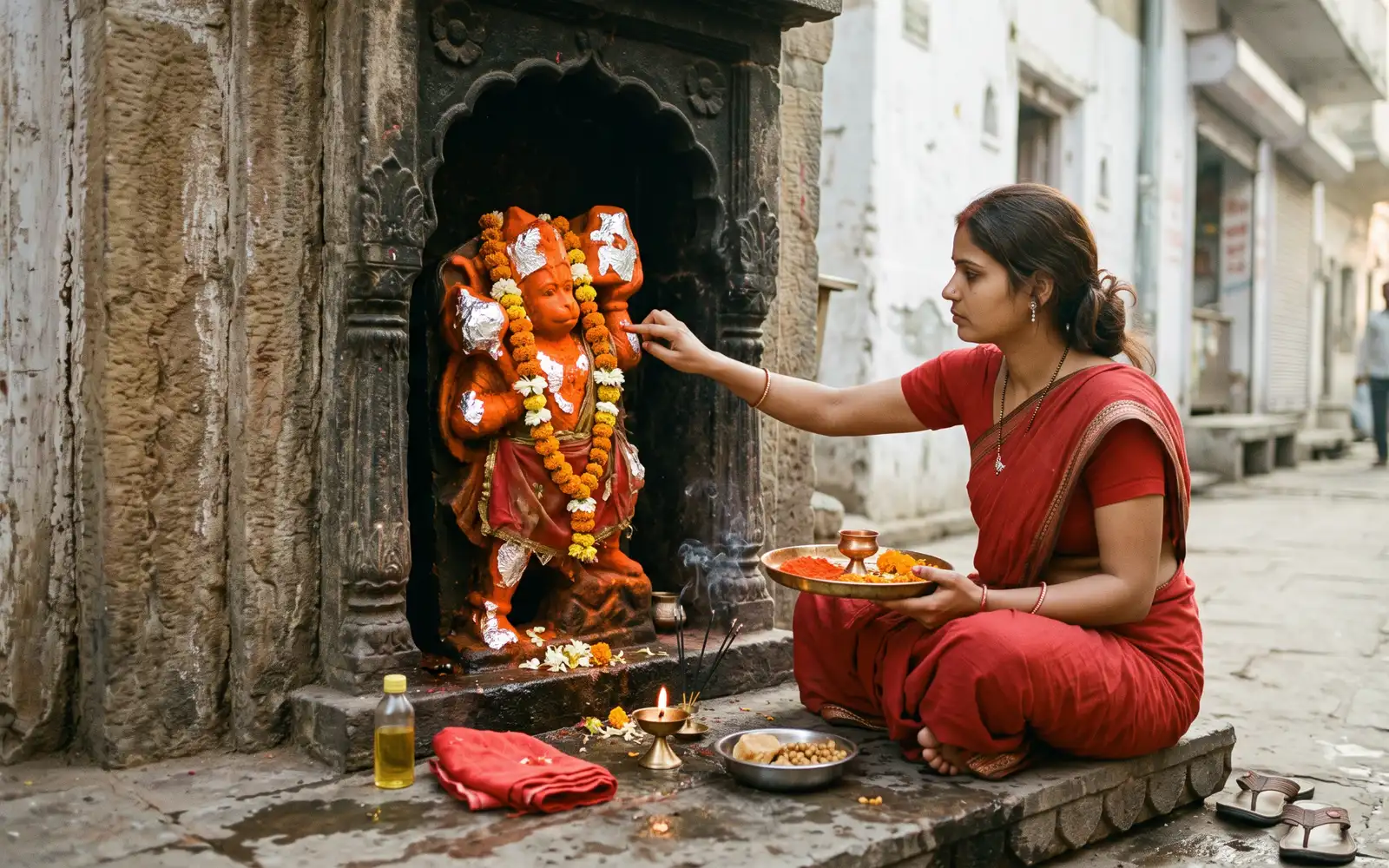
- Offer sindoor and chameli oil at a Hanuman shrine. A home altar works as well as a temple. The Hanumanta Hrudyam Box holds the sindoor, chameli oil, chola, red cloth and dhoop sticks a full Tuesday puja uses.
- Give daan on Tuesdays. Red masoor dal, jaggery, wheat or red cloth are the traditional items, given to someone who needs them.
- Feed animals. Gur-chana for cows or monkeys is a common Tuesday seva, and tradition treats kindness to animals as part of every graha remedy.
- Give Mars an outlet. Hard physical work, sport or regular exercise uses up the restless energy the dosh describes. Some modern astrologers also suggest donating blood, since Mangal rules blood, as a form of seva.
- Watch your words in an argument. Astrologers who take the dosh seriously say the most effective mangal dosh upay is restraint: pausing before a sharp reply, and letting a partner set the pace now and then.
The last two practices matter most. A remedy that changes how a person behaves at home does what a puja alone cannot, and it works whether the chart is manglik or not.
Cooling Mars, One Tuesday at a Time
Every remedy in this blog works like the rice offering at Mangalnath. Tradition does not ask a manglik person to fight Mars or fear him. It asks them to cool him: through a mantra repeated week after week, a fast, an offering to Hanuman, a puja performed with their name in the sankalp, and above all through patience at home.
The order matters. Read the chart properly first, because a nimn or cancelled dosh needs little more than a Tuesday habit. Choose a temple puja when the dosh is full or marriage talks keep stalling, and pick the puja that fits your concern, not the biggest one. Treat women and men alike, because the texts do. And keep the daily discipline going after any ritual ends, since that is the part of the remedy no pujari can do on your behalf.
Families who want a Mangal Bhaat or nivaran pooja performed at Mangalnath or Kalyani Devi without the journey can book it through Ekishwar.
Book a Mangal dosh nivaran puja
Mangalik Dosh NivaranPrayagraj · Kalyani DeviMangal Bhaat Puja
Panchan KarmUjjain · Mangal Bhaat, Panchan Karm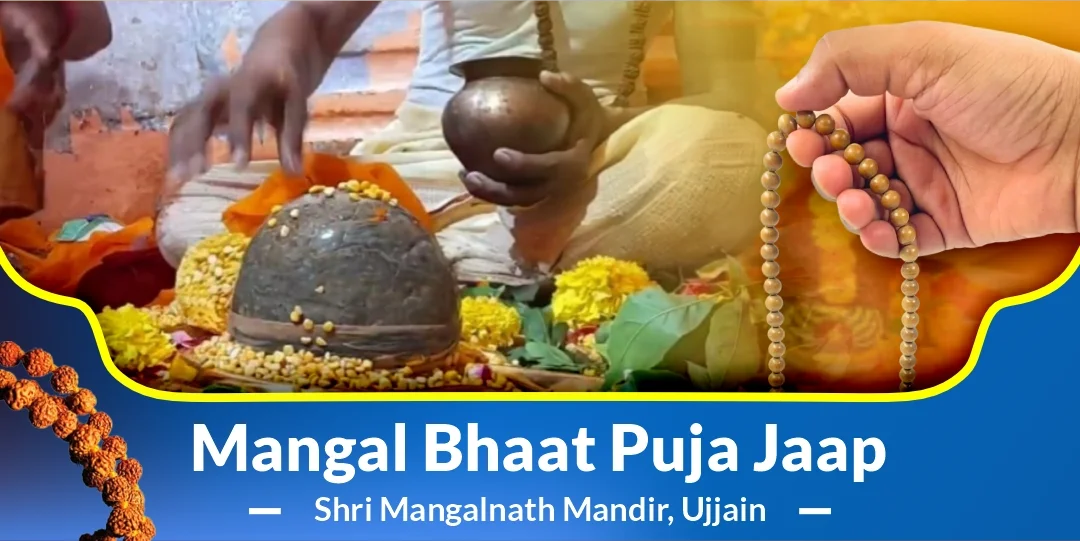 Mangal Bhaat Puja Jaap- 11 Pujaris 44,000 JaapUjjain · 44,000 jaap
 Mangal Angarak Dosh Grah Shanti 9,009 Beej Mantra Jaap & 108 Ahuti MahayagyaUjjain · Angarak grah shanti
 Vivah Siddhi Shukra Kripa Mahalakshmi MahaanushthanKashi · Vivah Siddhi
Pujas for you
Swipe · 4 pujas- Mangalik Dosh NivaranShri Kalyani Devi Shakti Peeth Mandir, PrayagrajBook now
- Mangal Bhaat Puja
Panchan KarmMangalnath Mandir, UjjainBook now
- Mangal Bhaat Puja Jaap- 11 Pujaris 44,000 JaapMangalnath Mandir, UjjainBook now
- Mangal Angarak Dosh Grah Shanti 9,009 Beej Mantra Jaap & 108 Ahuti MahayagyaMangalnath Mandir, UjjainBook now
FAQs on Mangal Dosh Remedies
- Can mangal dosh be removed completely?
- No ritual changes a birth chart, so the placement stays. What the remedies aim to do is soften its effect. Tradition also treats the dosh as cancelled in some charts, and a manglik partner is read as balancing it.
- Which is the best mantra for mangal dosh?
- The Mangal beej mantra, Om Kraam Kreem Kraum Sah Bhaumaya Namah, is the one most astrologers recommend and the one temples use for jaap. Chant it 108 times on Tuesdays, or daily for a fuller anushthan.
- Which day is best for mangal dosh nivaran?
- Tuesday, Mangal's own day. Angarak Chaturthi, when a Chaturthi tithi falls on a Tuesday, is considered the most auspicious date for a Mangal Bhaat or manglik dosh nivaran puja.
- Do manglik women and men need different remedies?
- The core manglik dosh ke upay are the same for both: mantra, Tuesday worship, daan and, where needed, a nivaran pooja. Only a few symbolic rites differ, such as kumbh vivah for women and arka vivah for men, and many astrologers no longer insist on them.
- Can the Mangal Bhaat puja be done without going to Ujjain?
- Yes. The pujaris at Mangalnath perform the puja on the devotee's behalf, with their name and gotra in the sankalp. Families who book from elsewhere receive a video of the puja.
- What does mangal dosh parihar mean?
- Parihar means remedy or neutralisation. Astrologers use the word in two senses: the cancellation rules that neutralise the dosh in certain charts, and the remedies, such as mantra, puja and daan, that devotees perform to soften it.
- Mangal dosh ke upay
- Mangal dosh remedies
- Mangal dosh nivaran pooja
- Mantra for mangal dosh
- Manglik dosh solution
- Mangal dosh parihar
- Mangal Bhaat puja
- Mangalnath Ujjain
Read next
All guides →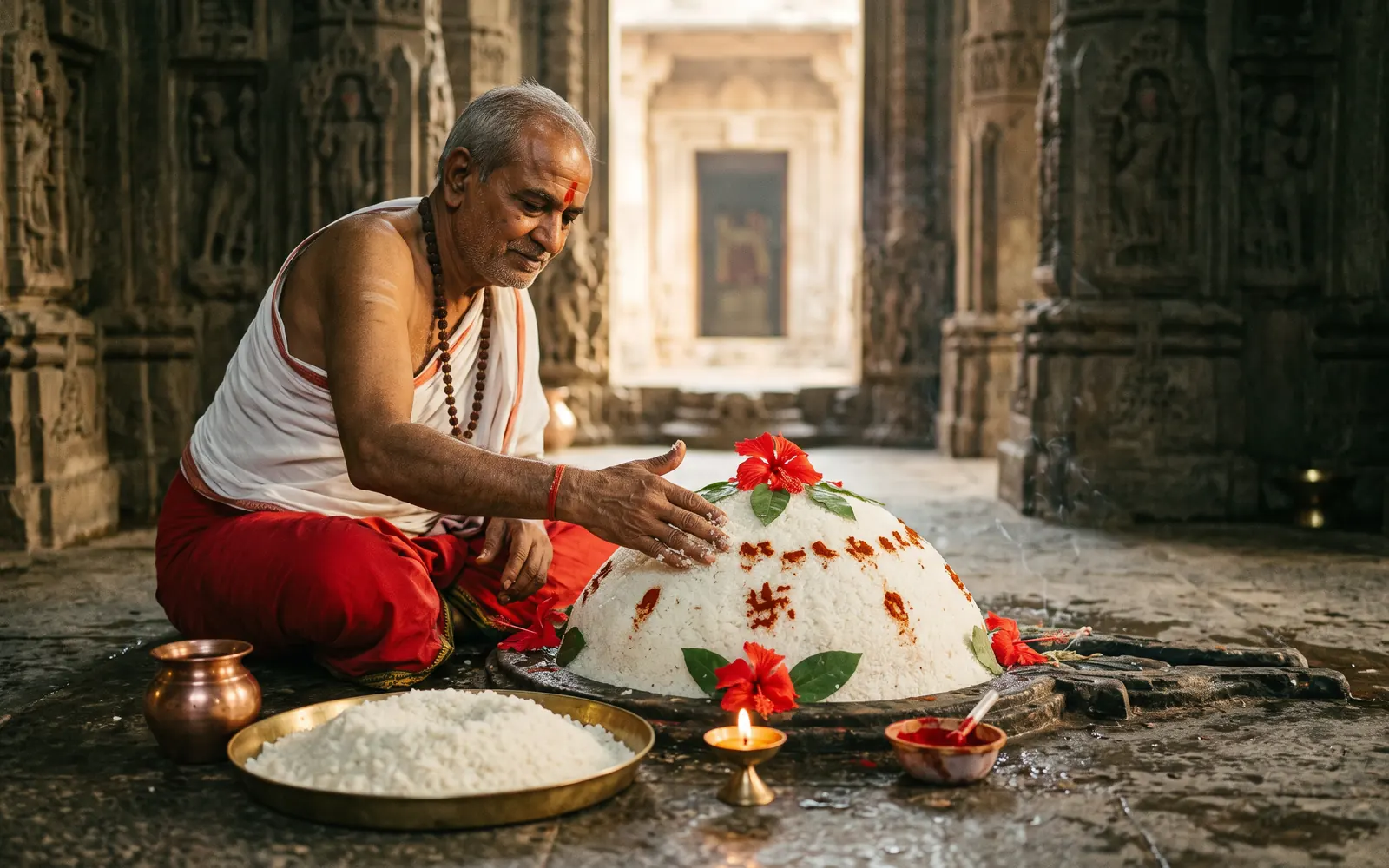 RitualsManglik Dosh: Meaning, How to Check It, Anshik and Nimn Manglik (Mangal Dosh Kya Hota Hai)Manglik dosh kya hota hai? Learn which houses create mangal dosh in kundli, how to check it from lagna, Moon and Venus, and what anshik and nimn manglik mean.24 Nov 2026 · 10 min read
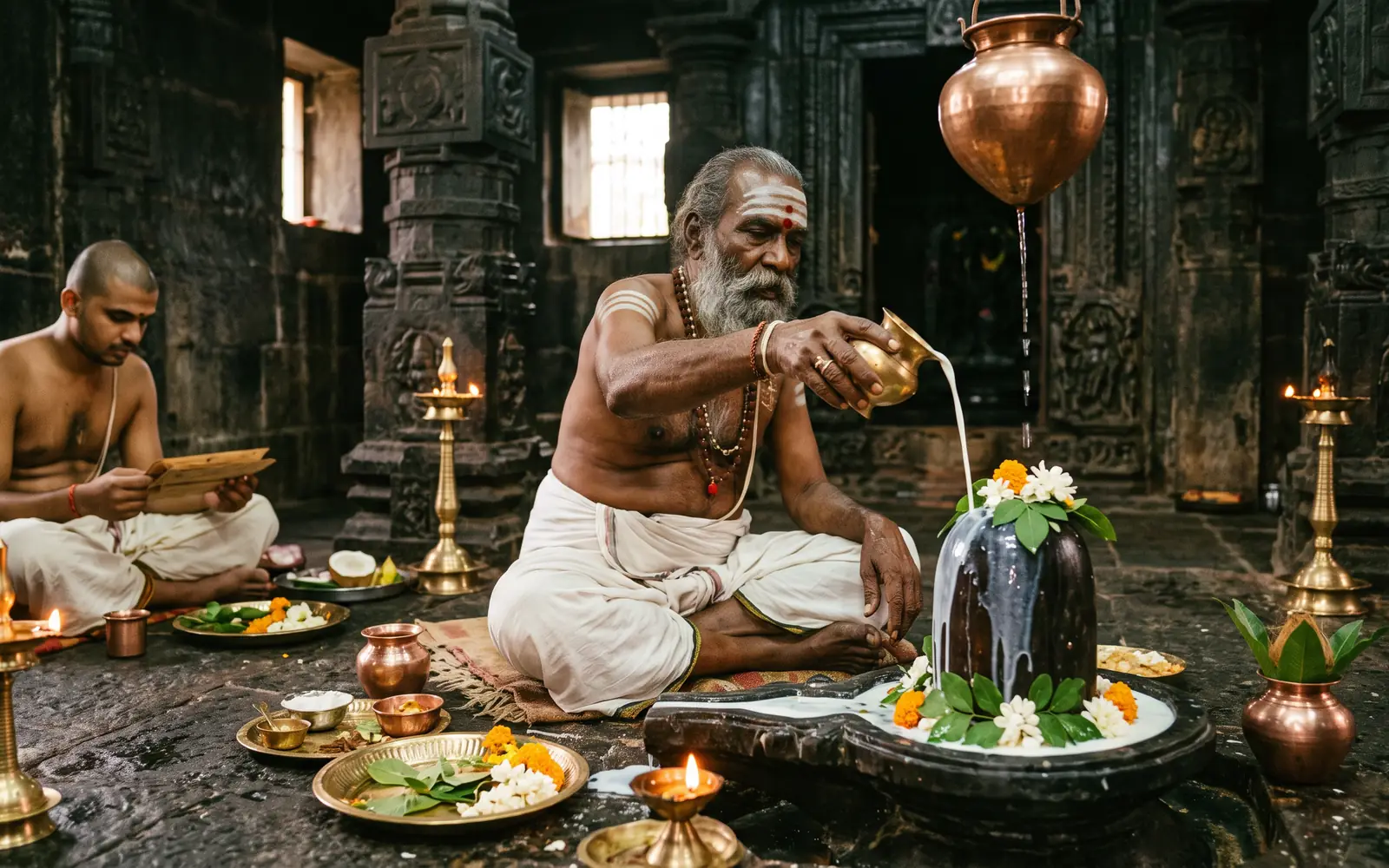 RitualsWhat Is Rudrabhishek? Meaning, Benefits and Why It Is PerformedRudrabhishek kya hota hai? The meaning of Rudra and abhishek, what the Rudri recites, the offerings used, traditional benefits and when and where to perform it.25 Nov 2026 · 8 min read
 RitualsShani Sade Sati: Which Rashis Are Affected, the Three Phases and Upay (Shani ki Sade Sati)Shani ki sade sati kis rashi par hai? Kumbh, Meen and Mesh are in sade sati in 2026. See each rashi's phase, exact end date, lakshan and traditional upay.25 Nov 2026 · 10 min read